
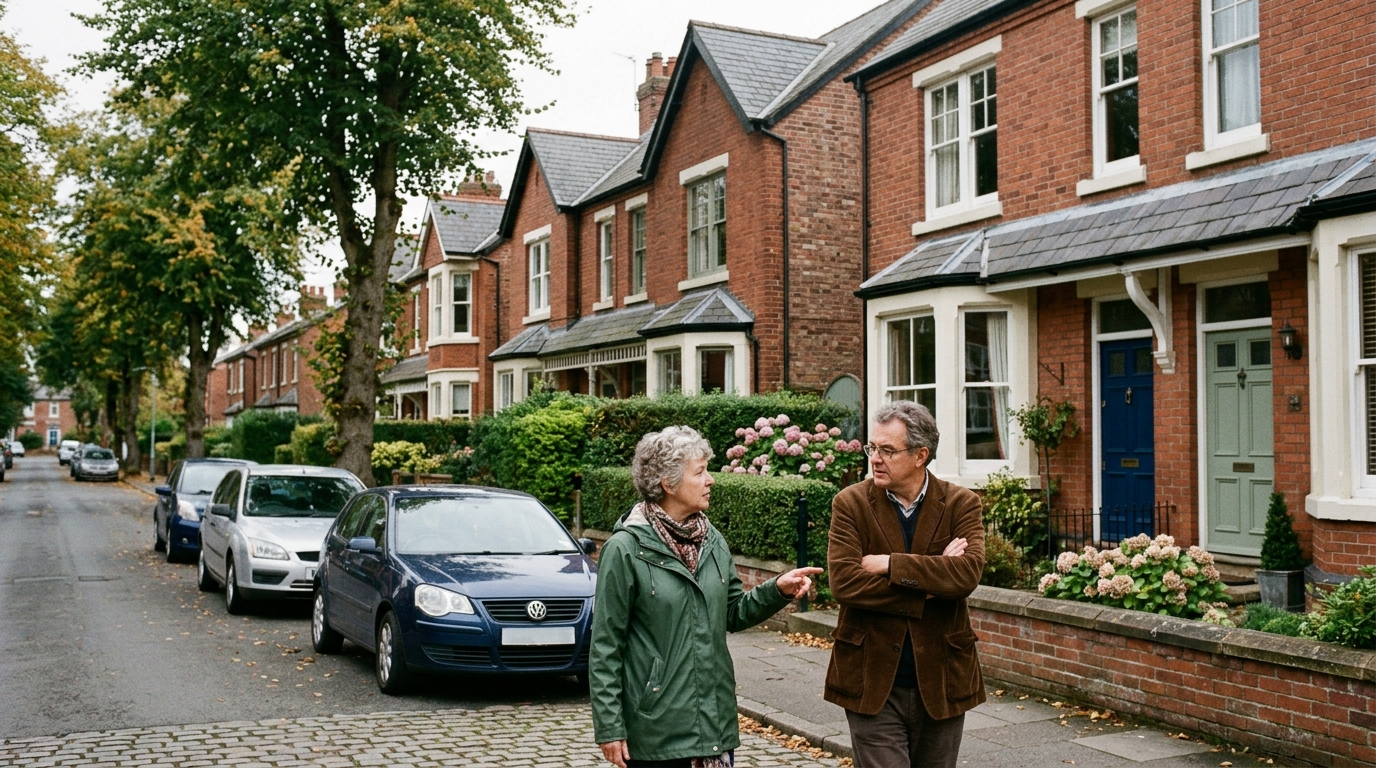

Andy Burnham’s transition from Prime Minister-elect to occupant of Number 10 is now a matter of days, and the property tax debate he sparked during his pre-Makerfield campaigning has moved from theoretical to urgent. The incoming premier has floated, with varying degrees of conviction, the idea of replacing Stamp Duty Land Tax with an annual wealth tax on property. For homeowners across Norfolk and Suffolk, the implications of either option are substantial.
Trevor Abrahmsohn of Glentree International, writing in The Negotiator this week, put it neatly: choosing between Stamp Duty and a mansion tax is choosing between “two root canal treatments.” The question isn’t whether property owners will pay. It’s how.
Stamp Duty currently delivers between £9 billion and £11 billion annually to the Treasury. It’s reliable, straightforward to collect, and politically painless because it arrives in large, unavoidable lumps whenever someone moves house. As Abrahmsohn observed, it’s “a bit like buying a train ticket and then being charged extra for moving to another seat.”
The problem is what it does to the market. Because the tax is elective, payable only on transactions, it actively discourages movement. Empty nesters stay in four-bedroom family homes because downsizing to something smaller means writing HMRC a six-figure cheque. That blocks younger families from trading up, chokes labour mobility, and leaves the nation’s housing stock distributed with all the precision of, as Abrahmsohn put it, “musical chairs at a care home.”
I see this pattern regularly across the Norfolk luxury market. Owners of substantial country houses in areas like Holt or Burnham Market will tell you candidly that they’d consider moving to something more manageable, but the transaction cost makes the arithmetic punitive. A couple selling a £2 million period property and buying at £1.2 million still faces a Stamp Duty bill north of £50,000 on the purchase. That isn’t a rounding error. It’s a new kitchen, a year of school fees, or the renovation budget for the next property.
The alternative Burnham has floated is an annual levy on property wealth. To replace SDLT’s £10 billion contribution, the numbers need to be significant. Abrahmsohn’s analysis suggests a rate of around 0.75% on higher-value homes, which translates to £11,400 a year on a £2 million property, £28,500 on a £5 million house, and £114,000 annually on a £20 million estate.
Spread more broadly at 0.48%, the burden shifts downward: £2,400 a year on a £500,000 home, £24,000 on a £5 million property.
For Norfolk and Suffolk homeowners, those figures demand serious attention. A period farmhouse in Southwold worth £1.5 million would face annual charges of £7,200 to £11,250, depending on the rate applied. That’s a meaningful recurring cost on a property whose owner may have bought it decades ago for a fraction of its current value.
And here lies the political trap. Rural Norfolk is home to precisely the demographic that makes wealth taxes explosive: people who are asset-rich and income-poor. A retired couple in a Grade II listed rectory near Aylsham, valued at £1.8 million but living on a pension, can absorb a one-off Stamp Duty bill if they ever sell. An annual levy of £8,600 to £13,500, with no corresponding income to fund it, is a different proposition entirely.
The standard workaround is deferral: roll up the tax against the estate until sale or death. But that requires considerable political courage, particularly when Inheritance Tax is already hovering, as Abrahmsohn colourfully noted, “in the hallway like an undertaker with a clipboard.” Compounding an annual wealth tax with IHT on the same asset creates a double charge that would face fierce resistance in the shires.
There is, though, a genuine upside to consider. Removing Stamp Duty’s transaction penalty would almost certainly increase market activity. Each housing transaction is commonly estimated to stimulate around 20 sectors of the economy: solicitors, removal firms, builders, furniture retailers, mortgage lenders. The capital currently locked inside properties because moving is too expensive would begin to circulate.
Across our market data covering 324 locations in Norfolk and Suffolk, the pattern is clear. Areas with higher average values tend to show lower transaction volumes relative to stock. That isn’t because demand is absent. It’s because the frictional cost of moving has become prohibitive at the upper end. Remove that friction, and the released capital flows into renovations, new purchases, and the broader local economy.
Abrahmsohn’s verdict on the economic argument is hard to dispute: Stamp Duty is “the fiscal equivalent of yanking on the handbrake and calling it a growth strategy.” A properly designed replacement could free the market considerably.
Whether Burnham actually pursues this remains uncertain. Abolishing Stamp Duty would please property owners but alarm the Treasury, which values the tax’s predictability. Introducing a mansion tax would please economists but alarm homeowners, particularly in Conservative-held seats across southern and eastern England where property values have outpaced incomes for decades.
Both Nigel Farage and the Conservative Party have previously flirted with Stamp Duty abolition, which tells you something about the electoral appeal. But no government has yet found the courage to replace a known, if clumsy, revenue stream with something more rational but less proven.
“Stamp Duty is economically clumsy but politically convenient,” Abrahmsohn concluded. “A mansion tax may be economically cleaner, but politically radioactive.”
For sellers and buyers in this region, the practical advice is straightforward. Nothing will change quickly, even under a new government. Fiscal reforms of this scale require consultation, legislation, and typically a Budget announcement. But the direction of travel matters.
If you’re an owner of a substantial property who has been deferring a move because of Stamp Duty costs, this debate is worth following closely. If Burnham moves toward abolition or even significant reduction, the window of activity that follows could be considerable. Conversely, any move toward annual taxation on property wealth would fundamentally alter the economics of holding high-value homes in areas like North Norfolk and the Suffolk coast.
What’s certain is that property taxation won’t remain unchanged under this new government. Burnham has placed the question firmly on the table. The answer, when it comes, will reshape the market for years.