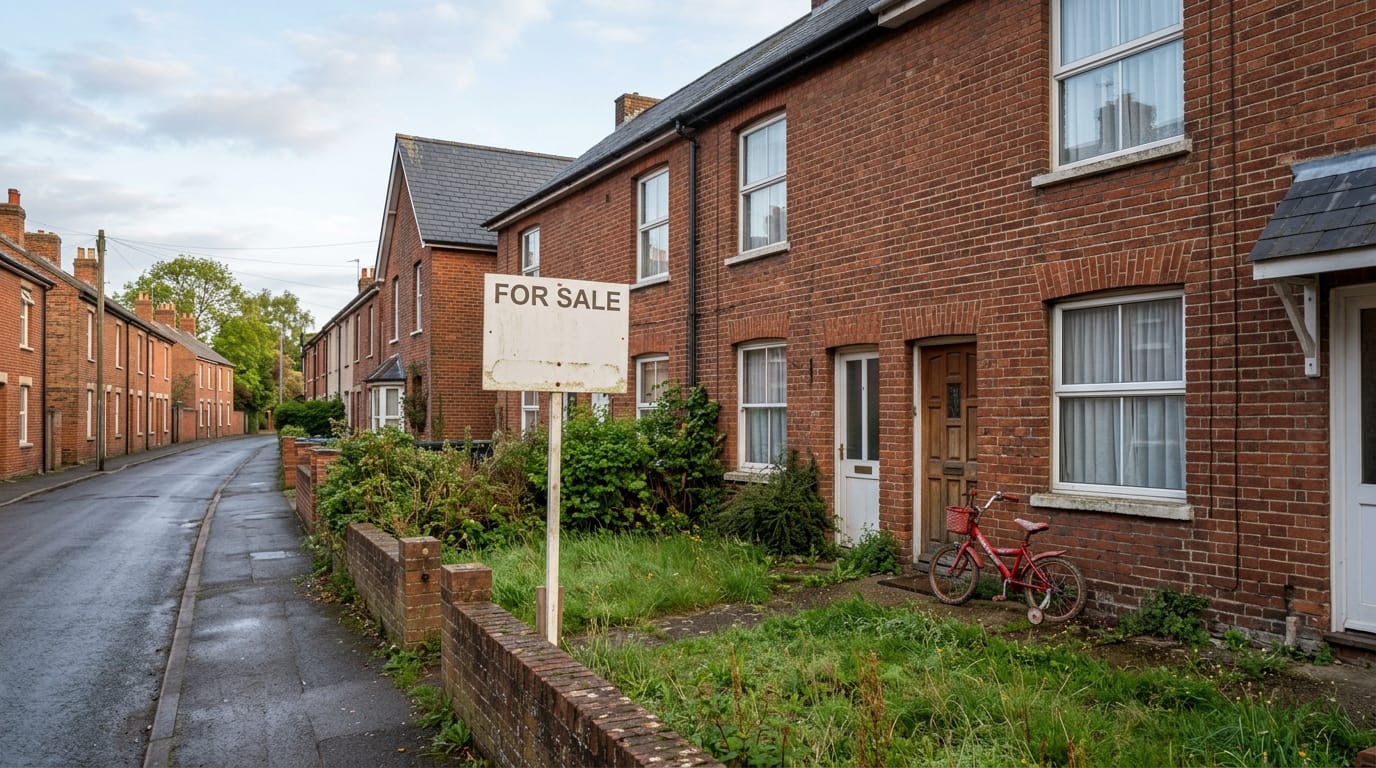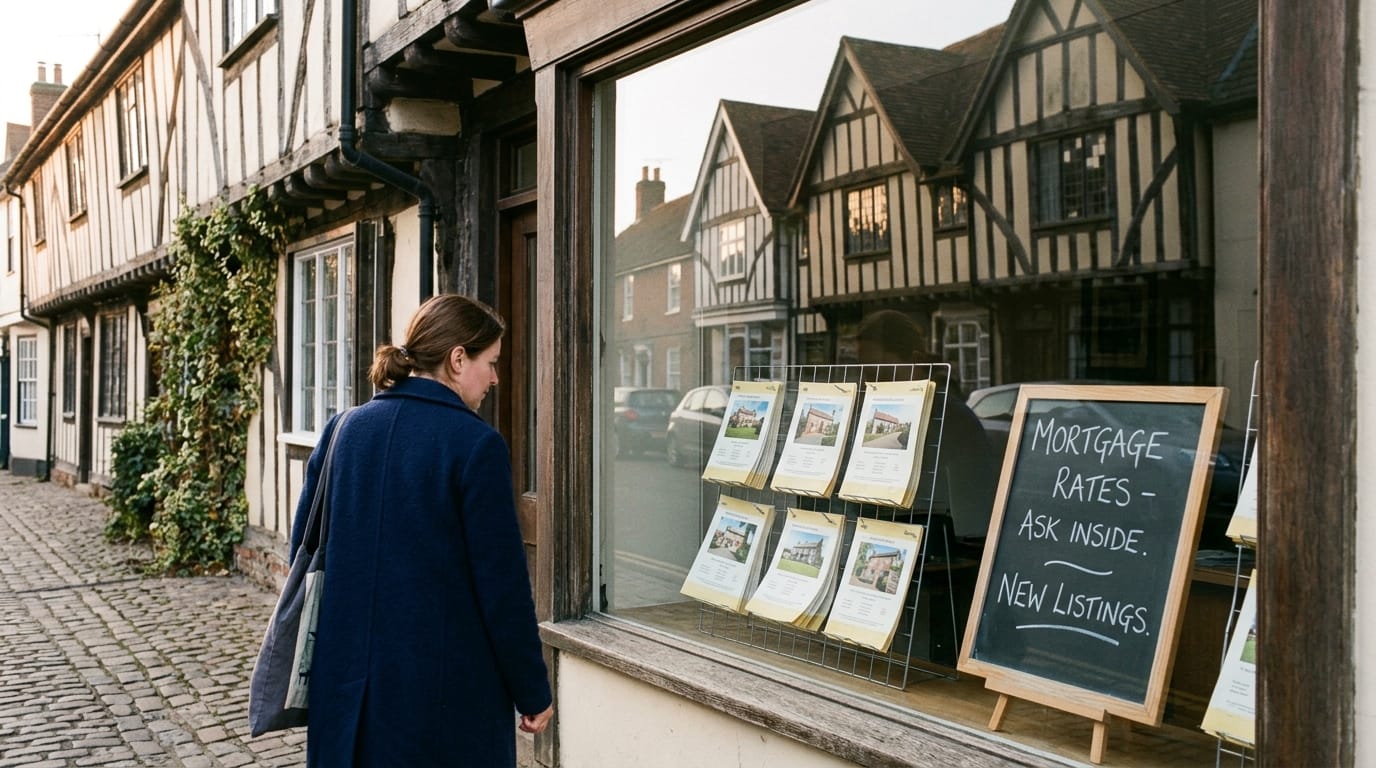
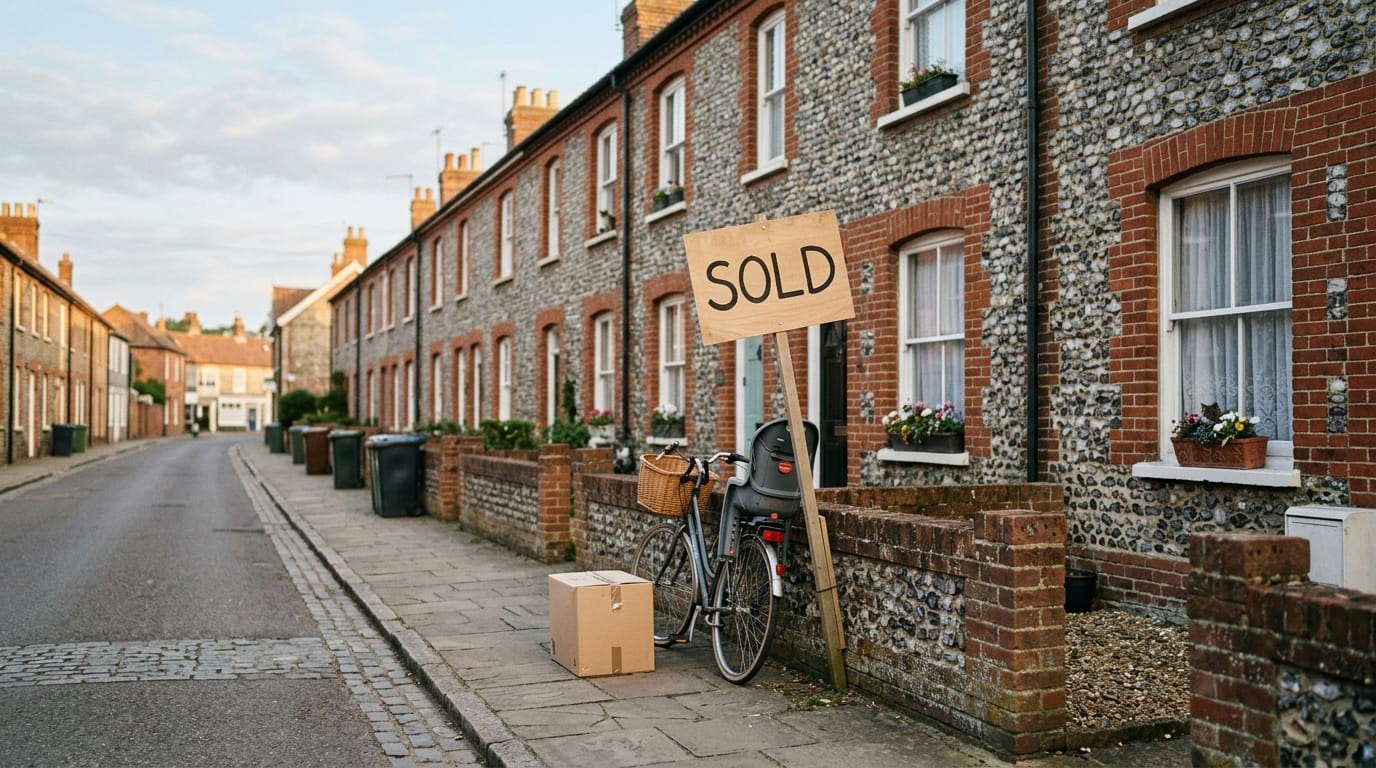

Just 5% of people selling a home in England and Wales this year had owned it for less than three years. That is the lowest share on record, and it is down from 15% in 2006. New research from one of the country’s largest agency groups, published this week, puts a number on something that has been visible in market towns and coastal villages across Norfolk and Suffolk for a while now: people are moving far less often than they used to, and the reasons are financial rather than emotional.
The five-year figure tells the same story. In 2006, 29% of sellers had owned their property for five years or less. In 2026 that has halved, to 14%.
Three forces are doing the work. The first is transaction cost. The group’s analysis puts typical stamp duty for a mover in England at £5,950 this year, rising to around £23,000 in London. On the sort of family houses that change hands in Wymondham or Holt, the figure sits comfortably above that national average, and stamp duty is only the headline item. Add legal fees, survey costs, removals and the inevitable work on the new house, and a lateral move becomes an expensive exercise in standing still.
The second is borrowing cost. Households who fixed at ultra-low rates have watched the replacement cost of their debt climb, and many are now waiting to see whether rates fall further before they commit to a larger loan. Waiting is free. Moving isn’t.
The third is the one that gets discussed least. Weaker price growth has left recent buyers with thinner equity to carry forward. The research found that one in five sellers who had owned for five years or less sold at a loss in 2026. Nationally, an estimated 7.9% of homes are now worth less than their owner paid for them, a figure that rises to 21% in London.
A seller facing a shortfall is dealing with two problems at once. There’s the financial one, where the deposit for the next purchase simply isn’t there. And there’s the psychological one, which is often the more powerful of the two. Very few people will willingly crystallise a loss on the largest asset they own if the alternative is to stay put for another two years and hope.
The group’s research director framed the effect bluntly, saying homeowners are increasingly finding that moving no longer pays, and describing high stamp duty, higher mortgage rates and weaker price growth as a combination of reasons why households are staying longer than they otherwise would. The consequence, she argued, is that homeowners have stopped making small incremental steps up and down the ladder. When they do move, it has to be a bigger, longer-term decision.
That matches what we see in instruction patterns locally. The three-year mover who wanted an extra bedroom has largely disappeared. What remains is the decisive move: a relocation, a downsize with real purpose, a family who need a genuinely different house rather than a slightly better one.
The most striking figure in the research is a counterfactual. If homeowners were still moving as frequently as they did in 2006, there would be roughly 439,000 additional housing transactions every year in this country. That is not a rounding error. It is close to a third of current annual turnover simply absent from the market.
Lower churn has consequences beyond estate agency. It means the existing housing stock is used less efficiently: retired couples in five-bedroom houses, growing families in two-bedroom cottages, workers commuting further than they would choose because moving closer to a new job doesn’t stack up financially. The research argues this acts as a drag on economic growth and productivity, and that argument is hard to dispute.
Counter-intuitively, thin turnover is not bad news for everybody. In villages where only a handful of houses trade in a year, scarcity supports price. A well-presented period property in Burnham Market or Southwold competes against very little, because the people who own the comparable houses have no financial reason to sell.
The difficulty is on the other side of the transaction. Owners who want to move within the same area often find there is nothing to move to. That, more than any index reading, explains why some of the most desirable postcodes in the region feel simultaneously strong and static.
The regional detail in the research also matters. Turnover has fallen everywhere, but the sharpest declines are in London and the South, where transaction costs bite hardest. The East of England sits between the extremes. Our own 324 local market reports show the pattern clearly at street and sector level: prime coastal and market-town locations with very low listing volumes, alongside larger centres such as Norwich and King’s Lynn where stock turns over at something closer to a normal rate.
If you are selling into a low-turnover market, the temptation is to assume scarcity does the work for you. It doesn’t, entirely. The buyers who remain are almost all making a decisive, long-term move, and they’ve done their research. They know what sold on the neighbouring street and what it went for. Scarcity supports a fair price. It rarely supports an ambitious one, and the sale that starts high and drifts down through two reductions ends up achieving less than the one priced correctly in week one.
For owners who bought recently, the honest advice is to check the numbers before committing. If you are among the 7.9% sitting below your purchase price, a year of patience may be worth more than a year of marketing.
Transaction taxes are the obvious lever, and the Autumn Budget will be watched closely by anybody who thinks stamp duty is the binding constraint on mobility. Falling mortgage rates would help too, though the effect is slower and less visible.
Neither is guaranteed. What’s more likely is that the current pattern hardens: fewer moves, made by more committed movers, with longer gaps between them. For sellers, that puts a premium on presentation, accurate pricing and reaching the small pool of buyers who are genuinely ready. For buyers with cash and patience, a market where nobody else can afford to move is quietly one of the better places to be.