
Half of British adults believe Brexit has harmed the UK housing market. That is the headline finding from new research by specialist mortgage lender Together, published to mark the tenth anniversary of the EU referendum.
The figure is striking, but what sits beneath it is more instructive. Among those who said Brexit had hurt the housing market, views split between those who felt the damage was significant (28%) and those who considered it more moderate (22%). Only 9% of respondents said Brexit had substantially helped, with a further 14% crediting it with more limited improvements.
The regional breakdown is revealing. Respondents in Scotland were most likely to say Brexit had harmed the market significantly, with 47% holding that view. The North East (37%) and North West (33%) weren’t far behind.
Londoners, perhaps surprisingly given the capital’s exposure to international buyer flows, were among the least likely to view Brexit positively: just 19% said it had helped. In the West Midlands, the figure dropped to 11%.
These aren’t random patterns. They broadly track the regions where affordability pressures have been most acute over the past decade, and where the promised economic benefits of leaving the EU have been slowest to materialise.
Among the more tangible impacts attributed to Brexit is its effect on the building industry. The UK construction sector relied heavily on EU labour before 2016, and the post-referendum reduction in workers has been well documented.
Scott Clay, a director at Together, put it directly: “Brexit introduced new trade barriers, supply chain friction, directly affecting the costs of new builds, and a reduction in EU construction workers.”
The consequences extend beyond individual projects. Clay argued that these pressures, combined with increasing regulation, have undermined the viability of many housing developments, threatening the government’s target of building 1.5 million homes by 2029.
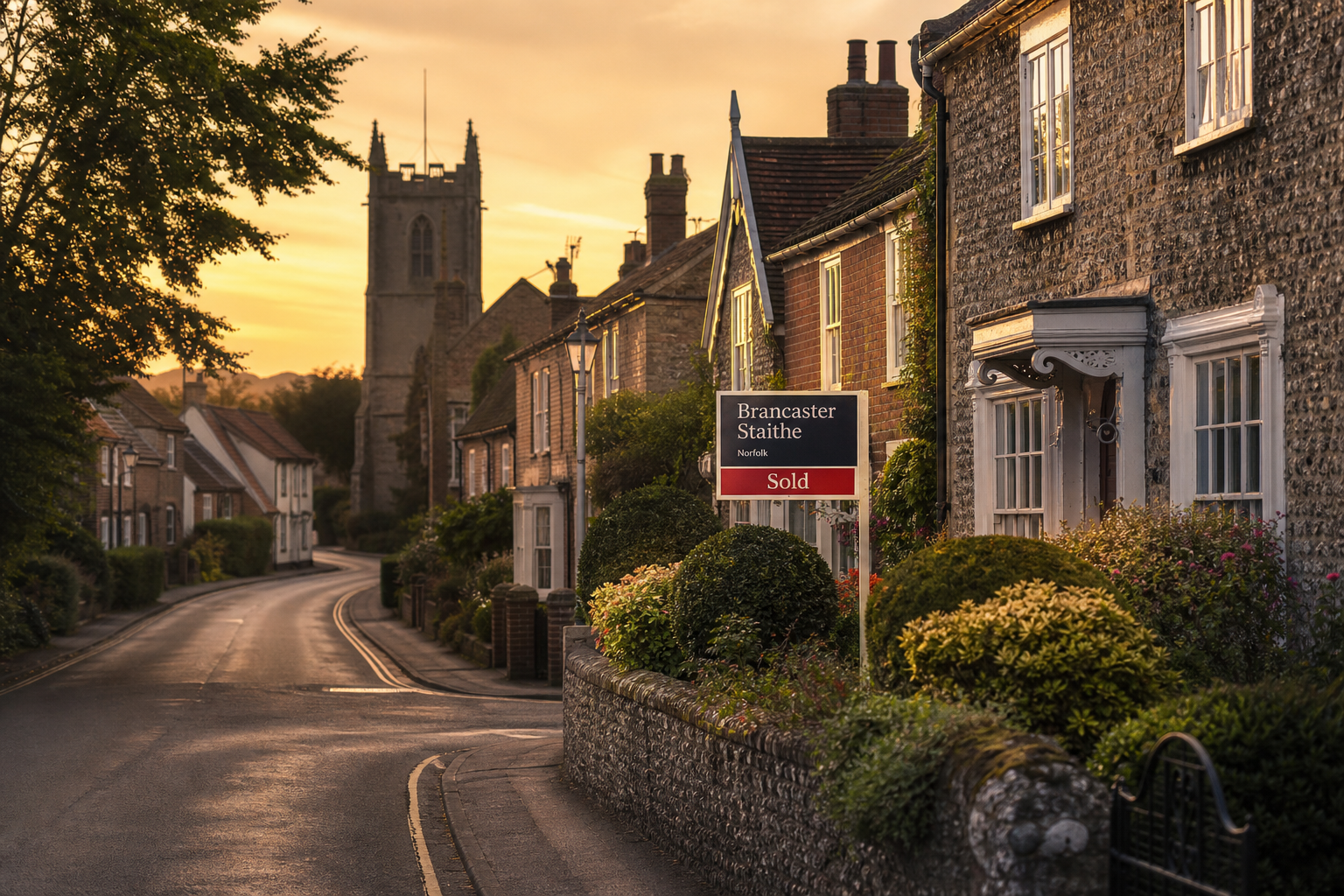
For a county like Norfolk, where village housing stock is finite and new development can take years to navigate through planning, any drag on construction output matters. Fewer new homes being built means existing properties carry a premium, particularly characterful homes in sought-after locations like Holt, Burnham Market and the Southwold coastline.
The most frequently repeated prediction in 2016 was a house price crash. It didn’t arrive.
“Overall UK property prices have remained relatively stable, defying doom predictions that the market would crash post-Brexit,” said Clay. That assessment is broadly supported by the data. Since the referendum, average house prices in England have risen substantially, though real-terms gains have been eroded by inflation and higher mortgage costs.
What did happen was subtler. International buyer interest in London cooled. EU nationals, uncertain about residency status and tax implications, pulled back. The capital’s prime market lost some of its magnetism.
“This has led many developers, investors and home buyers to look to the North and Midlands for better value,” Clay noted.
That northward and eastward drift has been good for Norfolk and Suffolk. The region sits at a sweet spot: close enough to London and Cambridge to be accessible, distinct enough to offer genuine lifestyle advantages, and priced at a level that represents clear value against the South East.
Norwich has drawn a steady stream of professionals relocating from the capital, particularly since the pandemic normalised remote and hybrid working patterns. Market towns like Wymondham, Aylsham and Diss have benefited too, offering period properties, strong schools and a pace of life that London simply can’t match.
The Ivybridge Collection’s property market reports across 324 locations track this trend in detail, showing resilient asking prices and consistent buyer interest across the region.
Any honest assessment of the past decade has to acknowledge that Brexit was far from the only disruption. A global pandemic closed the housing market entirely for weeks. Inflation surged to its highest level in four decades. The Bank of England raised interest rates from 0.1% to over 5% in less than two years. The Truss mini-Budget sent mortgage markets into temporary freefall.
Isolating Brexit’s precise contribution is, as Clay conceded, difficult. “While it’s difficult to isolate Brexit from other major events we’ve experienced over the past decade, including the pandemic, inflation surge and rapid increases in interest rates… the reality for many households has been higher borrowing costs and greater affordability pressures.”
The honest answer is that Brexit added friction without causing collapse. It made an already complex market harder to read.
Clay’s conclusion is pragmatic: the long-term health of the housing market will depend on affordability, housing supply and economic confidence, not on relitigating a referendum held a decade ago.
Mortgage rates have stabilised. Lenders are expanding access, with several major banks cutting rates and raising LTV limits in recent weeks. The political landscape is shifting too, with housing expected to feature prominently in any upcoming leadership contest.
For property owners in Norfolk and Suffolk, the picture is cautiously encouraging. The region wasn’t heavily exposed to the risks that Brexit posed to London’s international market. Its appeal is domestic, rooted in quality of housing stock, landscape and community rather than speculative investment flows.
Ten years on, the housing market hasn’t paid the price that many feared. But it hasn’t flourished either. What comes next depends less on what happened in 2016 and more on whether the current government can deliver on planning reform, construction targets and mortgage accessibility. Those are the factors that will shape the next decade for homeowners across East Anglia and beyond.