
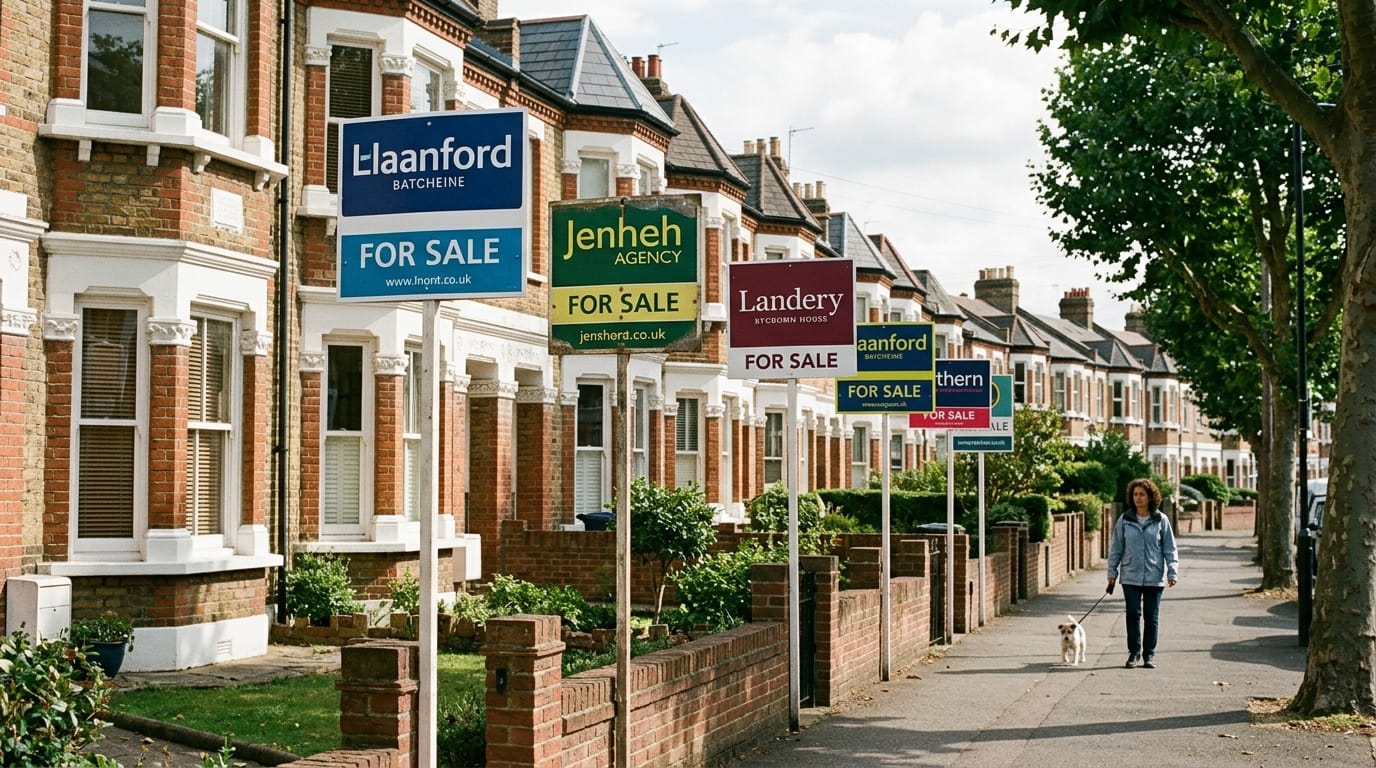
The numbers are back where they belong. After an unexpected dip that briefly rattled confidence, the UK property market bounced back last week, with 24,400 homes going sold subject to contract in week 32, recovering from the surprising fall to 21,700 the week before. That recovery is close enough to the 10-year week 32 average of 25,200 to read as a return to form, not merely a partial repair job.
The evidence increasingly suggests the previous week’s fall was simply a hangover from the hot weather, or higher numbers of people on holiday and the summer slowdown, rather than anything more sinister. One major property portal noted that the World Cup and the hot weather had been keeping the minds of some potential buyers occupied, which helps to explain a week 31 fall that, in hindsight, looks more like a statistical quirk than a genuine cooling of demand.
That said, reading the headline recovery as a clean bill of health would be a mistake.
Beneath that headline, the market remains brutally price sensitive. Half the homes leaving estate agents’ books are still withdrawing unsold, while four out of five homes listed and sold so far in 2026 achieved that sale without needing a price reduction. Read those two facts together and a clear picture emerges: sellers who price accurately from day one are completing; those who don’t are, in very large numbers, walking away empty-handed.
In July alone, 76,300 withdrawals were recorded nationally, a figure that is expected to rise further as more July data flows through the system throughout August. Only 51 percent of homes that left agents’ books in July exchanged and completed – the rest withdrew unsold. The seven-year average exchange-to-listings ratio is 57.6 percent. The gap between that long-run norm and today’s reality is not trivial. It represents tens of thousands of frustrated sellers who launched at the wrong number and paid for it.
The difference between the average asking price of all listings and the average asking price of homes that actually go sold subject to contract is currently 9.9 percent, against a long-term 10-year average of 16 to 17 percent – with average listing asking prices running at around £392,000 compared with £357,000 for homes that successfully find a buyer. A narrowing gap between those two figures suggests the market is becoming more efficient at matching price to buyer appetite – but only for the sellers willing to listen.
Accurately priced properties are finding buyers in an average of 36 days, while properties that required a price reduction averaged 127 days to achieve a sale. That is not a minor inconvenience. For a seller in a chain, or one whose mortgage product is approaching expiry, a four-month delay can be costly in ways that extend well beyond the eventual sale price.
The housing market has experienced a sharper-than-usual summer slowdown, with the number of sales agreed falling by 9 percent compared with the same period last year, and July recording the weakest level of activity so far in 2026 as some buyers took a wait-and-see approach. Mortgage rates had started to ease earlier in the year, falling from a peak of almost 5 percent in April to around 4.65 percent in June, before edging back up to around 4.75 percent in July as global uncertainty pushed borrowing costs higher.
One of the major portals noted that the first half of 2026 was more challenging than many predicted, with the unexpected war in Iran contributing to higher mortgage rates and greater uncertainty for buyers. Mortgage rates remain the biggest factor shaping activity, particularly in higher-value markets where borrowing costs have risen the most.
Supply of available homes in July 2026 was close to a 12-year high for that time of year, which has shifted negotiating power firmly towards buyers. The number of homes available for sale has increased across much of the country, giving buyers more choice and greater confidence to negotiate, with stock levels remaining elevated in many southern markets. East Anglia, with its broad spread of market towns, coastal communities and rural properties, sits squarely within that southern context.
The biggest lesson is that national headlines rarely tell the whole story. For homeowners, this means there are still buyers in the market, but they have more choice and are less forgiving when a home is launched at an unrealistic asking price.
Our own patch reflects several of these national tensions in sharper relief. The SSTC rate across the 31 areas we track sits at 19 percent, which means roughly four in every five listed properties remain unsold at any given point. That is not a sign of a broken market – it is a sign of a selective one. Buyers are present. They are simply choosier, better informed, and far less willing to pay for the privilege of buying an overpriced home in a market offering them genuine alternatives.
House prices in 2026 are being shaped less by timing and more by pricing. Homes priced correctly are still selling at a steady pace, while homes with ambitious pricing are taking longer to sell. That observation from one of the major portals applies as directly to a Georgian townhouse in Bury St Edmunds or a flint cottage outside Holt as it does to a semi-detached in Sheffield.
Fall-throughs remain comparatively contained, with 5.07 percent of homes sold subject to contract falling through in June 2026 – below both the 2025 average of 5.3 percent and the 10-year average of 5.8 percent. That is one genuinely encouraging figure. It suggests that when a sale does happen, it is broadly a serious sale – buyers who proceed are not pulling out at the rate they were in more volatile years.
In 2026, the first 30 days on the market are everything. When a property launches at the right price, it creates urgency. By the time a reduction happens, the strongest window of interest has often already passed. This is not new wisdom, but the data has never made the cost of ignoring it quite so visible.
September is traditionally one of the busiest months for buyers returning to the market, and the expectation is that activity will pick up again this year following the longer summer slowdown. Sellers who price realistically are likely to benefit most. The proportion of homes receiving price reductions of 5 percent or more typically peaks in September as sellers adjust expectations to reflect current demand, which means that autumn’s uplift in activity will, in many cases, simply expose the full cost of summer mispricing.
The week 32 bounce is real and it matters. The market did not collapse in August. The figures do not suggest a property market in crisis. They suggest a more selective market where preparation, presentation and pricing matter. For sellers in Norfolk and Suffolk preparing to launch this autumn, that is the only sentence worth reading twice.