
This was the heaviest data week the property market has seen in months. Within 48 hours, three major releases landed: the ONS House Price Index for May, the June inflation figures, and Rightmove’s July asking price data. Together, they paint a picture of a market at a crossroads, where encouraging inflation news sits alongside the steepest summer price correction in ten years.
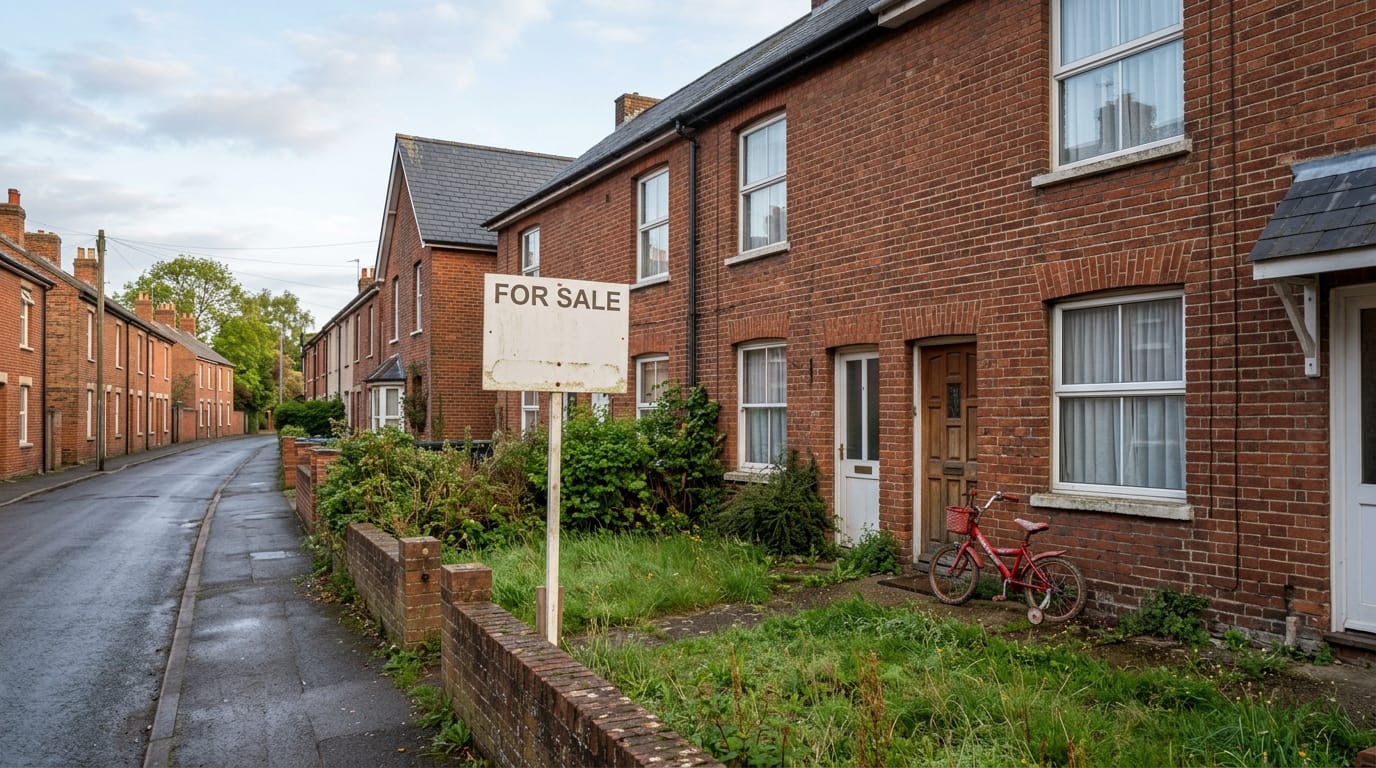
The standout number is Rightmove’s July asking price figure. The average price of a newly listed home fell by 1.0% this month to £372,359, a drop of £3,832. July always sees prices ease as holiday distractions set in, but this fall is five times larger than the ten-year average of just 0.2%. Rightmove attributes the steeper decline to three overlapping factors: record summer temperatures, the World Cup, and the change of Prime Minister.
The effect is measurable. Rightmove’s own analysis shows demand from buyers dipped 8% during May’s heatwave, 6% during June’s hot spell, and a further 4% during the current July heatwave. Activity across the first half of 2026 sits 6% below the same period last year, though notably it is level with the first half of 2024.
Tuesday brought two releases that shift the longer-term outlook. The ONS House Price Index for May showed UK prices up 2.7% year-on-year to £271,000, down from 3.9% in April. That deceleration is largely a base effect from the April 2025 Stamp Duty changes, not a sign of collapsing values. England recorded growth of 2.3% to £292,000, Scotland 4.4% to £196,000, and Northern Ireland continued to lead at 7.4% to £198,000.
The bigger story, however, was inflation. The Consumer Prices Index (CPI) fell to 2.6% in June, down from 2.8% in May and below the 2.7% that economists had forecast. It is the lowest reading since March 2025. Diesel prices dropped 10.7 pence per litre between May and June, food inflation eased to 1.7% (the lowest since August 2024), and core CPI held steady at 2.6%. Services inflation, which the Bank of England watches closely, edged down to 2.6%.
For anyone with a mortgage or thinking of getting one, this is the number that matters most. The Bank of England’s Monetary Policy Committee meets on 30 July with a full Monetary Policy Report, and this inflation print gives the doves on the committee real ammunition. Markets had already begun to price in a possible cut, and yesterday’s data strengthens that case.
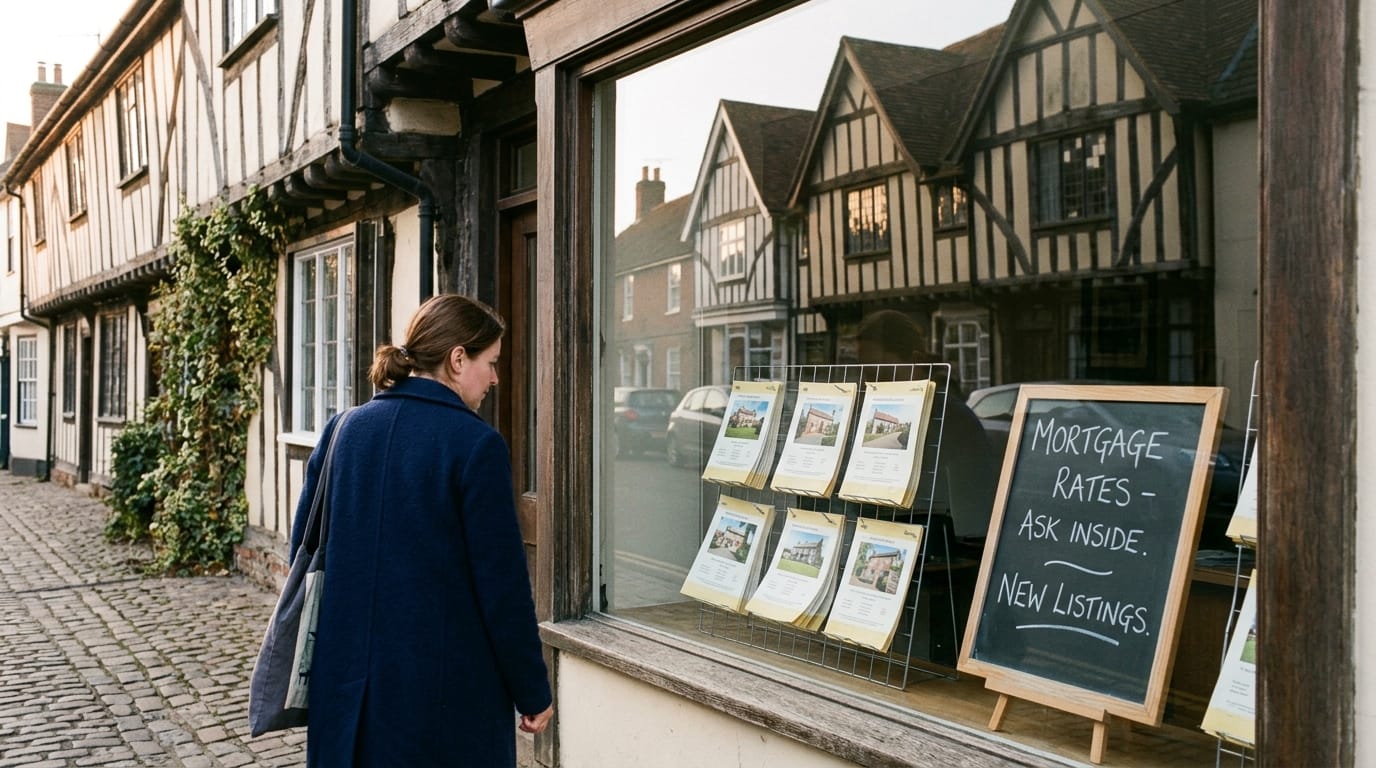
Here is the tension. While inflation is moving in the right direction, mortgage rates moved the wrong way this week. On Tuesday, Moneyfacts recorded the biggest daily jump in average fixed rates since early April. The average two-year fix climbed to 5.57% (up from 5.47% a week ago) and the five-year average reached 5.60% (up from 5.49%). This follows a wave of repricing from Halifax, HSBC, Barclays and Skipton Building Society, all effective from 21 July.
The driver is geopolitical, not domestic. Escalating conflict in the Middle East has pushed swap rates higher once again. Two-year SONIA swaps sit at 4.18%, five-year at 4.23%, both up from below 4% just weeks ago. As one broker put it: “Swap rates rose this year while the base rate went nowhere. Borrowing costs can fall back without the Bank of England doing anything, and that is exactly what had been happening until last week.”
The best available rates remain significantly below the headline averages. First Direct is offering a two-year fix at 4.47% and a five-year at 4.54% for remortgage borrowers at 60% loan-to-value. For first-time buyers at 95% LTV, NatWest offers 5.16% to 5.30%.
Rightmove’s national data carries a sharp lesson for Norfolk sellers. Across all homes sold so far in 2026, nearly three-quarters completed without needing a price reduction. Those that did reduce spent an average of 127 days on the market before finding a buyer, compared with just 36 days for homes that sold at their original asking price.
Zoopla’s research underlines the point further. Nearly half of all UK homes listed over the past three years failed to sell at all. Among those that did sell, the average discount from original asking price was 3.5% in Q1 2026, roughly £18,800 less than the figure first advertised. Once a property passes 12 weeks on the market without a sale, the probability of finding a buyer drops to just 14.5%.
Norfolk’s median house price stands at £266,250 according to Construction Capital’s H1 2026 report, down 1.9% year-on-year across 8,854 transactions. Wymondham leads the county at £300,000 (flat year-on-year), while Dereham is the only major town recording growth at 0.7%.
Across the 324 local markets we monitor, 81% currently favour buyers. The average SSTC rate remains at 19%, with 261 locations classified as buyers’ markets, 53 balanced, and just 10 favouring sellers. The average property spends 105 days on the market before going under offer.
The strongest seller markets continue to cluster around the Norwich fringe. Poringland leads at 63% SSTC, followed by Caistor St Edmund at 55% and Blofield at 50%.
On the buyer side, the picture is more telling. Several well-known Norfolk locations currently show 0% of listed stock under offer: Bacton, Cromer, East Tuddenham, Great Bircham and Happisburgh. Cromer stands out as a major coastal town where buyer conditions are as strong as anywhere in the region.
Speed of sale varies enormously. Weston Longville is currently averaging just 47 days to go under offer. At the other end, Hunstanton is averaging 299 days and Wroxham 283 days. These are markets where pricing strategy is everything.
The message from every data source this week is the same: price correctly from day one. The gap between what well-priced homes achieve and what overpriced homes endure has widened to its largest point in years. If your home sells within four weeks, you are statistically in the strongest negotiating position. After 12 weeks, the odds shift dramatically against you.
Summer distractions are temporary. The World Cup will end, the heatwave will pass, and the autumn market will bring renewed activity. Sellers who use the summer to prepare properly, invest in presentation and marketing, and launch at a realistic price will be best positioned to capitalise on that return.
If you are in a position to act, this is one of the strongest buyer markets in recent memory. Supply near a 12-year high, 81% of Norfolk and Suffolk markets favouring buyers, and sellers pricing more competitively than at any point since the start of 2026. The CPI data makes a BoE rate cut on 30 July a genuine possibility, which could bring mortgage costs down in the months ahead.
Do not wait for the “perfect” rate. Secure a property at a strong price now, and you can always remortgage to a better rate later. The homes being listed this summer are priced to sell, and serious buyers have real negotiating power.
All eyes turn to Wednesday 30 July, when the Bank of England announces its next base rate decision alongside the full Monetary Policy Report. With inflation now at 2.6% and falling faster than forecast, the case for a cut from 3.75% is building. HMRC property transaction data for June is due on 31 July. Rightmove’s daily mortgage tracker will continue to reflect the tug-of-war between falling inflation and rising geopolitical risk. And the summer market itself will tell us whether sellers are adjusting their expectations fast enough to meet buyers where they stand.