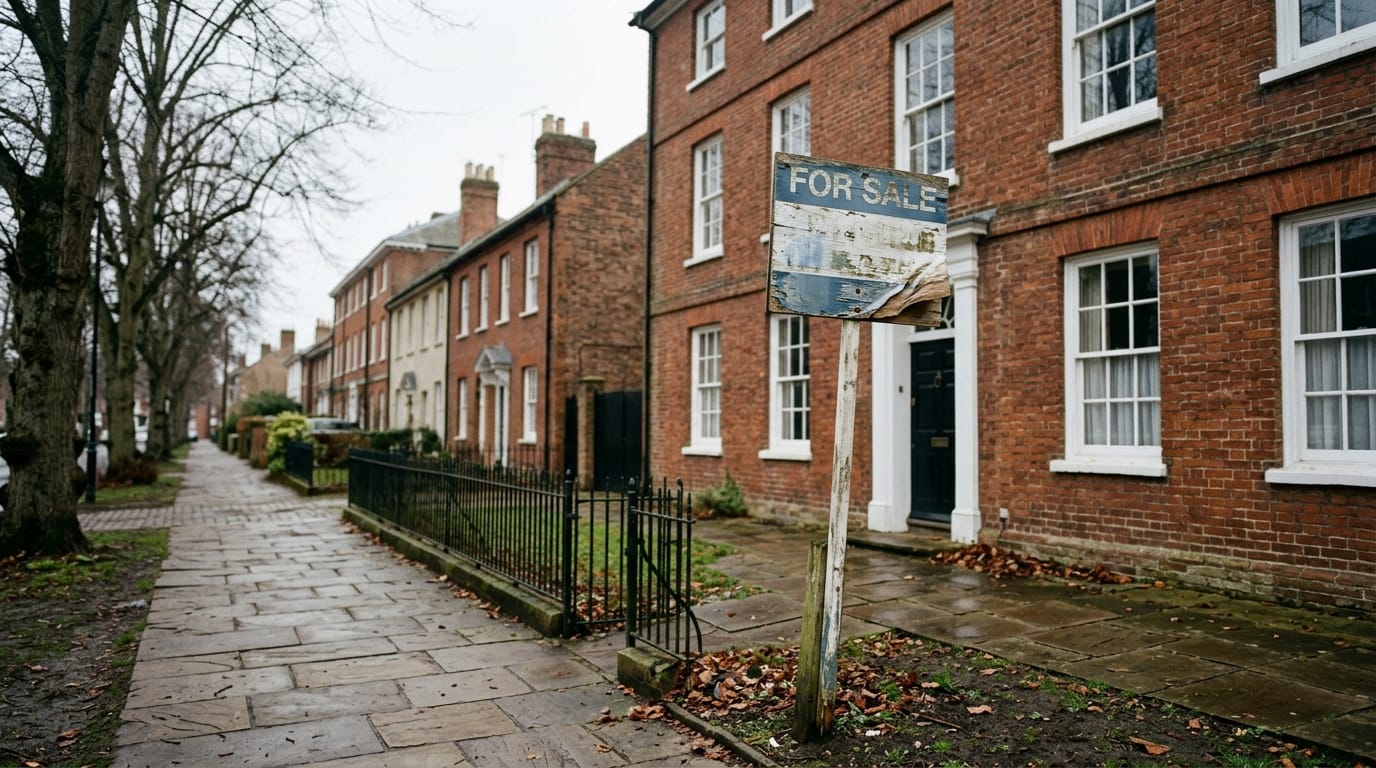

British mortgage lenders are extending loans without upfront deposits at volumes unseen in nearly two decades. According to Bank of England figures, the proportion of UK home loans completed with deposits below 10% has climbed to its highest point since 2008. For an generation of private tenants trapped between escalating rents and steep house valuations, the revival of ultra-high loan-to-value financing looks like an open door. Yet the terms attached to these deals illustrate a delicate trade-off between securing a home today and absorbing distinct financial exposure tomorrow.
Mainstream institutions including Lloyds, Santander, Skipton Building Society, and Yorkshire Building Society have expanded packages that lend upwards of 95%, reaching 100% in specialist categories. Skipton's Track Record product, designed specifically for renters who have unbroken track records of meeting monthly rent commitments, requires no deposit at all. For borrowers such as Conroy, a 32-year-old video editor, and his partner Amber, a 28-year-old solicitor, the structure provided a rare breakthrough. Moving from a rented flat in central Manchester, the pair secured a four-bedroom house in Swinton for £242,000 on a 25-year term without laying down savings upfront.
The mathematical reality of a zero-deposit mortgage, however, sits squarely in the repayment rate. Conroy and Amber took on a five-year fixed rate of 5.33%, translating to monthly outgoings of £1,500. While comparable to what they previously paid to their landlord, that interest rate carries a visible premium over the deals available to buyers arriving with larger cash reserves. Typical first-time purchasers still put down an average deposit around 20%, an outlay that unlocks much tighter interest margins across mainstream lenders.
Other products in the modern high-LTV stable carry similar pricing structures. In North Wales, first-time buyers Bronya, 27, and George, 29, completed the purchase of a £258,000 house in Rhuddlan backed by Lloyds. Supplying just a £5,000 deposit – approximately 2% of the purchase price – the couple secured a 33-year facility at an interest rate of 5.89% fixed for five years. Monthly repayments settled at £1,400, reflecting parity with the rental outgoing on their previous one-bedroom flat, but committing them to three decades of amortisation on a 98% loan.
Market observers frequently contrast today's high-LTV lending with the unconstrained subprime products of the mid-2000s. The regulatory framework established over the past decade mandates strict affordability testing. Today's zero-deposit deals require extensive evidence of sustained rental payments alongside rigorous stress testing of overall household income. Lenders restrict eligibility carefully by borrower history and property profile, avoiding the indiscriminate distribution that preceded the global financial crisis.
Even with thorough underwriting, high leverage leaves virtually no buffer against market corrections. When a borrower finances 98% to 100% of a property's value, any minor softening in prices exposes them to negative equity. That occurs when the outstanding loan balance exceeds the market value of the property itself. Falling into negative equity does not trigger immediate foreclosure if the borrower keeps up monthly payments, but it binds the owner in place. Refinancing at the conclusion of a fixed term becomes exceptionally difficult, and selling the property requires the owner to cover the shortfall out of pocket.
Borrowers stepping into these contracts are openly betting on local market stability. Conroy acknowledges the calculation, noting that he and Amber plan to overpay on their mortgage throughout their five-year fix to build up personal equity quickly. There is always an element of a gamble with property, he observed, though thorough research led him to conclude values in his target district would hold steady. In Rhuddlan, Bronya and George base their decision on a long horizon, viewing their purchase as a permanent base rather than a short-term stepping stone.
The practical viability of 100% mortgages shifts dramatically depending on local house prices. Across regional pockets of the North West or North Wales, entry-level properties trading between £240,000 and £260,000 make a zero-deposit loan manageable on strong professional wages. An aggregate borrowing amount of £250,000 fits standard household income multiples of 4 to 4.5 times earnings for a couple earning around £60,000 combined.
Across Norfolk and Suffolk, the baseline arithmetic presents a more challenging hurdle for aspiring entrants. Across 31 monitored areas within our two counties, the average property price stands at £673,945. While entry-level terraces and secondary-market flats trade well below that overall regional figure, the broader baseline means that zero-deposit products remain heavily restricted in application. Lenders cap total exposure through strict income multiples, meaning a 100% facility can rarely stretch to cover mid-market regional stock without exceptional household earnings.
Where high-LTV deals do find footing across East Anglia, they typically serve younger working households purchasing modern developments or smaller family homes in market towns. For these buyers, sidestepping the long years required to amass a £30,000 or £50,000 cash deposit can mean getting on the ladder half a decade earlier. The challenge, however, comes with regional market pacing. In an environment where prices track flatly rather than surging forward, equity cannot be generated by broad market appreciation alone. Owners who buy with little or no money down must actively amortise their balance or make deliberate overpayments to create a cushion against economic headwinds.
The appetite for these loans tells a broader story about the UK tenure divide. Rents have advanced rapidly across regional centres, consuming money that would otherwise form the bedrock of personal savings. When tenants realise that their current rental payments equal or exceed the monthly cost of servicing a 95% or 100% loan, taking on the leverage often appears preferable to funding a landlord's yield indefinitely.
Lenders recognise this demand. Institutions rolling out these products are balancing their own regulatory capital requirements against the necessity of attracting new borrowers. Offering a 5.33% or 5.89% rate allows them to capture solid margins while helping customers jump what has long been the primary barrier to homeownership.
The long-term success of this modern cohort of zero-deposit owners will depend on individual financial resilience over the coming five years. Fixed terms offer complete payment certainty in the short run, providing households with space to stabilise their outgoings and adjust to the costs of direct ownership. Once those introductory terms conclude, the true measure of these products will rest on whether borrowers have managed to build genuine equity, either through steady mortgage repayments or underlying market stability, before they return to the refinancing market.