

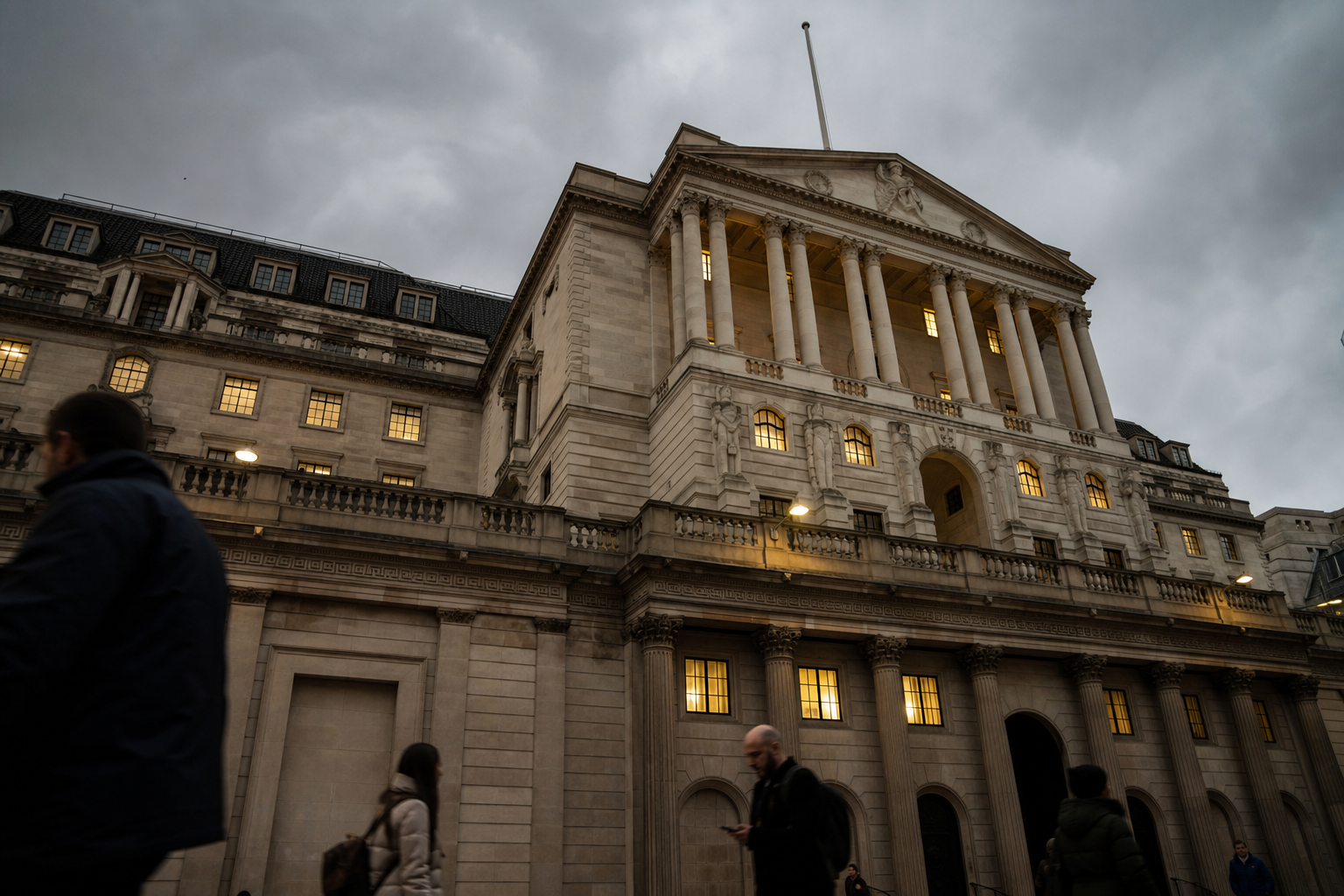
The Bank of England’s chief economist has warned that interest rates may need to increase this year to bring inflation under control, in the most hawkish signal yet from a senior policymaker at the central bank.
Huw Pill, one of nine members of the Monetary Policy Committee, told BBC Walescast that “the speed limit at which you can run the economy is a bit lower than it’s been in the past.” He was among the minority who voted for a rate increase at the June meeting, when the committee held the base rate at 3.75%.
His comments will concern the millions of homeowners approaching mortgage renewals, particularly those who had been banking on rate cuts to ease their monthly payments.
Pill’s frustration with persistent inflation was plain. “I’ve been at the bank for 56 months, inflation’s been at or below target for three months, it’s been above target for 53 months,” he said.
With CPI currently at 2.8%, well clear of the Bank’s 2% target, Pill believes the MPC has been “a little bit over optimistic about what the trend growth in the economy is.” That’s a polite way of saying his colleagues have been too relaxed about the inflationary pressure building beneath the surface.
For homeowners across Norfolk and Suffolk, the implications are direct. The average two-year fixed mortgage rate currently sits at 5.52%, according to Moneyfactscompare.co.uk data cited in this week’s RICS housing survey. On a typical £250,000 loan over 25 years, that translates to monthly repayments of £1,538.
A rate rise would push those numbers higher still.
Pill’s warning creates an unusual tension in the mortgage market. Several lenders moved to cut rates this week, seemingly betting that the base rate will fall rather than rise.
Atom Bank reduced its prime range by 0.15%, with two- and three-year fixes now starting from 4.99% up to 85% loan-to-value. It was the bank’s third round of cuts within a month. Richard Harrison, head of mortgages at Atom, said the reductions sent “a clear message” about the bank’s “strong appetite to lend, particularly at the higher-LTV brackets.”
Pepper Money also trimmed rates across its residential range, with products from 5.3% at 75% LTV and shared ownership rates from 5.65%. Paul Adams, its sales director, described the cuts as helping “more customers access homeownership opportunities.”
These competitive moves suggest lenders expect borrowing costs to ease. If Pill’s colleagues eventually side with him, that expectation could prove misplaced.
The base rate’s direction matters enormously for property values across East Anglia. Markets in Norwich and Ipswich are particularly sensitive to mortgage affordability. A buyer stretching to afford a family home won’t find more confidence if the Bank starts tightening.
For sellers, the calculation shifts too. Pricing realistically becomes even more important when buyers face rising borrowing costs rather than falling ones. Our property market reports covering 324 locations across Norfolk and Suffolk track exactly how affordability is shifting at a local level.
The picture differs in the premium rural markets. Cash buyers and equity-rich downsizers, who represent a larger share of transactions in coastal and countryside locations, aren’t as directly exposed to rate movements. But they aren’t immune: rate expectations shape the broader sentiment that drives all property markets.
Pill’s broader argument deserves attention. He pointed to slowing productivity as a structural constraint on the UK economy, suggesting that the country simply can’t grow as quickly as it once did without generating inflation.
“Better infrastructure to link places together” and “a better educated workforce” are recognised drivers of productivity, he said, but acknowledged these are “very difficult things to deliver” when public finances are constrained.
For East Anglia, where transport infrastructure remains a persistent frustration and wage growth has historically trailed the national average, this isn’t abstract economics. It’s the underlying reason why affordability ratios in market towns like Wymondham and Attleborough have stretched beyond comfortable limits for many buyers.
Pill was in the minority in June. Most of his MPC colleagues aren’t yet convinced that a rate rise is necessary. But chief economists carry intellectual weight disproportionate to their single vote. Their analysis often signals where the committee’s thinking is heading, even when it takes months to arrive there.
The next MPC decision comes on 7 August. Markets currently don’t expect a change. But if inflation ticks higher in the next data release, or if oil prices reverse their recent decline, Pill’s position could quickly attract supporters.
For Norfolk and Suffolk homeowners approaching a mortgage renewal, the message from Pill is worth hearing. Lenders are cutting rates now, and competitive deals are available. The window may not stay open as long as many expect.