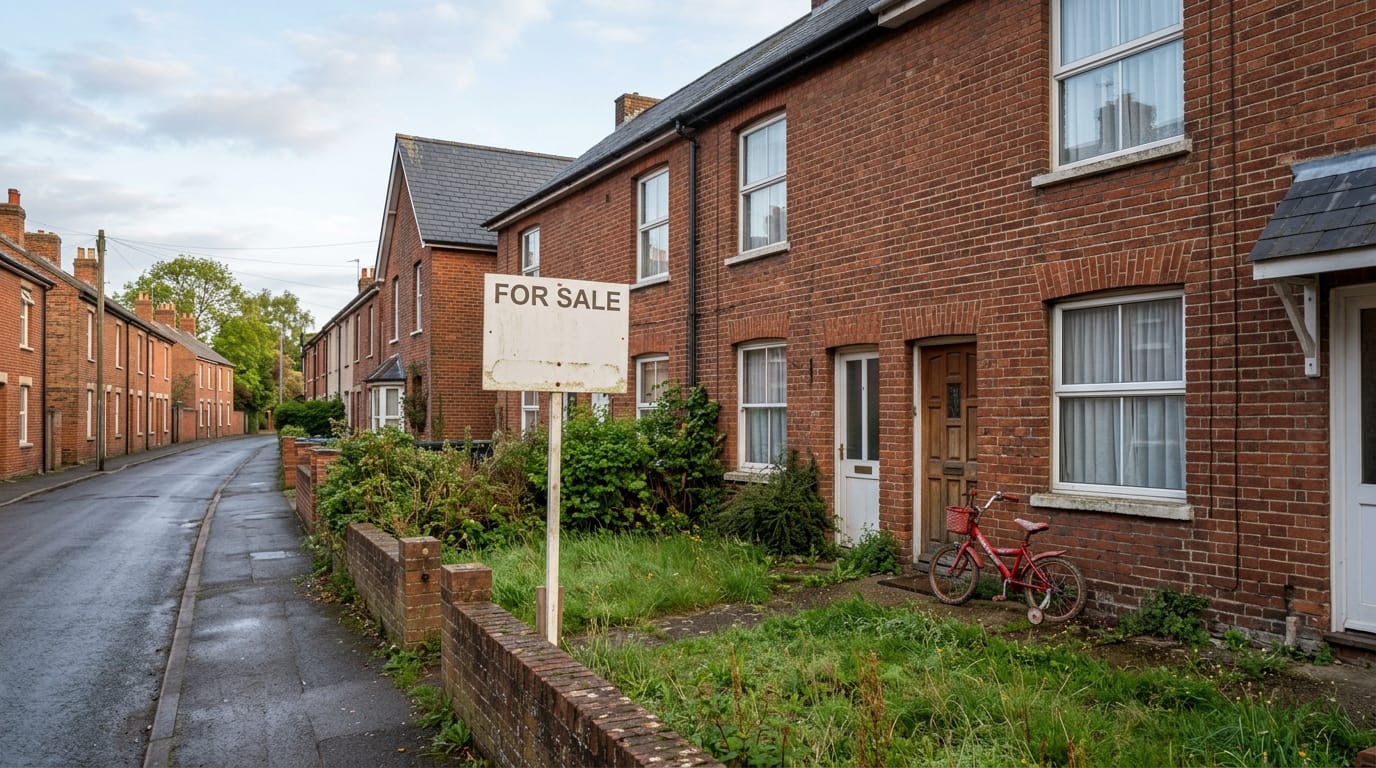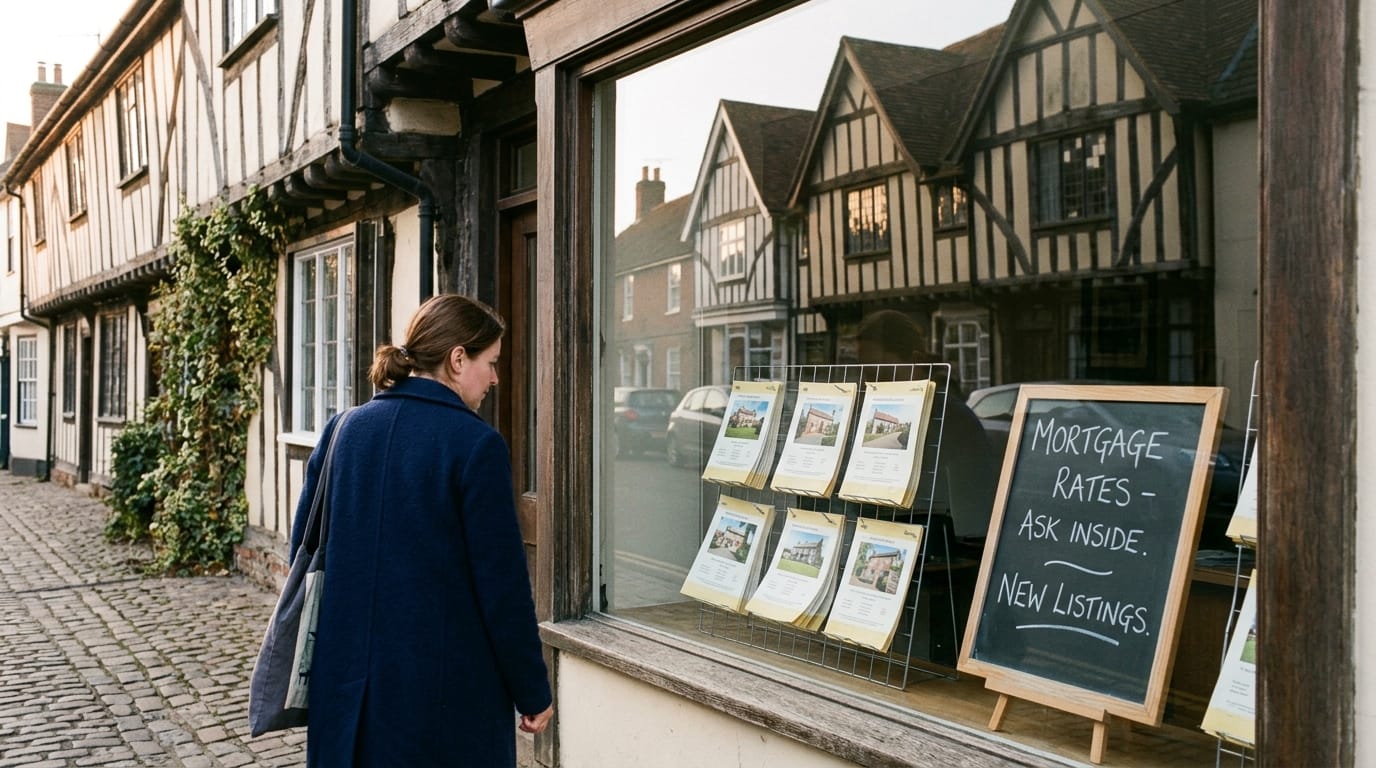

The summer slowdown has arrived sharper than usual this year, with the number of homes sold across England and Wales dropping 9% in July compared to the same period last year, according to new data from Zoopla.
Only the North East bucked the trend, registering a modest increase in sales. Every other region saw activity fall, a pattern driven by rising mortgage costs, political transition and, Zoopla noted, the distraction of the World Cup.
Richard Donnell, executive director at Zoopla, pointed to the cost of borrowing as the primary drag. “Average mortgage rates started the year at 4% and are currently around 4.75%, adding more than 1,500 pounds a year to the cost of buying an average-priced home,” he said. “Together with the political uncertainty of a new Prime Minister and the distraction of the World Cup, demand to buy homes has slowed.”
The average home in England and Wales is worth 1.3% more than it was twelve months ago, an increase of roughly 3,400 pounds, bringing the typical property value to 272,800 pounds. That’s growth, technically, but not the kind that excites anyone.
In London, prices have actually fallen, with the typical home worth 3,270 pounds less than a year ago. The South East has dropped by 1,480 pounds. By contrast, Northern Ireland has seen the strongest gains, up 9,610 pounds year-on-year, with the North West close behind at 7,100 pounds.
The regional divide tells a familiar story. Markets where affordability remains relatively manageable are holding up. Those where prices are already stretched, particularly in southern England, are softening first.
Zoopla’s data reveals a clear seasonal pattern: the share of sellers cutting their asking price by 5% or more consistently peaks in September, as activity picks up after the summer holidays. Many sellers, hoping to complete before Christmas, reduce their price in early autumn to attract returning buyers.
Donnell’s advice to sellers is straightforward. Don’t wait.
“For anyone who doesn’t need to move, it’s entirely reasonable to wait and see how things settle,” he said. “But for those with a genuine need to sell, our data shows September is when the market typically turns, and pricing to meet buyers now is what tends to get deals done, rather than waiting to see what autumn brings.”
Almost a third of homes currently on the market were listed between April and June and remain unsold, with no price adjustment. Sellers whose properties are still sitting at their spring asking price by October risk missing the autumn window entirely.
Separate data from Propertymark, the estate agency trade body, reinforces the picture of a cooling market. The average number of prospective buyers per branch dropped from 78 in April to 64 in May 2026, while stock levels edged up from 43 to 44 properties per branch.
Viewings per available property fell from 2.4 to 2.2 over the same period. Sales agreed held steady at eight per branch, but the pricing power has clearly shifted. An average of 84% of member agents reported that properties sold below the asking price in May. Just 11% achieved the asking price or above.
Nathan Emerson, Propertymark’s chief executive, acknowledged the pressure: “While we have seen a slight dip in prospective buyer registrations, stock levels have edged upwards, giving consumers more choice and helping to create a more balanced sales market.”
Around three quarters of local markets are registering fewer sales than a year ago over the past three months, according to Zoopla. But a handful of areas are defying the trend.
Warrington, Hull and Dundee stand out as genuine hotspots, with sustained increases in sales agreed and price growth above the national average. Prices in Warrington are up 3% year-on-year.
At the other end, Bath, Oxford and Harrow have all seen sales fall while moving from positive price growth a year ago to flat or negative territory. Harrow was already flagged as a market under pressure in April, when homes there were taking 65% longer to sell than twelve months earlier. That weakness has now fed through into prices, with the average property value there falling 0.8% over the past year.
The East of England sits somewhere between the extremes. It hasn’t seen the sharp falls of London or the South East, nor the resilience of the North West or Northern Ireland. For sellers in Norwich, Great Yarmouth or King’s Lynn, the message from the data is clear: pricing realistically from the outset matters more than ever.
Stock is building. Buyers have more choice than at any point in recent years. And with mortgage rates at 4.75% and climbing, the calculation for every purchase has changed. Sellers who price ambitiously in this market aren’t just risking a slow sale. They’re risking no sale at all before Christmas.
The Ivybridge Collection’s property market reports cover 324 locations across Norfolk and Suffolk. For sellers weighing up whether to adjust their asking price, local data on how quickly comparable homes are moving is a more reliable guide than headline national figures.
Donnell’s final word was practical: “Sellers should speak to a local agent who knows what’s actually happening on their own patch, rather than relying on the national picture.”