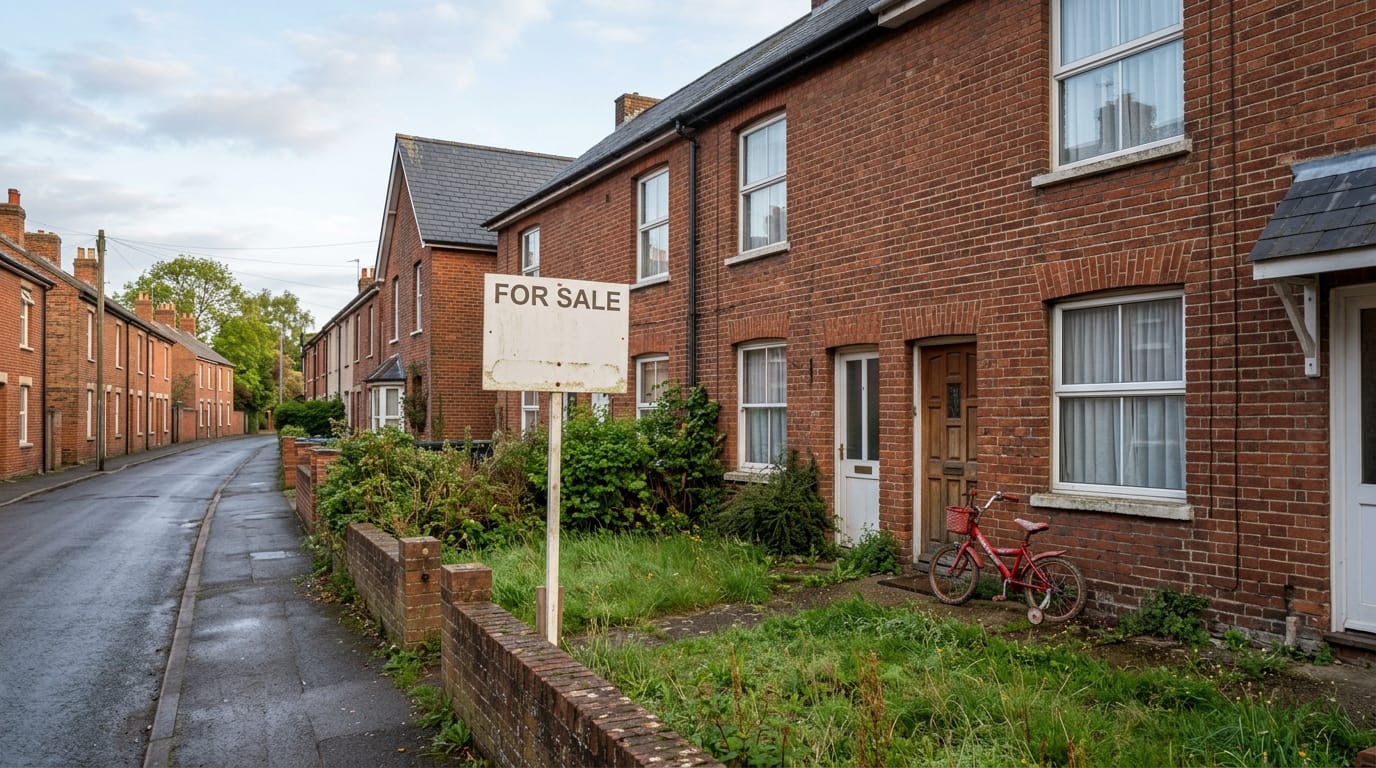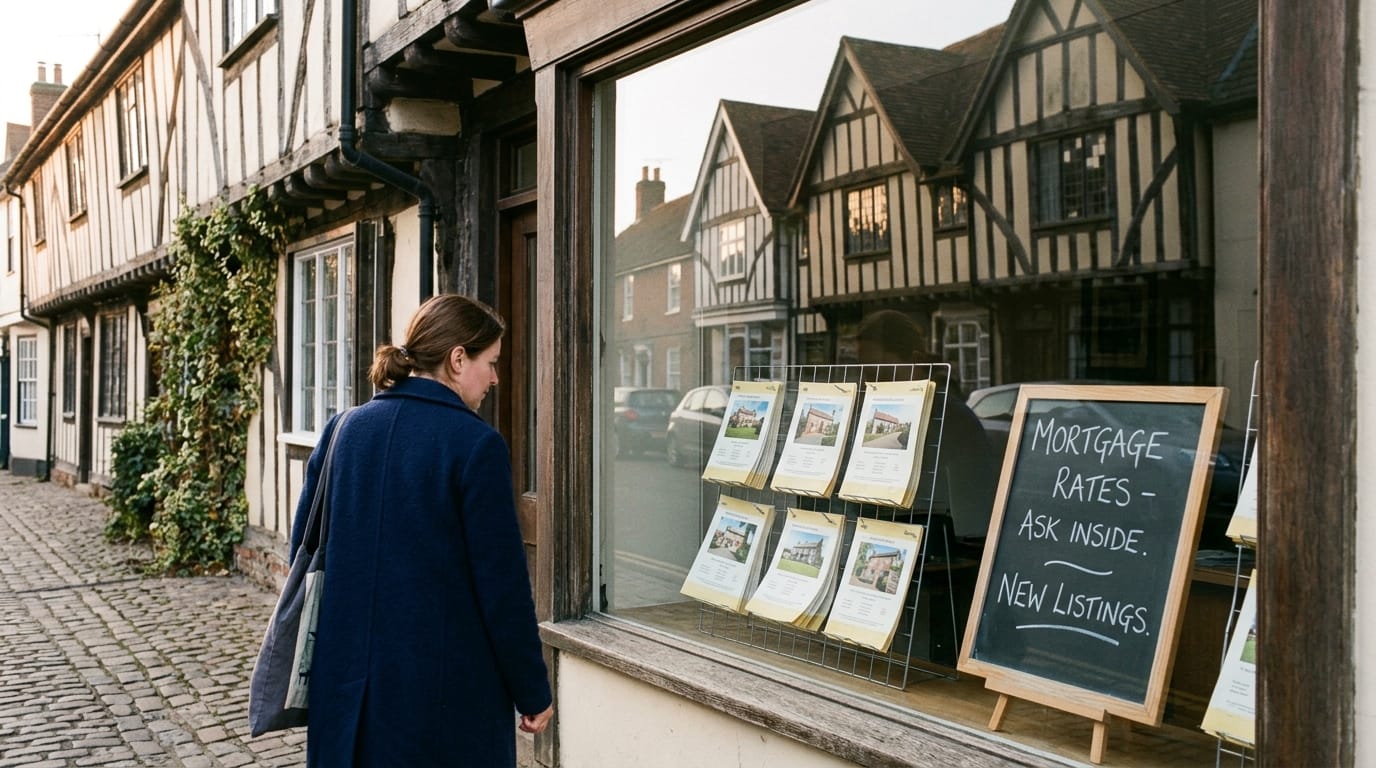
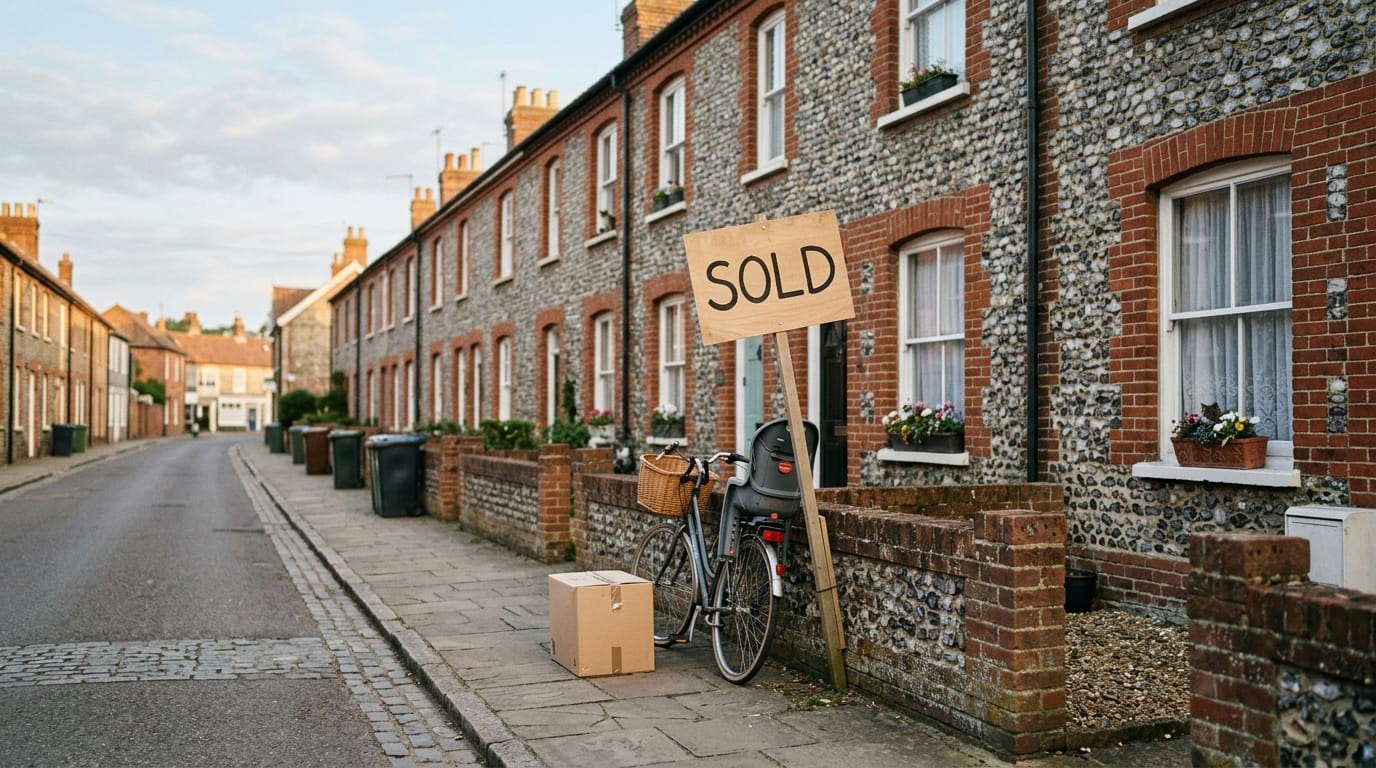
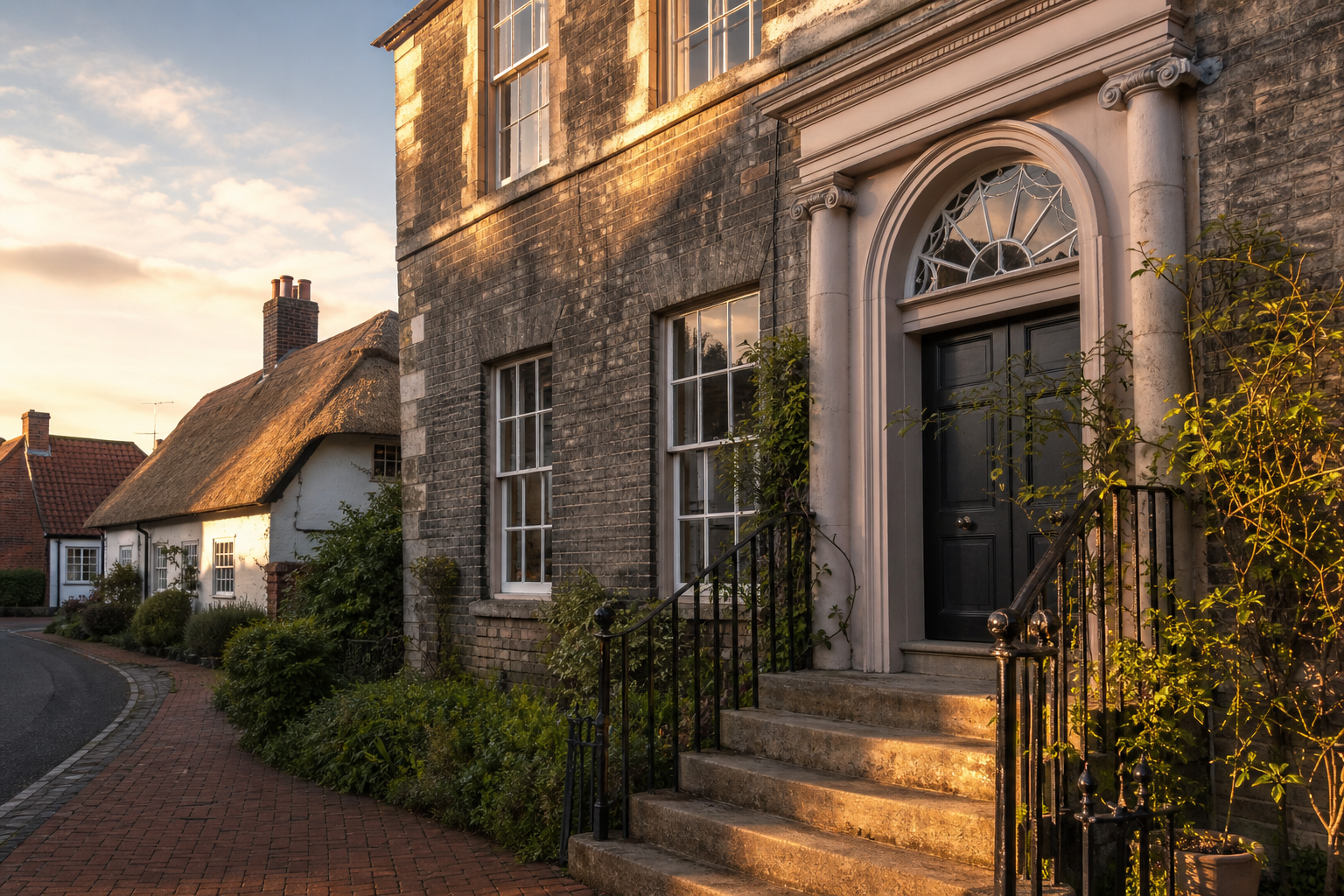
More than 1.5 million homes in Britain fall outside mainstream mortgage lending criteria, according to research published this week by the specialist lender Together. That is roughly 6% of the UK’s 28 million residential properties, houses that a high street bank may decline to finance regardless of the buyer’s income or deposit.
For most of the country that is a statistical curiosity. In Norfolk and Suffolk it describes a meaningful slice of the housing stock.
Together’s list of problem characteristics reads like an inventory of East Anglian vernacular architecture. Construction type. Condition. Location. The lender specifically cites thatched cottages, high-rise apartments, homes sitting close to commercial premises, and properties lacking a functioning kitchen or bathroom.
Thatch is the one that should make regional owners sit up. Norfolk and Suffolk hold one of the highest concentrations of thatched roofs in England, along with clay lump, flint, timber frame, single-skin brick and every other pre-Victorian building method that a mainstream lender’s automated criteria were never written to accommodate. Add a working forge or a village shop next door, and a perfectly sound house can find itself in the same category as a flat with cladding problems.
This is the part sellers most often misunderstand. A decline is usually a policy decision rather than a structural one. Mainstream lenders operate at volume, and volume requires standardisation: standard construction, standard reinstatement cost, standard resale liquidity. A Grade II listed longhouse with a reed roof and a 1780s chimney stack does not fit a template, so the template rejects it.
Ryan Etchells, chief commercial officer at Together, framed it as a hidden constraint on supply. “One of the less visible challenges facing the UK property market is the sheer number of properties that mainstream lenders are reluctant to finance,” he said. “That means a significant number of homes are effectively out of reach for ordinary buyers. While they don’t feature in official housing shortage figures, they represent part of the wider supply problem and highlight the scale of investment needed to bring more homes back into the mortgageable market.”
The demand side of the research is the encouraging half. Among people who had bought or seriously considered buying a difficult-to-mortgage property, 44% said the main attraction was affordability and value compared with a conventional home. Some 31% were after a renovation or restoration project. Another 28% saw an opportunity to add value and sell at a profit later.
Nearly a third of those who knew the purchase would be complicated went ahead anyway because they judged it worthwhile, and 21% said the rewards outweighed the risks. For buy-to-let investors, rental income potential was the leading draw, cited by 35%.
So the buyers exist. The friction is financing. Together found 21% of respondents had already had an application rejected, and 32% said they were left with a much smaller pool of lenders willing to look at them.
The commercial consequence of an unmortgageable label is not usually a lower price. It’s a smaller buyer pool and a longer, riskier transaction.
A cottage that needs specialist or bridging finance loses every buyer who assumed a two-week mortgage offer from their existing bank. It loses more when a survey triggers a retention or a full decline three weeks into the process, and the sale collapses back to square one. In a market where the average move already takes months, two failed chains can cost a season.
Handled properly, though, the same property sells perfectly well. The work is front-loaded: understand before launch how the house will be financed, and by whom.
Establish the construction type and get it documented. A structural engineer’s letter or a specialist survey on a non-standard wall or roof turns an unknown into a known, and lenders price knowns far more happily than unknowns.
Assemble the paperwork early. Listed building consents, thatch inspection and fire-retardant treatment records, damp and timber reports, electrical certificates, any evidence of remedial work. If the house has a functioning kitchen and bathroom, make sure that is visible in the marketing, because their absence is one of Together’s explicit decline triggers.
Then qualify buyers on finance route, not just on budget. A cash purchaser, a specialist lender client and a mainstream mortgage applicant carry very different completion probabilities on the same house at the same price. Knowing which you have before you agree terms is the difference between a straightforward sale and an expensive education.
Etchells noted that many borrowers simply don’t know alternative finance exists. That knowledge gap is where regional value gets destroyed, and it’s why local market evidence matters more than national averages when pricing anything unusual. A period property in Wells-next-the-Sea or Aldeburgh competes in a market defined by a handful of comparable houses, not by an index of 28 million. Our 324 local property market reports are built on that principle.
There is also an opportunity buried in the numbers. If 6% of national housing stock is priced at a discount to conventional equivalents because of a financing obstacle rather than a physical one, then buyers who can navigate specialist lending are being handed an arbitrage. Restoration projects in this region have historically rewarded exactly that patience.
The policy implication is the one worth watching. Every property returned to mortgageable status is an addition to effective housing supply that requires no new land and no new planning consent. Empty homes above shops, cottages with failed roofs, houses stripped of kitchens: all of them count. Nobody currently counts them.
Expect specialist lenders to keep pressing that argument, and expect more of them to compete for this business. For owners of the region’s older and more idiosyncratic houses, the direction of travel is favourable. The house that is hard to finance today may simply be a house with fewer competing sellers, and that has rarely been a bad position to occupy in Norfolk or Suffolk.