Norfolk offers some of the finest equestrian country in England. Rolling farmland, established bridleway networks and quiet lanes connect villages where horses are part of daily life. From the chalk grasslands of west Norfolk to the river valleys of the Broads fringe, the county provides year-round riding across varied terrain.
Equestrian properties in Norfolk range from modest paddock homes on the edge of market towns to substantial holdings with professional-grade facilities, arena complexes and extensive grazing. What they share is access to open countryside and a community of riders, breeders, competitors and enthusiasts who have shaped the county’s equestrian culture over generations.
For sellers considering the market, our Property Pricing Brief provides a confidential, data-backed valuation that accounts for the specific characteristics of equestrian holdings.
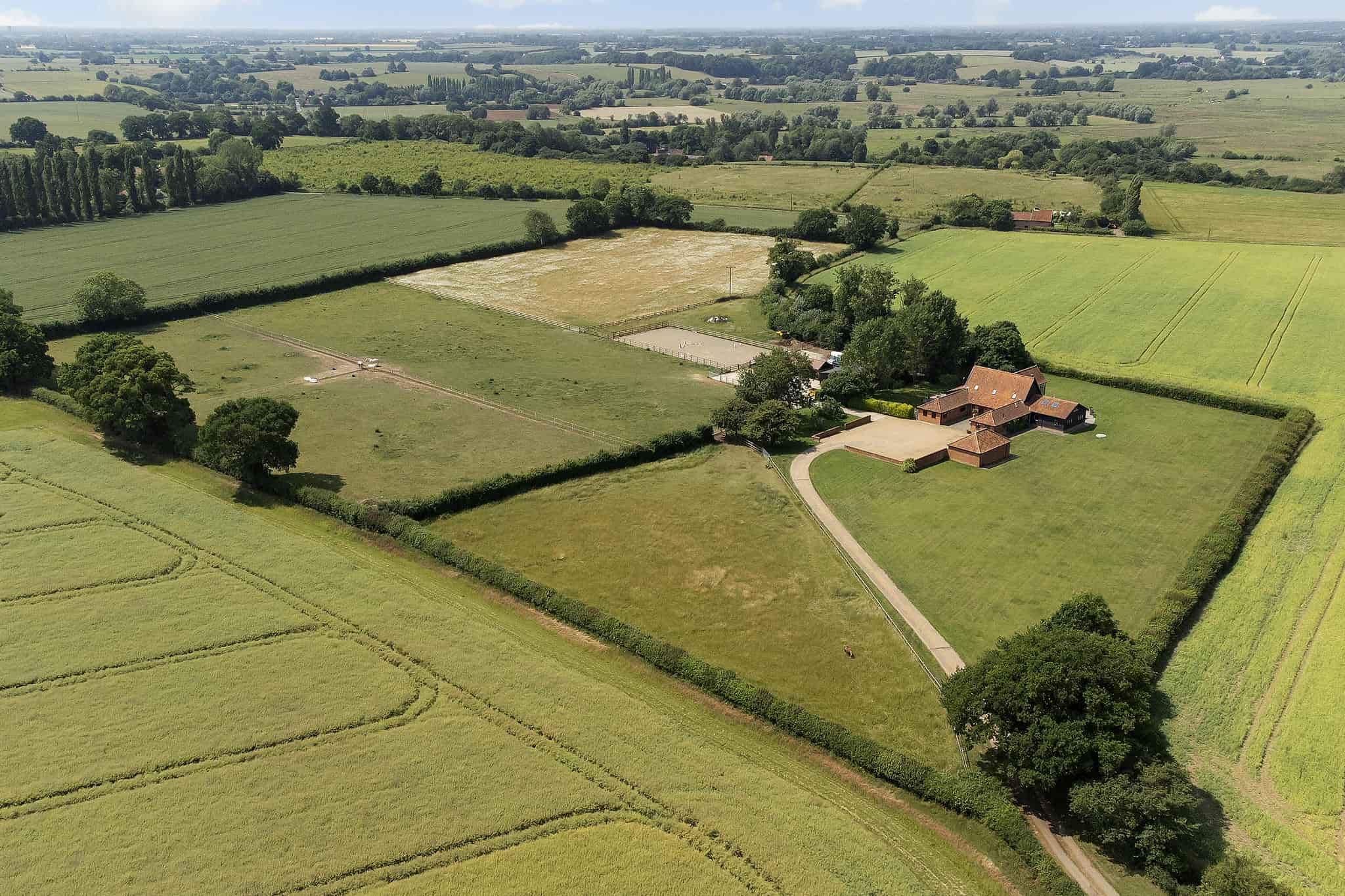
A true equestrian property is shaped by thoughtful planning and effective land management. The distinction between a house with a paddock and a genuine equestrian home lies in the infrastructure: stable configuration, ventilation and access must support daily care. Paddocks require correct rotation, secure boundaries and appropriate drainage. Arena surfaces need proper foundations to remain reliable across seasons.
Beyond the facilities, practical considerations matter: water supply to outlying fields, shelter positioning, feed and hay storage, tack security, and vehicle access for horse transport. The orientation of the yard relative to the house, the separation of equestrian traffic from residential areas, and the quality of fencing all influence both functionality and value.
For detailed guidance on presenting these features to buyers, our guide on preparing an equestrian property for sale covers every stage from first impressions to completion.
Equestrian properties for sale in Norfolk are concentrated in several distinct areas, each with its own character and price profile. Understanding these micro-markets is essential for both buyers and sellers.
South Norfolk and the Waveney Valley offer some of the county’s most established equestrian country. Villages such as Hempnall, Long Stratton and Wymondham sit within easy reach of Norwich while providing the acreage and quiet lanes that equestrian buyers prioritise. The gently undulating landscape and clay-over-chalk soils make for excellent grazing.
North Norfolk’s rural interior, particularly around Holt, Melton Constable and Reepham, combines attractive countryside with proximity to the coast. The bridleway network here connects with open farmland and woodland rides, making it popular with competitive and recreational riders alike.
The Broadland fringe villages of Blofield Heath, Brundall and Great Witchingham offer larger plots within commuting distance of Norwich, while Aylsham and Marsham provide rural seclusion with good road access.
Mid Norfolk, around East Dereham, Swanton Morley and North Elmham, tends to offer the best value for acreage. Properties here often include more land than equivalent-priced holdings closer to the coast or Norwich.
Browse all 324 Norfolk and Suffolk property market reports for detailed pricing data in any location.
Having represented equestrian homes across the county, we see consistent priorities from buyers searching for equestrian properties in Norfolk. Understanding these helps sellers present their property effectively and helps buyers refine their search.
Land quality and quantity. Most serious equestrian buyers need a minimum of three to five acres for a small private yard, with ten acres or more for those keeping multiple horses. Soil type, drainage and aspect all affect grazing quality and paddock management.
Stable and yard infrastructure. Well-maintained loose boxes, a hard-standing yard, wash-down area and secure tack room are baseline expectations. Purpose-built American barn stabling, covered walkers and isolation boxes add measurable value for professional yards.
Arena specification. An all-weather arena is consistently the single most valuable equestrian facility. Surface type (silica sand, fibre-sand, rubber-mix), base construction and drainage determine whether it adds significant value or requires costly replacement.
Access and transport. Adequate turning space for horseboxes and trailers, a hardened driveway, and proximity to competition venues or training centres influence buyer decisions significantly.
Bridleway and hacking access. Direct access to bridleways or quiet lanes for riding is one of Norfolk’s strongest selling points. Buyers actively seek properties where they can ride out from the gate.
For a deeper look at buyer expectations, our research piece on what equestrian property buyers really want draws on conversations with active purchasers across the county.
Pricing equestrian properties requires a different approach to standard residential valuation. Land, facilities and infrastructure can account for 30-50% of the total value, yet comparable evidence is often limited because equestrian holdings trade infrequently.
In Norfolk, equestrian properties with three to five acres, a small yard and basic facilities typically start from around £500,000 in mid Norfolk, rising to £750,000 or more in sought-after villages. Properties with ten or more acres, a full complement of stabling, an all-weather arena and quality accommodation regularly exceed £1 million, particularly in north Norfolk and the southern approaches to Norwich.
Key pricing factors specific to equestrian properties include:
Our Property Pricing Brief analyses these factors alongside local comparable evidence and current market conditions to establish an accurate guide price.
Equestrian homes require specialist marketing that speaks directly to buyers who understand the lifestyle. Generic property photography and descriptions miss the details that matter: arena surface close-ups, stable layout plans, land surveys, and footage that conveys the riding environment.
We create cinematic film and photography that expresses atmosphere, movement and landscape, not just facilities. Campaigns are directed to buyers who understand the responsibilities of equestrian ownership, protecting the integrity of the sale and reducing unnecessary viewings.
Prospective buyers receive precise information on acreage, stable configuration, arena surface specification and layout. This supports confident and informed decision-making from the first enquiry.
Our full approach is detailed in our equestrian property marketing strategy guide.
The equestrian property market operates differently to the mainstream residential market. Buyer pools are smaller but more committed. Viewings are longer and more technical. Negotiations often involve specific conditions around fixtures, fittings and even horse welfare during the transition.
We represent only a limited number of equestrian homes at any one time, led personally by directors Robert and Nicola Holmes-Chapman. This ensures each property receives the attention, expertise and continuity that a complex equestrian sale demands.
If your equestrian property is located outside Norfolk, our national equestrian property sales service provides the same specialist approach across the UK.
We maintain a private register of qualified equestrian buyers actively searching for properties across Norfolk and Suffolk. Many equestrian homes sell through our network before reaching the open market, giving registered buyers early access to new instructions.
Register your equestrian property requirements to receive priority notifications when suitable holdings become available.
How much land do I need for an equestrian property?
As a general guide, allow one to one and a half acres per horse for year-round turnout, plus additional space for an arena, yard and any exercise areas. Most functional equestrian properties in Norfolk sit on three acres or more.
Do equestrian properties hold their value in Norfolk?
Well-maintained equestrian properties with quality facilities tend to hold value strongly, particularly in areas with good bridleway access. The limited supply of genuine equestrian homes in Norfolk means demand consistently outpaces availability at the higher end of the market.
What planning permissions do I need for equestrian use?
Private, non-commercial equestrian use (keeping your own horses) typically falls within permitted development. Commercial livery, riding schools or competition yards usually require specific planning consent. We recommend checking with your local planning authority before marketing.
How long does it take to sell an equestrian property?
Equestrian properties often take longer to sell than standard residential homes due to the smaller buyer pool. A well-priced, well-presented equestrian home in a good location typically finds a buyer within three to six months. Specialist marketing and access to registered equestrian buyers can significantly shorten this timeline.
What adds the most value to an equestrian property?
An all-weather arena in good condition consistently adds the most value relative to its cost. Quality stabling, secure post-and-rail fencing, a hard-standing yard and direct bridleway access also contribute meaningfully to price.
Is Norfolk good for equestrian living?
Norfolk is one of the best counties in England for equestrian living. The extensive bridleway network, quiet country lanes, varied terrain, and strong equestrian community make it a natural choice. The county hosts numerous competitions, has excellent equine veterinary services, and benefits from relatively affordable land compared to the Home Counties.
You may also find distinctive homes for sale in Norfolk and Suffolk helpful as you explore your options.
For the latest updates on the Norfolk property market, including mortgage rate changes, government policy, and local trends, visit our Norfolk Property Market News section.