Broadland is not a name that appears in every property search. Yet for those who know Norfolk, it is often where the most compelling conversation begins. Stretching north and east of Norwich across the river valleys of the Bure, Yare and Wensum, the Broadland district encompasses over 60 parishes, three market towns and some of the county’s most coveted rural addresses.
For sellers of distinctive homes in this area, understanding what makes Broadland attractive to the buyers who matter most is not a small advantage. It is the difference between a home that waits and a home that moves.
Broadland occupies a singular position in the Norfolk property conversation. It is not coastal, yet it carries the waterway heritage of the Broads National Park. It is not city, yet many of its parishes sit within easy reach of Norwich. It offers the independence of village life without the isolation that can concern buyers whose partners still commute or whose children need reliable schooling.
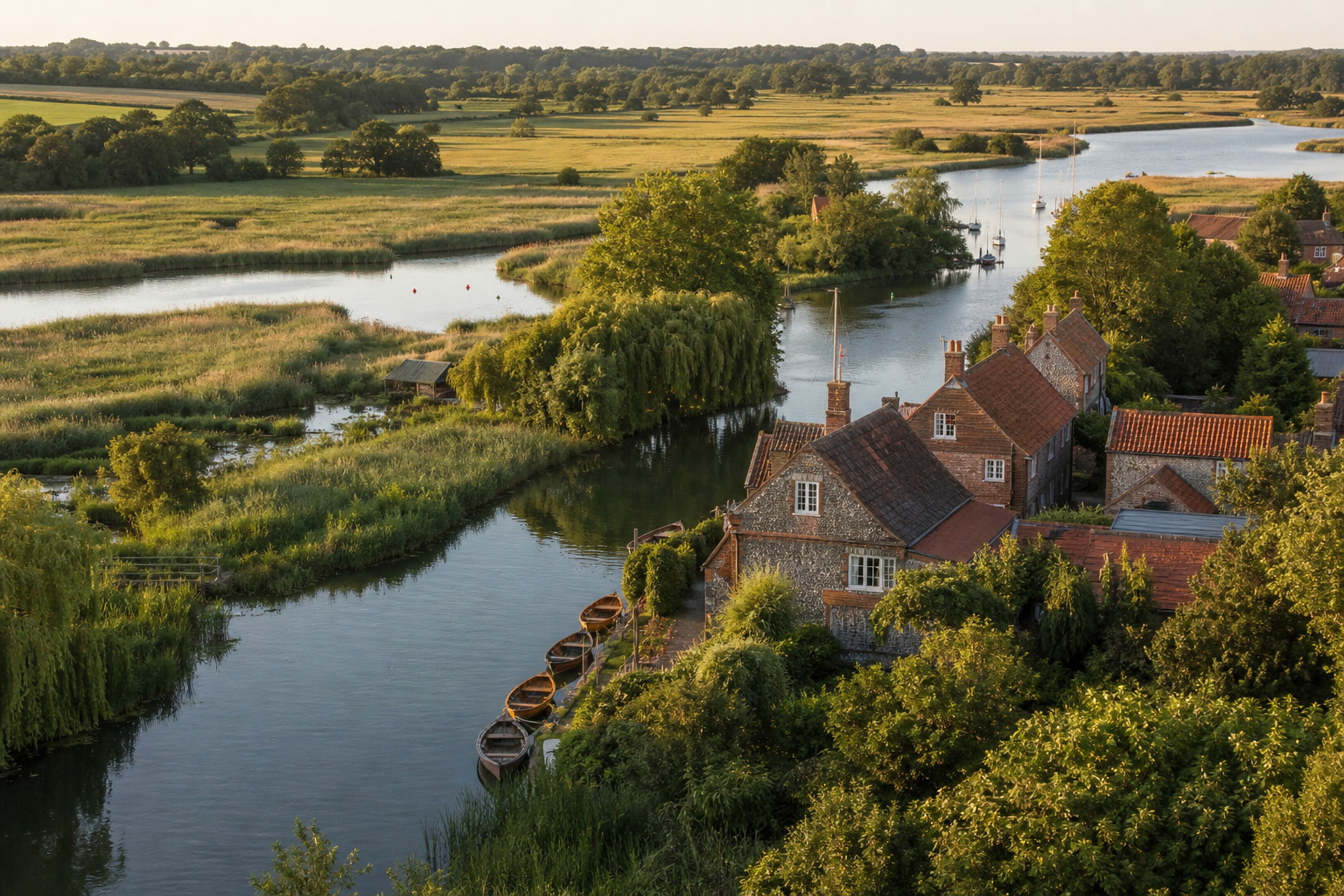
The district is named after the Norfolk Broads: a network of navigable rivers, lakes and wetlands that constitute England’s largest protected wetland and carry the legal equivalent of National Park status. Property within or adjacent to the Broads carries a lifestyle premium that is difficult to replicate elsewhere in the county. Riverside homes with private moorings, views across open water, kingfishers at the garden edge: these are not marketing embellishments. They are the daily reality for homeowners in villages like Horning, Coltishall and South Walsham.
According to ONS data published in late 2025, the average house price in Broadland reached £312,000 in July 2025, up from £298,000 twelve months earlier: a rise of 4.7%. Detached properties, the type most frequently sought by the buyers The Ivybridge Collection works with, averaged £422,000, having grown by 5.6% over the same period.
Current asking price data from live market listings shows average asking prices across the district running at approximately £371,000, with detached homes at an average of just over £476,000. At the top end, a meaningful number of properties exceed £750,000, with 42 homes currently listed above £1 million.
Broadland’s growth rate of 4.7% year-on-year outperformed the East of England regional average of approximately 4% over the same period and reflects genuine demand rather than a corrective bounce. The district consistently draws buyers priced out of North Norfolk’s coastal premium but unwilling to compromise on character, setting or quality of life.
Broadland’s three official market towns each attract a distinct buyer profile and deserve individual consideration by anyone thinking of selling in this area.
Aylsham is one of only five UK Cittaslow towns, a designation that recognises towns committed to the slow-living philosophy: local food, heritage architecture, community. The market place, owned by the National Trust, hosts two weekly markets and a monthly farmers’ market. Properties here include genuine Georgian and Jacobean homes in the town centre, alongside the kind of rural farmhouses that rarely reach the open market. Buyers tend to be self-employed, creative professionals or those relocating from London who want authenticity without pretension.
Reepham sits between the Bure and Wensum valleys and is consistently cited by agents as one of the most desirable small market towns in Norfolk. Its 18th-century market square, independent dining, regular festivals and position on the Marriott’s Way cycling route give it a quality of life that surprises buyers who arrive without prior knowledge. A four-bedroom home in Reepham’s centre recently guided at £549,500. A more modest three-bedroom home is currently available in the high £200,000s. The spread reflects a market that accommodates both entry-level buyers and those seeking something genuinely special.
Acle is known as the gateway to the Broads, positioned midway between Norwich and Great Yarmouth on the River Bure. It is a growing town with strong local amenities, direct rail access, and immediate connection to the broader Broads network. New build development continues at the top end: a guide price of £950,000 has recently been achieved for a high-specification five-bedroom detached home on a new Acle development.
Beyond the market towns, it is Broadland’s villages that drive the strongest appetite among buyers searching for something exceptional.
Wroxham and Hoveton are the twin villages most commonly called the capital of the Broads. The River Bure divides them. Boating activity, riverside restaurants, a village rail station on the Bittern Line and direct access to the national park combine to make this one of the most recognisable Broadland addresses. A riverside property on Staitheway Road recently guided at £750,000. Properties on the well-regarded Beech Road are achieving similar figures.
Coltishall sits on the River Bure just seven miles from Norwich. The village retains a genuine character: historic pubs, period architecture, river walks, community events. It lies within easy reach of Wroxham and the Bure Valley Railway. Sales data shows 452 properties transacted here over the last decade, with the highest recorded sale reaching £1,850,000 for a barn conversion in the surrounding rural area. Semi-detached homes are currently moving in the £360,000 range.
Horning is a waterside village of genuine appeal. River frontage, views across the Bure, walks to Ranworth Broad and the Broads National Park visitor centre nearby. A three-bedroom detached with river views recently guided at £750,000 to £800,000. The village draws buyers who want direct water access without the crowds of the more commercial Broads locations.
Brundall, on the River Yare to the east of Norwich, is a riverside community with a strong boating heritage and direct rail links into the city. Its position on the Wherry Line, with stations at Brundall and Brundall Gardens, makes it popular with commuting households who want access to the water without sacrificing convenience.
The buyers who come for Broadland property are not browsing speculatively. They have usually done considerable research. They know the difference between a riverside address with direct mooring and one that simply has a water view. They understand the Broads designation, what it means for planning and what it implies about the environment they are buying into.
For this reason, selling a distinctive home in Broadland requires more than a standard listing. The setting must be understood and articulated. The lifestyle must be presented accurately and compellingly. A riverside home photographed poorly or described in generic terms is not just underrepresented: it is likely to achieve less than it should and attract fewer of the right buyers.
The buyers most likely to pay well for a Broadland home are often London relocators, semi-retired couples seeking a quieter way of life, or Norwich professionals upgrading to something more distinctive. Each requires a different angle of communication, and each responds to a different version of the Broadland story.
Broadland’s accessibility is a key part of its appeal and one that sellers should highlight confidently.
Two rail lines serve the district. The Bittern Line connects Norwich to Cromer with stations at Salhouse, Hoveton and Wroxham and North Walsham. The Wherry Line runs from Norwich to Great Yarmouth and Lowestoft, stopping at Brundall, Acle and Reedham. Both provide practical daily commutes into Norwich, where mainline services reach London Liverpool Street in under two hours.
Norwich International Airport offers direct flights to Amsterdam Schiphol, with onward connections globally: a detail that matters to buyers working internationally or with family abroad.
Schooling is strong across the district. Broadland’s schools include several rated Good or Outstanding by Ofsted, and the district’s proximity to Norwich means that secondary school options extend well beyond the immediate catchment area.
The upper end of the Broadland market, properties above £600,000 and particularly those above £750,000, attracts buyers with a defined set of expectations. Based on current listing data and buyer behaviour, the most consistently sought features are:
River or water frontage, whether directly on the Bure, Yare, Ant or Thurne. Private mooring access adds materially to achievable values and significantly narrows the competition for the property.
Character and age. Converted barns, Georgian townhouses, period farmhouses and Arts and Crafts homes all attract buyers who have specifically chosen to avoid the new-build market. Original features, proper volume and a story worth telling all contribute to buyer interest.
Land and privacy. Even modest land holdings, a third of an acre or more, carry a premium in the Broadland village market. Buyers at this level are often moving from smaller urban plots and value space disproportionately.
Proximity to the Broads network. Even for buyers who have no interest in boating, proximity to the national park and its footpaths, nature reserves and landscape quality is a genuine draw.
Broadland is a market with real depth at the premium end. Detached properties are achieving average sold prices of over £422,000 across the district, and exceptional homes in the most sought-after villages are comfortably exceeding £750,000 when presented correctly. The growth of 4.7% recorded in the twelve months to July 2025 reflects genuine appetite from a buyer pool that is expanding as remote and hybrid working continues to change where people choose to live.
For homeowners in Wroxham, Coltishall, Horning, Aylsham, Reepham, Brundall or any of the surrounding parishes who are considering a move, the current conditions reward preparation and presentation. The buyers for these homes exist and are active. What they need to find is a home that has been presented with the care and intelligence it deserves.
At The Ivybridge Collection, we work with sellers of distinctive homes across Norfolk and Suffolk. If your Broadland home deserves a more considered approach to its sale, we would welcome the conversation.
You may also find Norfolk’s finest villages helpful as you explore your options.