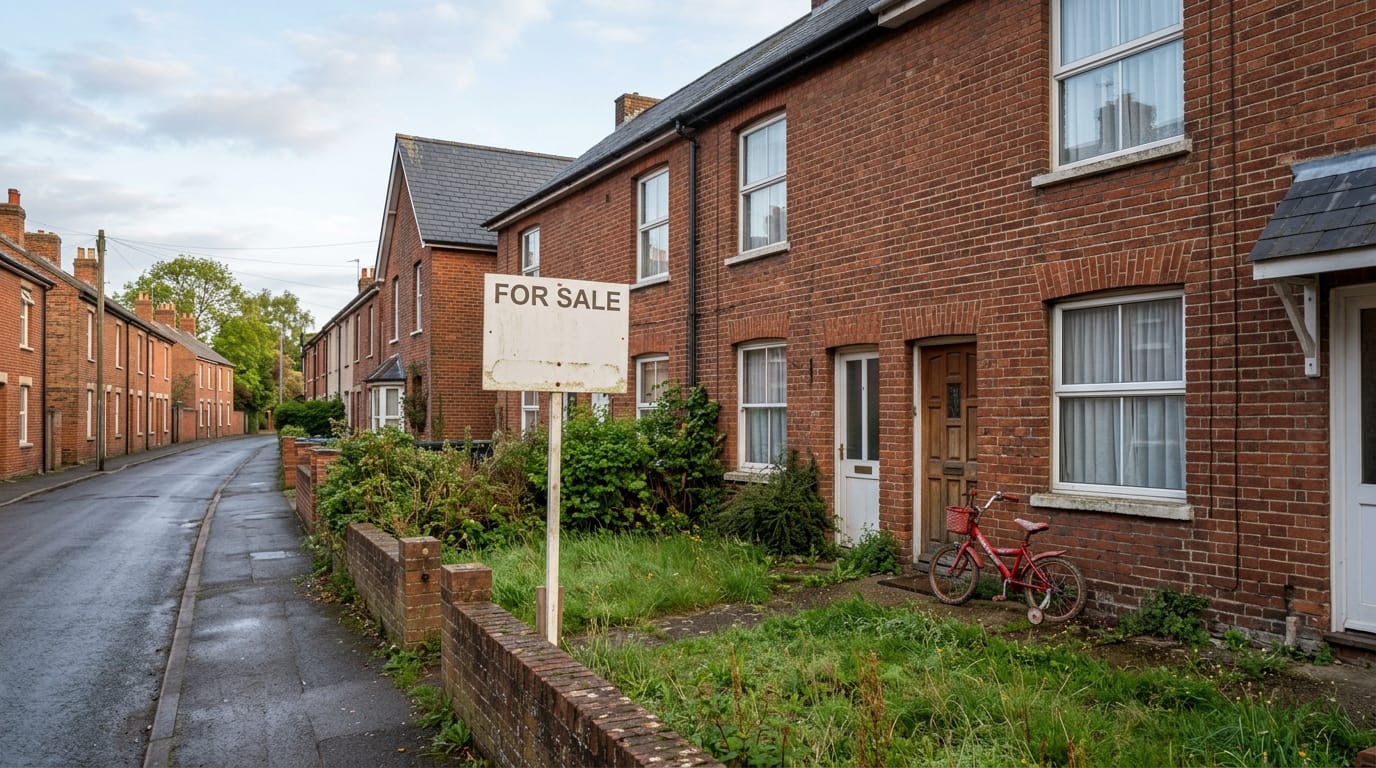


The East of England has all but vanished from the buy-to-let purchase map. Its share of landlord purchase applications at one specialist brokerage fell from 16.0% in the second quarter of 2025 to 2.1% in the second quarter of 2026, one of the sharpest regional collapses in the figures. Landlord money has gone north instead.
The numbers come from Commercial Trust’s Q2 2026 Buy To Let Mortgage Index, published this week. Across the whole book, purchase applications accounted for 24.2% of all buy-to-let submissions in the quarter, down from 29.8% a year earlier. That is an 18.9% year-on-year fall, more than double the 9.1% relative decline recorded in the first quarter. Over the first half of 2026 as a whole, purchases made up 26.1% of applications against 29.2% in the same period of 2025.
The interesting detail is that the landlords still buying are borrowing considerably more. The average purchase loan rose by £12,781 over the year to £207,673, up 6.6%, and £18,069 or 9.5% higher than in the first quarter of 2026.
Jorden Abbs, the broker’s chief executive, framed it as a change of behaviour rather than a retreat. “Landlords have not stopped buying, but the data shows they are becoming more selective,” he said. “Purchases now account for a smaller slice of applications, yet the average loan requested by buyers is higher.”
Remortgaging has taken up the slack, rising from 44.1% of applications in the second quarter of 2025 to 56.0% a year later. Abbs read that as landlords reviewing finance, managing costs and positioning themselves before a next move rather than exiting.
The broker attributes the shift to investors purchasing more selectively in light of the Renters’ Rights Act, whose main provisions came into force on 1 May. The Act ended fixed-term assured shorthold tenancies for new lettings, removed Section 21, gave tenants the right to challenge unreasonable rent increases, and set out a new grounds-based possession regime. It changes the arithmetic of a rental business rather than the arithmetic of a single purchase, and that is exactly why it shows up in application data before it shows up in yields.
Sitting alongside it is the Warm Homes requirement for all private rented properties to reach EPC band C by 2030. In a written parliamentary answer earlier this month, the Parliamentary Under Secretary of State at the Department for Energy Security and Net Zero acknowledged that rental prices are not determined by any single factor and that wider market factors alongside the minimum energy efficiency standards regulations could affect rents, whether or not a property needs upgrading.
Our two counties hold an unusually high proportion of solid wall, pre-1919 and non-standard construction housing: flint, clay lump, timber frame, thatch, Victorian brick with no cavity. These are precisely the properties for which an EPC C is expensive, sometimes technically awkward and occasionally, on a listed building, close to impossible without consent battles.
A landlord weighing a £250,000 Victorian terrace in Norwich or a period cottage in Holt against a modern semi in Yorkshire is not just comparing gross yields. They are comparing a probable retrofit bill against a property that already complies. Yorkshire and the Humber took 12.6% of purchase applications in the quarter, almost four times its 3.4% share a year earlier. The North East rose from 1.7% to 8.4%. The North West led the table at 14.7%.
Abbs was careful about that trend. “The continued interest in northern markets may reflect the value and rental returns landlords believe they can find there,” he said. “Even so, no location should be treated as a shortcut. Investors still need to weigh up local demand, property costs and the finance available.”
Two consequences follow, and they point in opposite directions.
The first is supply. If fewer landlords are buying in the East of England, the private rented stock in Norwich, Ipswich, Great Yarmouth and the market towns grows more slowly than tenant demand does. Student demand in Norwich, coastal seasonal demand and the steady inflow of relocating households do not shrink to match. Abbs made the point himself: a sustained decline in purchase activity would matter for rental supply, and policy needs to protect tenants without making it harder for responsible landlords to add homes.
The second is competition for stock. A cohort of investor buyers stepping back from a market removes bidders from exactly the price bands where first-time buyers and downsizers operate. For anyone buying their own home in the £180,000 to £300,000 range, that is quietly good news.
Landlords deciding to release capital should think carefully about how they present the asset. A property marketed purely as an investment now competes for a smaller pool of buyers than it did eighteen months ago, and buy-to-let mortgage pricing has not eased: the average new fixed rate across the wider market stood at 5.59% this week.
Vacant possession, a completed EPC improvement, or simply an honest schedule of what a retrofit would cost, all widen the audience considerably. Owner-occupier demand for a well-presented period house in a good Norfolk village remains a different and deeper market than investor demand for the same building. Knowing which buyer you are actually selling to is the whole game, and it starts with an accurate read on local values. That is what our 324 location market reports are for.
The regional numbers in a single broker’s index are volatile and shouldn’t be over-read. The pattern across two consecutive quarters is harder to dismiss. Capital is flowing towards lower entry prices, higher gross yields and newer building stock, and away from expensive, characterful, hard-to-retrofit housing.
That is a policy outcome, not a market accident. Whether the next Budget corrects for it, or accelerates it, will tell landlords in this part of the country a great deal about the decade ahead.