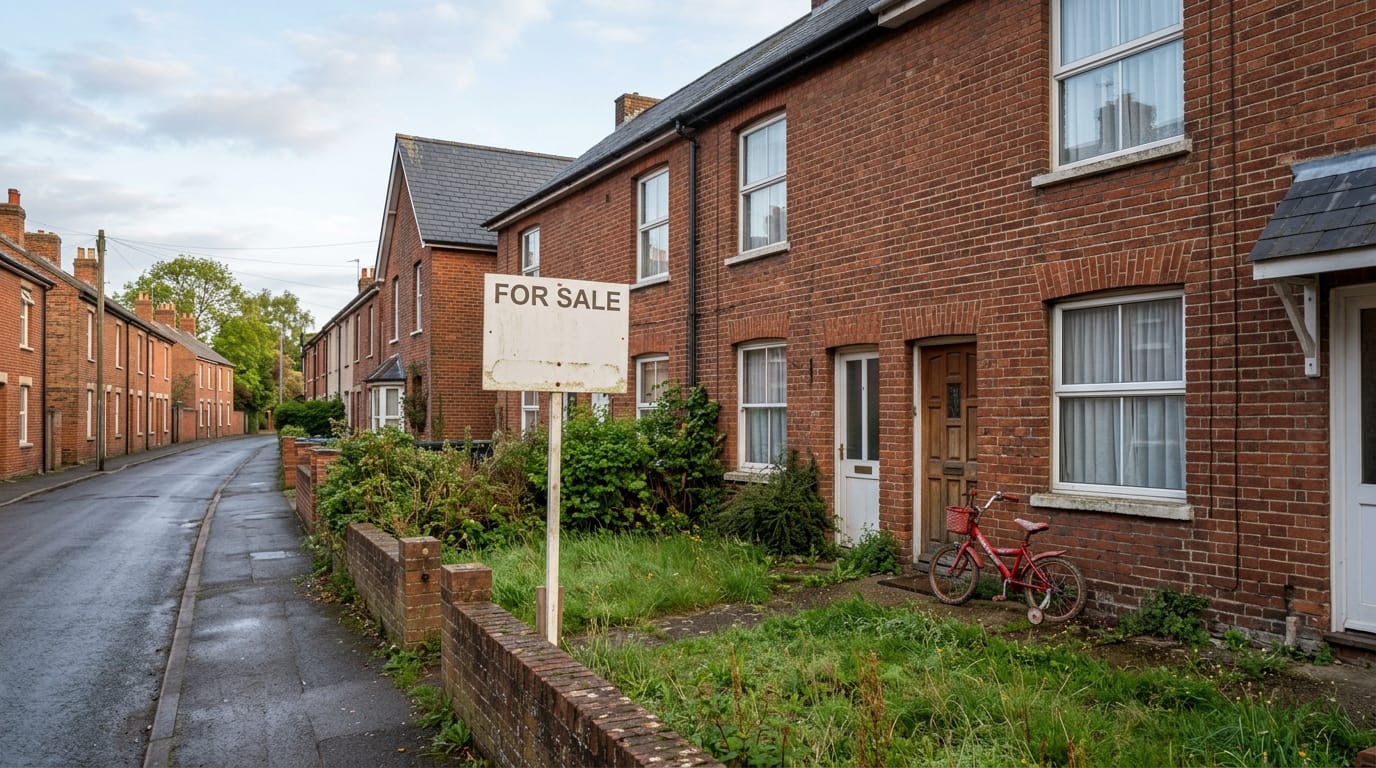

Average asking prices across England and Wales fell by 1% in July, a drop of £3,832 that brought the typical asking price to £372,359, according to Rightmove’s latest monthly index. That’s five times the usual 0.2% seasonal dip the market sees at this point in the year.
The figures point to a market where buyers hold the cards. Supply is close to a 12-year high for the time of year, giving purchasers more choice than they’ve had since the immediate aftermath of the financial crisis. Sales activity in the first half of 2026 ran 6% below the same period last year, though it remained level with 2024.
Rightmove attributed the sharper-than-usual dip to a confluence of summer distractions: the World Cup, a spell of hot weather, and the political upheaval that saw Andy Burnham replace Keir Starmer as Prime Minister. Each would dampen activity on its own. Together, they’ve created a market where many would-be buyers have paused.
Nathan Emerson, chief executive of Propertymark, said the year had “initially started with optimism,” but added that “global unease has in many ways dominated the agenda ever since.” Consumers, he said, have been “exercising greater caution with their spending to help ensure household budgets are better protected against unforeseen increases in expenditure.”
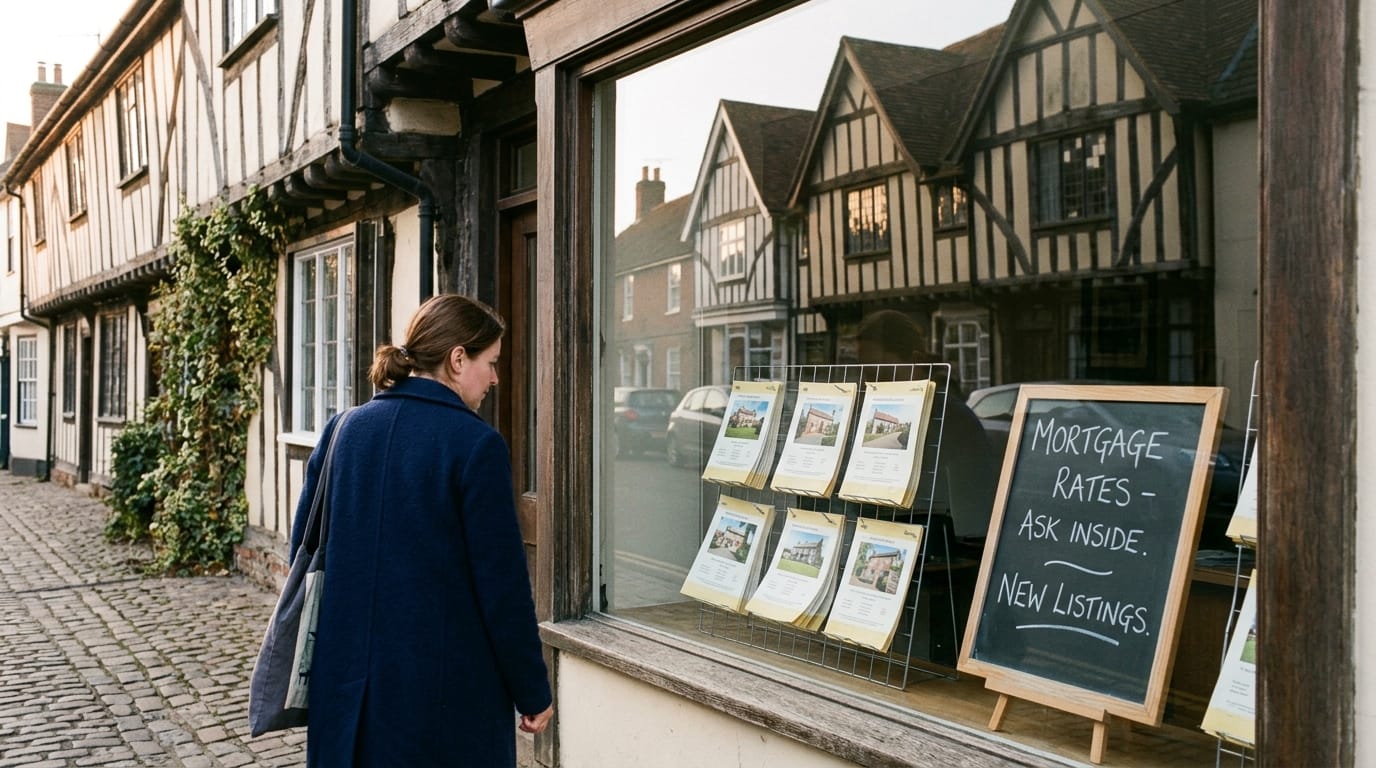
The timing couldn’t be worse for sellers hoping for a late-summer bounce. Within days of Burnham entering Downing Street, Halifax, HSBC and Barclays all announced mortgage rate increases, with Santander following suit. Halifax has removed its sub-4% mortgage rates entirely.
Santander’s repricing, effective 22 July, pushes some products up by as much as 0.3%. A two-year fix at 90% loan-to-value for first-time buyers will rise to 4.99%, while the equivalent at 60% LTV moves to 4.6%. Product transfer rates are rising too, by up to 0.2% across residential deals.
The trigger isn’t domestic politics but geopolitics. A sharp rise in swap rates, driven by escalating conflict in Iran and fresh US military strikes, has forced lenders to reprice. Hina Bhudia, a partner at a leading finance firm, noted that “up until the end of last week, the market had been relatively calm, with borrowers benefiting from a range of competitively priced tracker and fixed rate products.” That calm has now gone.
For sellers across Norfolk and Suffolk, the message from these numbers is clear: pricing accuracy matters more than ever. In a market where supply is abundant and buyers are cautious, overpricing is the fastest route to a stale listing.
Chris Thomas, a managing director at an estate agency in Warwickshire, put it bluntly: “Accuracy of pricing is everything and getting the price right the first time gives sellers the best chance.” He added that sellers should choose an agent “who knows the local area and market extremely well and has a proven strong track record of giving honest and professional advice.”
That’s particularly relevant in markets like Norwich and King’s Lynn, where a steady flow of new instructions has given buyers more options. Properties priced realistically from day one are still selling. Those testing the market with ambitious figures are sitting.
All eyes now turn to the Bank of England’s interest rate decision at the end of July. A cut would provide a much-needed confidence boost and could prompt lenders to reverse some of their recent increases. A hold, or worse, would likely entrench buyer caution into the autumn.
Matt Smith, Rightmove’s mortgage expert, offered a measured assessment: “Mortgage rates are higher than many buyers would have hoped for at the start of the year, and the increases due to the war in Iran have understandably dented confidence for some.” He was quick to add that “lenders remain keen to lend, and the mortgage market is still competitive.”
Mark Harris, chief executive of mortgage broker SPF Private Clients, was more cautious. “Re-escalation of the conflict in the Middle East has led to the jump in swaps, rather than domestic political uncertainty,” he said, “but there could be a bumpy ride ahead, which is the last thing the new Prime Minister needs.”
The data doesn’t suggest a market in crisis. It suggests a market recalibrating. Buyers haven’t vanished. They’re being selective, and they can afford to be.
Coastal towns like Cromer and Southwold continue to attract interest from buyers willing to pay for the right property, particularly those relocating from London or the South East. But even in these markets, the premium for lifestyle locations won’t insulate an overpriced listing from sitting on the market.
The Ivybridge Collection’s 324-location property market reports show the variation across the region. Some postcodes are seeing healthy demand. Others are softer. The difference, almost always, comes down to whether the asking price reflects what buyers are willing and able to pay right now, not six months ago.
The autumn market will be shaped by two forces largely beyond sellers’ control: geopolitics and monetary policy. If the conflict in Iran de-escalates and swap rates ease, mortgage lenders will follow with cuts, and confidence should recover. If tensions persist, the market will adjust to a new normal of higher borrowing costs.
For sellers in Norfolk and Suffolk, the practical response is the same either way. Price accurately, present well, and work with an agent who understands the granular differences between one village and the next. The buyers are there. They just won’t overpay.