There is a new piece of jargon doing the rounds in the property world, and it captures something estate agents have quietly worried about for years. ‘Housefishing’, a play on the dating-app term catfishing, describes what happens when a listing photograph has been so heavily reworked by artificial intelligence that the home a buyer sees in person bears little relation to the one they fell for online. Experts warn that using AI to enhance property images can go too far and mislead prospective buyers.
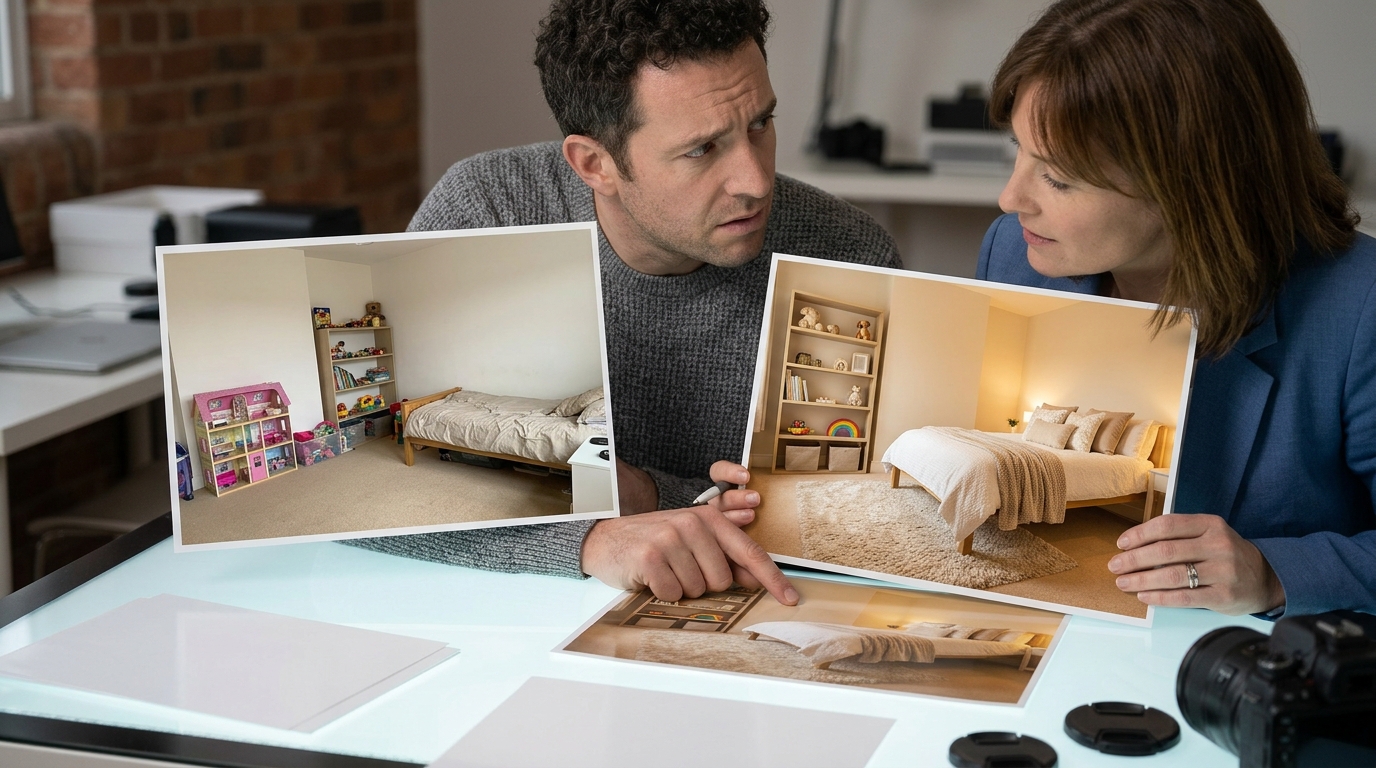
The examples uncovered by the BBC are striking. In one case, a bedroom photograph was transformed by AI so that, on the left, the image has been AI-enhanced, giving the room warm lighting and luxurious decor, while the real room looked nothing like it. In another, the AI removed a doll’s house and changed the shape of a rug in a child’s bedroom before the listing went live. These were not minor retouches. They changed what a buyer thought they were looking at.
To their credit, once the discrepancies were raised, all three companies told the BBC they had strict guidelines on how AI could be used on their websites and have since taken the images down. That response matters. It suggests the industry knows where the line sits, even if some listings have strayed over it.
The rules here are not as grey as some agents might like to believe. Trading Standards told the BBC that estate agents can use AI to make basic enhancements to photos, or to virtually furnish an empty room or garden, as long as they indicate they have used the technology. That is a sensible, workable position. Virtual staging has genuine value for empty properties, helping buyers picture a lived-in space rather than a bare shell.
The problem comes when AI starts changing what is actually there. Structurally changing a room, for example by adding a window, or hiding features could mislead consumers and break the law. That is the test agents and sellers need to hold onto: does the edit help a buyer imagine potential, or does it conceal the truth of the property.
One of the UK’s largest property portals, which aggregates listings from agents rather than selling homes directly, has said AI-generated imagery is permitted provided it is clearly labelled, and that agents remain responsible for what they upload. It also prohibits listings that misrepresent a property’s appearance or condition. One agency named in the BBC’s reporting said it had introduced a policy of labelling every AI-enhanced photograph, with a spokeswoman adding that the firm never used the technology “to misrepresent the fundamental features of a property”. That is the standard the rest of the industry ought to be measured against.
Norfolk and Suffolk have a particular stake in this. A large share of buyers in these counties are relocating from further afield, often choosing a cottage, a converted barn or a coastal bolthole on the strength of photographs long before they book a viewing. With the average home currently on the market across the region priced at £304,937, these are not trivial decisions made on a whim. A buyer who travels two or three hours to view a property that looks nothing like its listing has lost a day, and an agent who let that happen has lost a measure of trust that is far harder to rebuild than a photograph is to reshoot.
There is a financial logic behind the temptation to lean on AI. Physical staging is not cheap. One Sussex-based agency director explained that physical staging can cost anywhere from £5,000 on average up to £50,000 just to show a property with furniture in. Set against that, a few pounds spent on AI-generated staging for an empty room looks like an easy win for a seller watching their budget. The difference is that software furnishing an empty lounge is a reasonable aid to imagination. Software that paints over damp, widens a cramped kitchen or conjures a view that does not exist is something else entirely, and it is the latter that is generating complaints.
None of this means AI has no place in marketing a home. Used honestly, it can help a seller present a tired room at its best without the cost and disruption of a full staging job. The principle that ought to guide every listing in Norwich, Ipswich, or any village in between is straightforward: label it, and never let it hide the truth. A portal spokesperson put it well, stressing that technology should support customer trust rather than undermine it. That is as true for a thatched Suffolk cottage as it is for a London flat.
For sellers, the practical advice is simple. Good quality real photography, taken in the right light at the right time of day, does more for a listing than any amount of digital polish, and it does not risk a wasted viewing or a disappointed buyer walking away before negotiations have even begun. For agents, disclosure is not a box-ticking exercise. It is what separates a confident, professional listing from one that invites a complaint.
Regulation in this space is still catching up with the technology, and it would be no surprise to see clearer rules emerge as more cases like these come to light. In the meantime, the agents and sellers who get ahead of the issue, by being upfront about what has been enhanced and keeping any editing within sensible limits, stand to gain the most. In a market where trust between buyer and seller is the thing that actually gets a sale over the line, that is not a bad place to be positioned.