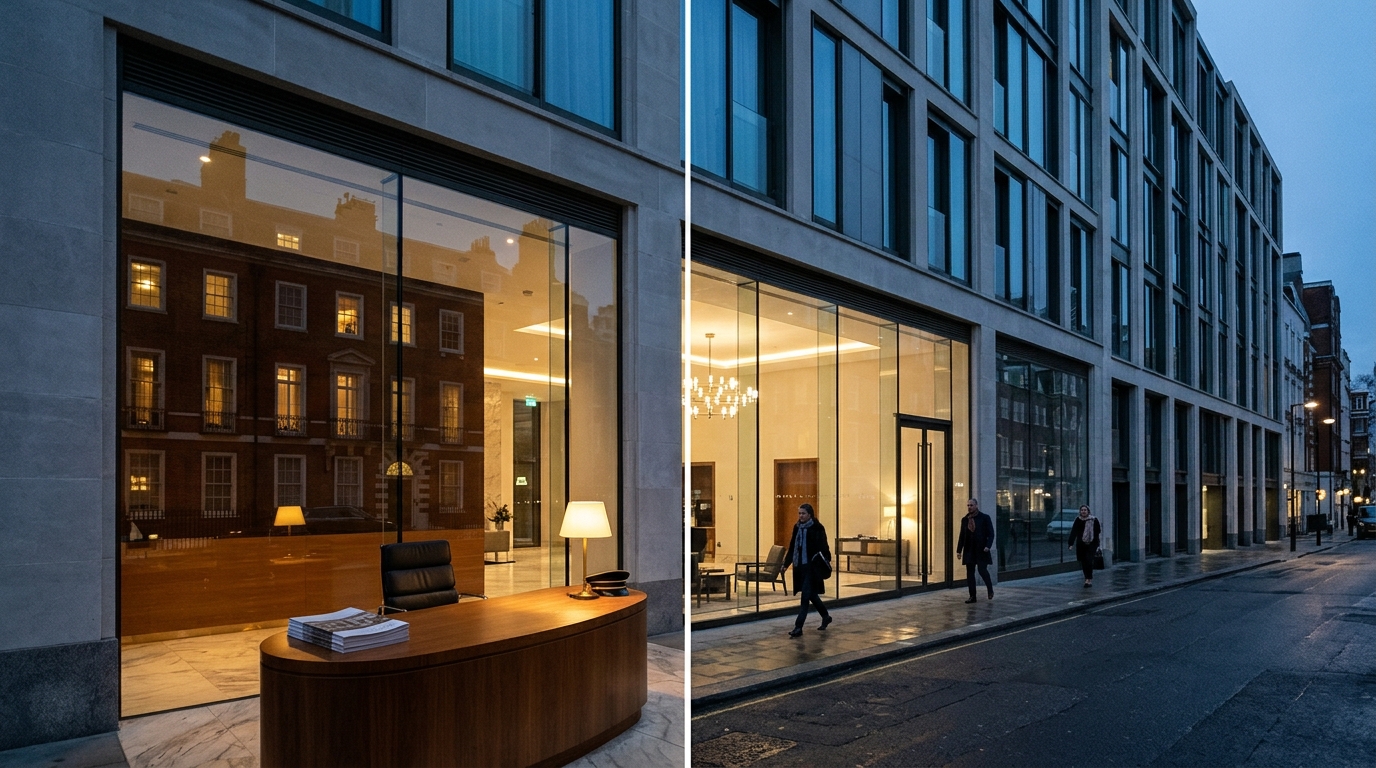
A half-empty luxury tower is an awkward sight. Marble lobbies and concierge desks are in place, with floor-to-ceiling views across the city skyline, but few residents have moved in. That is the picture emerging from central London, where new figures show the capital’s most expensive postcodes holding a growing stock of brand-new homes that have not been sold.
According to research from the market analyst Molior, reported this week by the Guardian, there were 1,400 completed but unsold homes in zone 1 at the end of September, three times the number recorded in 2016. That zone covers the City and the West End, as well as the central districts of Mayfair and Marylebone. Developers are not replacing that stock at the old pace either. Separate reporting on the same Molior data found that new construction starts in zone 1 have fallen 75% over the past decade, with just 1,600 homes beginning construction in the past 12 months.
That is a marked change for a part of the market that spent the best part of two decades as a default destination for international capital. The reasons are not mysterious. One developer’s view, quoted in the Guardian’s reporting, put it bluntly: “The fundamental problem is that construction costs have gone through the roof”. Demand has not kept pace either. The same source noted “demand for these properties has gone down… a lot of those homes are being sold to overseas buyers and they are not in the market as much as they were,” pointing to tax changes around stamp duty and the abolition of the non-dom regime as contributing factors.
This is not just a story about empty flats. It is also about who absorbs the cost of building homes that then go unsold. One case making headlines is London Richmond, a developer that marketed itself as a specialist in the capital’s finest neighbourhoods, with a portfolio of 20 properties worth more than £30,000,000 in locations including South Kensington, Wimbledon and West Hampstead. It appointed administrators in August after its funding ran out, and more than 300 creditors are reportedly still waiting on outstanding debts of around £39,000,000, according to the administrator BTG.
It is not an isolated case. Trade coverage of the same Molior figures notes that several developers have entered administration, while major players including Berkeley Group and Taylor Wimpey are scaling back their London ambitions. One account of the retreat describes Berkeley Group, the city’s largest residential developer, stating it would stop acquiring new land, while Taylor Wimpey plans to exit the London market entirely. When the sector’s two biggest names pull back at the same time, it says something about how commercially difficult the maths has become, not just at the very top end but across much of London’s new-build pipeline.
None of this happened overnight. The Guardian’s reporting traces the pressure back to a run of setbacks: the sector was hit hard by Brexit and the Covid pandemic, then by higher property taxes after a period of rapid price growth post-financial crisis. Rising and volatile construction costs, combined with pricier borrowing, now mean that financing a project can involve carrying a fast-growing debt pile before a single flat is sold. For a developer, those are demanding conditions.
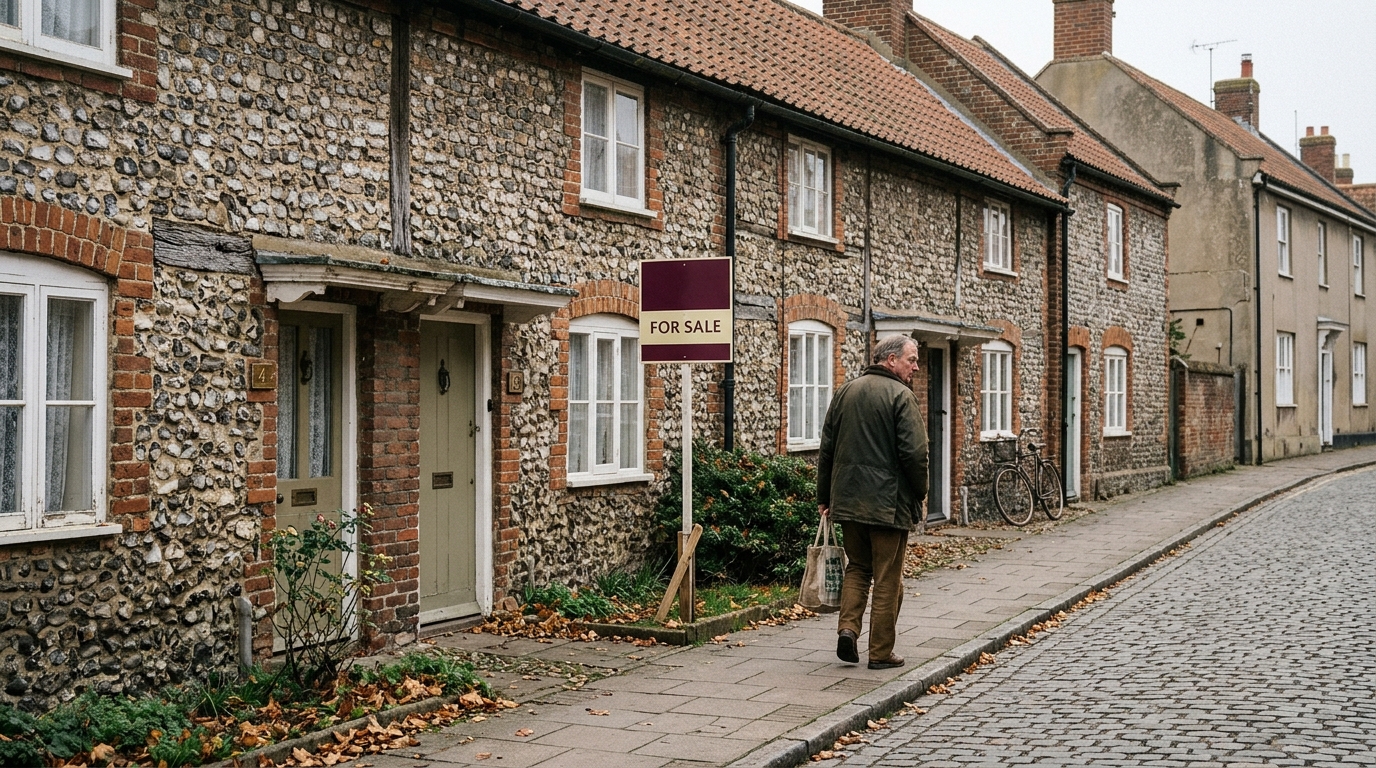
It would be easy to read all of this and assume the wider housing market is in trouble. The local figures tell a different story. The 1,400 unsold homes in zone 1 sit in a rarefied segment of multimillion-pound flats aimed at a narrow pool of wealthy, often overseas, buyers. That is a world removed from the terraced houses, village semis and coastal cottages that make up the vast majority of transactions across Norfolk and Suffolk.
Our own figures across 603 areas of Norfolk and Suffolk, current as at 8 November, put the average sold price over the twelve months to the end of September at £303,896, drawn from 41,390 completed sales recorded by HM Land Registry. That is a market built on volume and everyday demand, not scarcity value or marble lobbies. The average asking price for the 24,786 homes currently on the market is £304,937, a gap of barely 0.3% above the sold average.
Sold prices have eased a little here too. The year-on-year change across Norfolk and Suffolk is down 1.0%, a gentle movement and nothing like the stock of unsold new homes facing central London. Of the 24,786 homes for sale across these areas, 36.5% are already sold subject to contract, so a little over a third of listings have a sale agreed.
That contrast matters. London’s prime new-build sector is grappling with a demand problem rooted in global capital flows and tax policy, alongside construction economics at a scale that does not apply to a three-bedroom house in a Norfolk market town or a period cottage on the Suffolk coast. Here, the fundamentals are more straightforward. Family moves and downsizing drive much of the market alongside local employment and a steady trickle of buyers relocating from further afield in search of space and value. None of that depends on whether a non-dom investor in Mayfair decides to buy a £5,000,000 flat.
What London’s experience does offer is a useful reminder of how quickly sentiment can shift when costs rise and demand softens at the same time. Developers who assumed scarcity alone would guarantee buyers for ultra-prime stock have been proven wrong. Pricing carefully and understanding who is actually buying matter more than ever, wherever you are selling.
For Norfolk and Suffolk, the figures describe a market that has adjusted steadily rather than seized up. Sold prices are down 1.0% on the year, asking prices sit close to the sold average, and 36.5% of listed homes are already under offer. These are the signs of a functioning market.