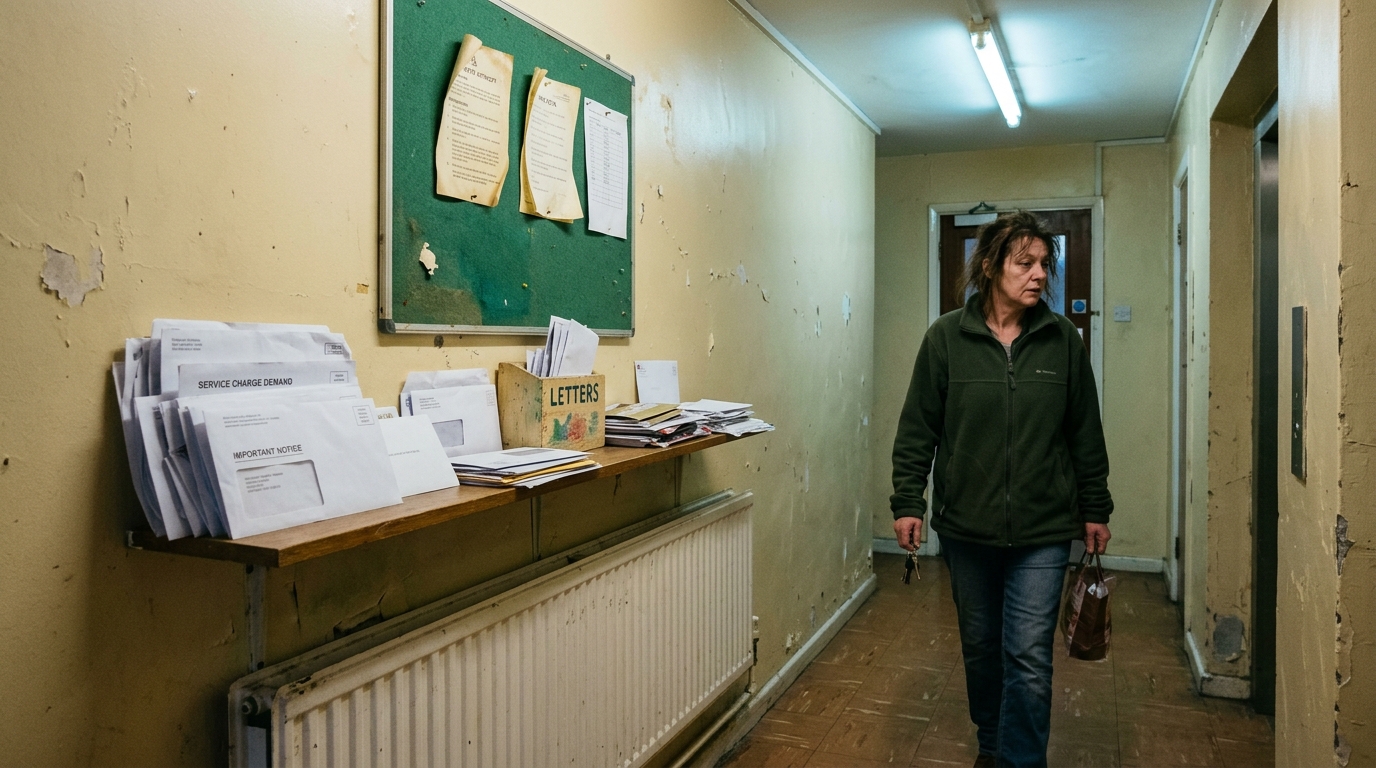
Flat owners across England can find themselves in a tricky position, and recent testimony shared through national financial media shows how it happens. A buyer moves into a leasehold home and, months later, is hit with an annual service charge rising to £2,500. At the same time, the investor who owns the building prepares to sell the freehold at auction.
For an owner in that position, the questions arrive quickly. An annual service bill of £2,500 makes a flat harder to hold comfortably, and the prospect of the building passing to a third-party speculator at auction raises another: should leaseholders join together and buy the freehold themselves? The law gives them routes to consider, and the sensible first step is to understand them.
Service charge increases rarely happen in isolation. They frequently follow years of deferred works, rising building insurance premiums, or management firms passing on higher operating costs without enough oversight. At £2,500 a year for a single apartment, affordability becomes a real constraint.
Buyers look closely at recurring outgoings. A service bill at this level reduces borrowing capacity, so an applicant who could comfortably manage a mortgage on the purchase price may find the lender reducing the loan to allow for the building levy. For an existing owner who wants to sell, that makes the open market harder work.
A freehold sale adds another factor. Under statutory rights, qualifying long leaseholders usually hold a legal Right of First Refusal when an investor decides to dispose of the freehold title. If the freeholder chooses to auction the asset, leaseholders must be notified through formal notices, which give them a short, strictly enforced window to match the auction price or accept whoever wins the bidding in the room.
Acquiring the freehold, whether by collective enfranchisement or by taking up the Right of First Refusal, gives leaseholders long-term control of the building. Once they own the freehold jointly, often through a shared management company, they can replace an underperforming managing agent and challenge unreasonable administration mark-ups. They can also scrutinise contractor quotes for themselves.
That control comes with responsibilities. Running a communal building takes steady governance and compliance with fire safety rules. Owners also take on direct responsibility for chasing arrears from neighbours who do not pay, and setting aside adequate sinking funds becomes an internal task rather than a complaint to an outside landlord. Still, for many residents, taking collective control is the only dependable way to halt unchecked service charge inflation.
These leasehold questions sit within a regional market with plenty of activity. Across 603 surveyed areas of Norfolk and Suffolk, Land Registry records show 41,390 completed sales over the 12 months to 30 September 2026, at an average sold price of £303,896.
The average sold price is down 1.0% year on year, a modest change, and the previous 12 months recorded 40,849 transactions. Asking prices across the 24,786 homes listed on 8 November 2026 averaged £304,937, so the asking and sold averages sit close together.
Of those 24,786 listings, 36.5% are currently marked as sold subject to contract, which leaves more than six out of ten still available on the open market. In that market, a leasehold flat with a £2,500 service charge attracts close scrutiny of its running costs, so clear service charge accounts help a seller.
Buying the freehold at auction needs upfront capital. Leaseholders must pay for professional valuation surveys and specialist property solicitors, and set up a collective legal entity to take title. When individual owners already find a £2,500 annual charge hard to manage, finding thousands of pounds in discretionary capital to buy a share of the freehold can prove difficult.
Yet leaving the freehold to an unknown buyer at auction carries its own risk. Speculative buyers often purchase freehold reversions at auction to exploit secondary revenue opportunities such as permission fees and lease extension premiums, plus insurance placement commissions. For an owner hoping to protect their equity, passing up the chance to buy the building can lock in higher costs for years to come.
Across regional centres such as Norwich and Ipswich, as well as coastal market towns throughout East Anglia, flats have traditionally provided an affordable entry point for first-time buyers and downsizers. When the running costs of those homes rival the maintenance outlays of large detached houses, buyer enthusiasm fades quickly. Mortgages can stall during underwriting, and survey reports may flag ongoing dispute risks.
Deciding whether to buy out a freeholder or absorb a £2,500 yearly charge starts with an honest audit of the building’s financial health. If neighbours can agree on a plan and share the administrative work, acquiring the freehold remains the cleanest path to restoring predictability to annual accounts. Starting that conversation early, before an auction date is set, keeps the most options open.