The Cambridge Building Society has confirmed a £150,000 donation, paid over three years, to help The Angels Foundation UK establish a permanent wellbeing centre for survivors of domestic abuse across Cambridgeshire. On the surface this reads as a corporate social responsibility story, the kind of item that circulates through trade press and local news bulletins before fading from view. Look closer, though, and it says something more specific about the pressures sitting underneath the East of England’s housing market, pressures that estate agents and lenders in Norfolk and Suffolk would do well to pay attention to.
The grant itself is not new news in isolation. The wellness centre will be available to survivors of domestic abuse across Cambridgeshire, and the charity will use the £150,000 grant over three years from The Cambridge to build on its support for those in need, providing furniture and flooring for those moving into new homes alongside counselling and therapeutic services. The £150,000 award is the first multi-year grant of its kind made by The Cambridge, and the partnership followed an earlier Community Fund grant in 2023, before The Angels became one of the building society’s community partners in 2024.
What makes this update newsworthy is the trajectory it describes. Founder Caroline Deeprose put it plainly in her own words: “The first year of funding has taken us from working from my kitchen table to now having our own premises, our own wellbeing centre.” She added that it had enabled her to work full-time on the charity, with a bookkeeper now in place, and that the money from The Cambridge had helped the organisation grow to support many more survivors of domestic abuse in Cambridge.
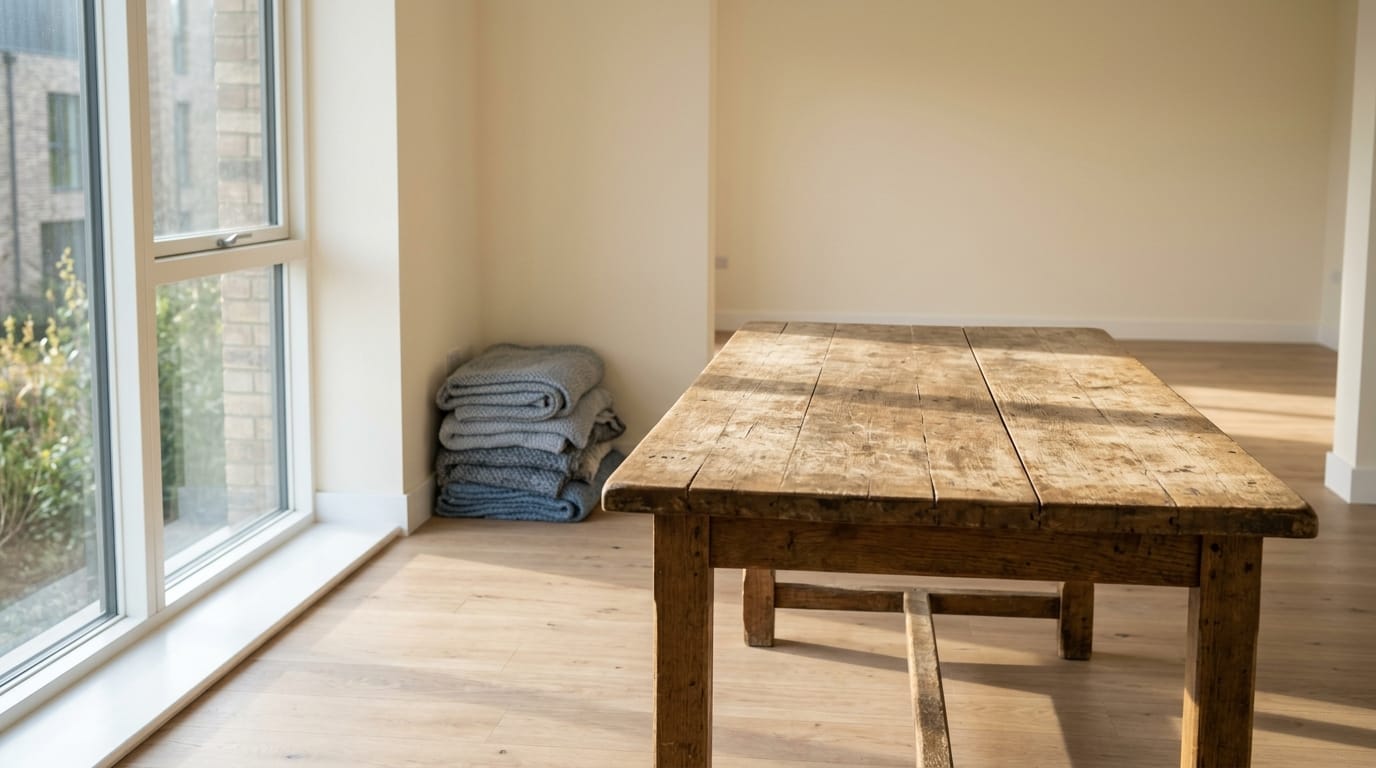
The charity’s own trajectory has an interesting footnote too. The original kitchen table from which Deeprose started the charity is now kept inside the new wellbeing centre, a detail that underlines just how recently this operation was a one-woman effort run from a spare room. Peter Burrows, chief executive of The Cambridge, called the growth “hugely inspiring”, adding that the society is “proud to be supporting the vital work they do for survivors of domestic abuse and look forward to seeing that impact continue to grow over the next two years.”
What deserves more attention than it usually gets is the practical nature of what The Angels actually does. This is not simply counselling and emotional support, though that matters enormously. The Angels provides practical support for survivors moving into new accommodation, including furniture and flooring, as well as counselling, therapy and recovery workshops designed to address the longer-term effects of domestic abuse. That is a housing story as much as a wellbeing one. Survivors fleeing abusive relationships are frequently rehoused into properties with nothing in them at all, and the gap between being offered a tenancy and being able to actually live in it safely can be significant.
National data on this problem is stark. Less than 2% of social housing tenancies come furnished, and the lack of support can be a significant barrier to victims escaping domestic abuse as they worry about how they will finance starting anew. For anyone working in residential property, that statistic reframes what a “successful move” actually means for the most vulnerable tenants. A signed tenancy agreement or completed purchase is only the beginning of the story; an empty flat with no flooring, no white goods and no bed is not a home, whatever the paperwork says.
Deeprose has spoken about this gap before, warning last year that “leaving is only the first step”, and that “survivors often face empty social housing, poverty and untreated trauma”, adding that “without community backing, too many return to their abusers.” The scale of need in the county is not trivial either: in 2023, more than 10,300 domestic abuse-related crimes were reported in Cambridgeshire. That is a caseload with a direct housing dimension attached to almost every incident, whether that means an emergency move, a refuge placement, or a longer-term rehousing process.
The Cambridge is not a distant institution to readers across Norfolk and Suffolk. The society has built a physical presence into West Suffolk in recent years, and its lending footprint reaches well beyond its Cambridgeshire heartland. That matters because the same structural gap the charity is plugging in Cambridgeshire, the mismatch between housing supply and the practical, furnished, move-in-ready homes that vulnerable tenants actually need, exists everywhere stock turns over slowly. Norfolk and Suffolk’s own housing market has not been quick to move this year, and in markets where properties sit for extended periods before a sale is agreed, the knock-on effect for anyone needing to move urgently and safely can be considerable. A slow-turning market is an inconvenience for an ordinary seller; for someone fleeing domestic abuse, it can be the difference between staying in danger and reaching safety.
This is also part of a wider pattern in how The Cambridge spends its profits. The domestic abuse grant sits alongside the society’s Rent to Home scheme, which lets tenants reclaim up to 70% of the rent you pay to help fund your house deposit, providing a stepping stone from renting to homeownership, and a much larger commitment revealed at the end of its 175th anniversary year. The society marked its 175th anniversary with a year of community investment including a £1m commitment to address housing and inequality issues across Greater Cambridge, investing into Greater Cambridge Impact, aimed at tackling housing and inequality challenges in Cambridgeshire over the next decade. Burrows described the year as one of “record donations to good causes, a transformational investment to help tackle homelessness” alongside the society’s core lending business.
None of this changes headline market statistics, and it would be wrong to overstate a single charitable grant as a solution to a regional housing shortage. But it illustrates something genuinely useful for anyone advising buyers, sellers, or landlords across East Anglia: mutual lenders increasingly see housing precarity, not just mortgage rates, as core to their community remit. A building society that measures its purpose partly by whether people “have a home” is not a neutral observer of a slow, sticky housing market; it has skin in the game.
For agents and brokers working across Norfolk and Suffolk, the practical lesson sits at the edges of the property transaction itself. Getting a survivor of domestic abuse safely rehoused is not just about finding an available tenancy or completing a sale quickly, it is about what happens in the days and weeks after the keys change hands. As lenders like The Cambridge put more of their profits behind that gap, the wider industry may need to think harder about how housing supply, charity partnerships, and financial institutions intersect long after a deal is agreed.