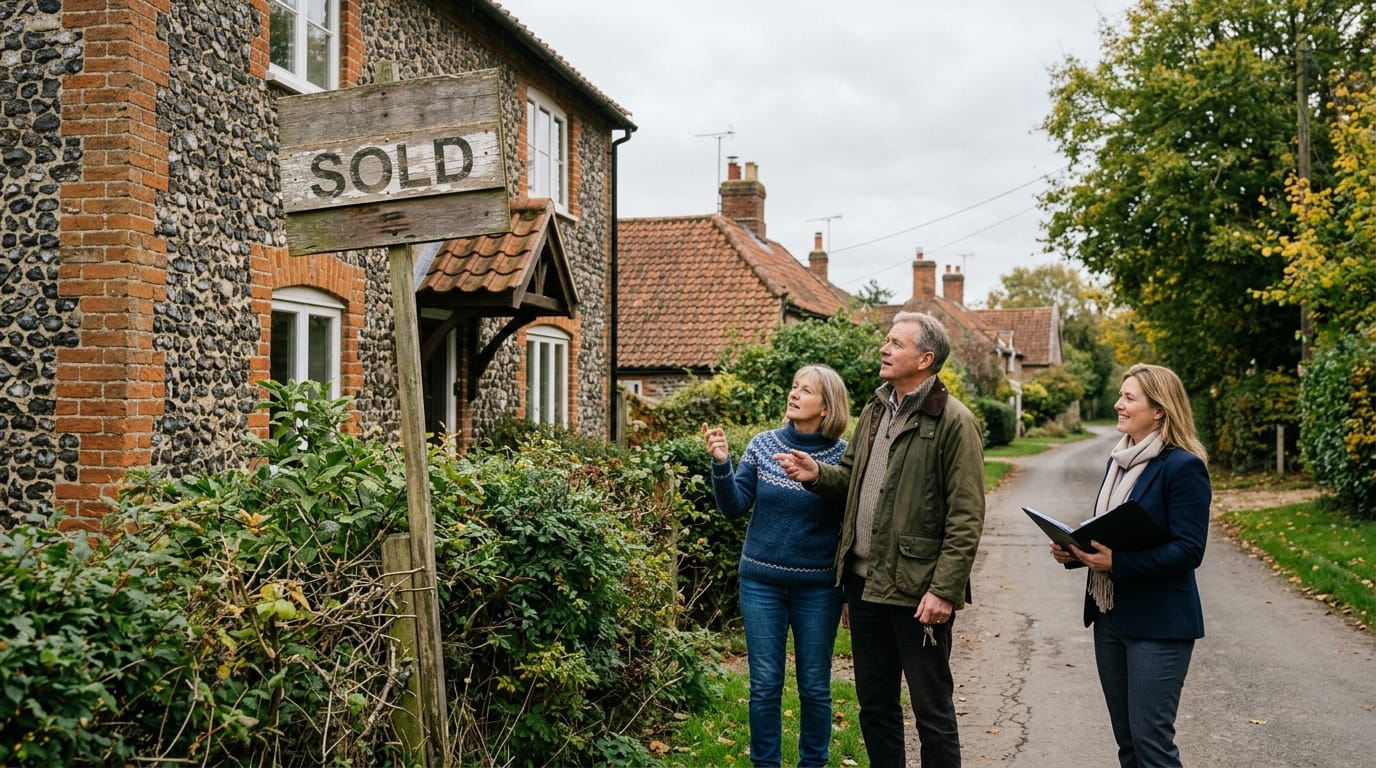
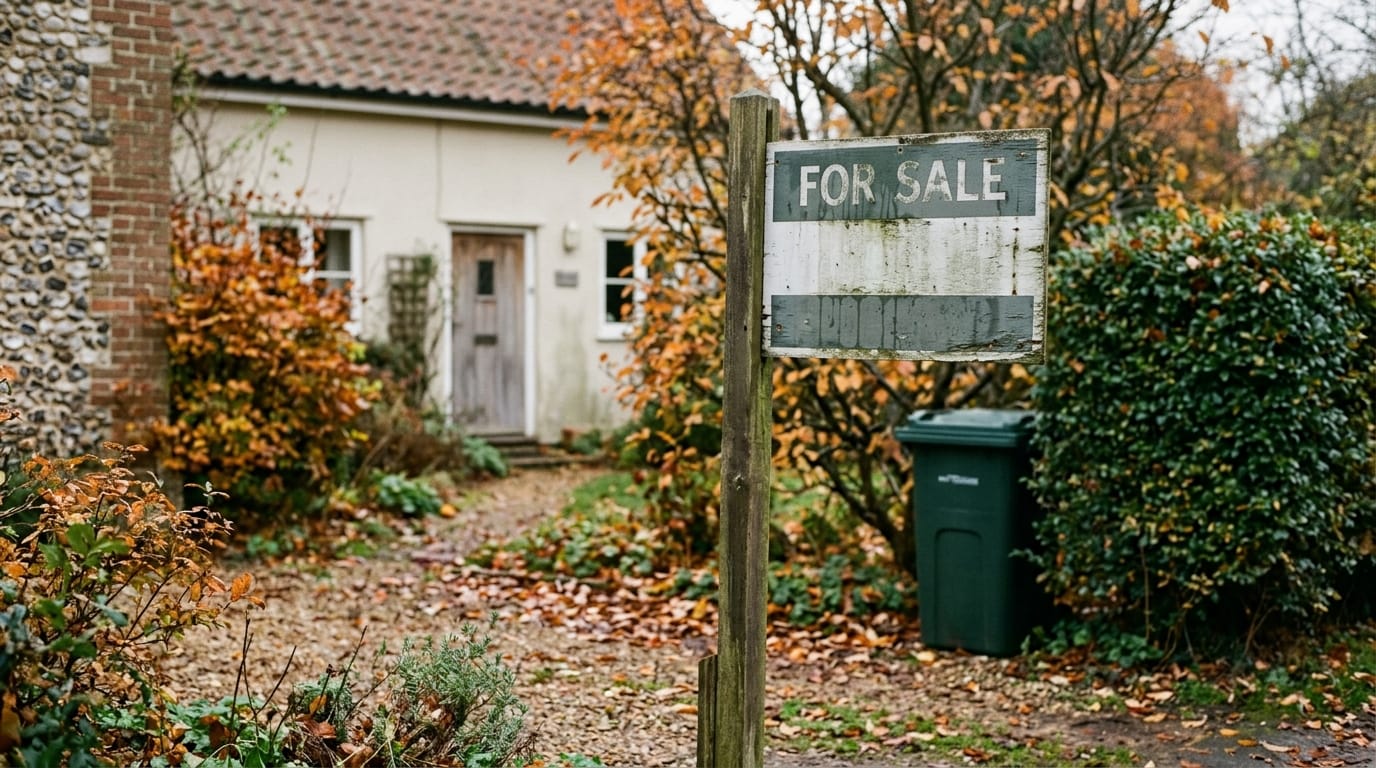
Three months without a sale can feel like a long time, especially when you had a clear idea of your moving timeline. Before you panic or make a hasty decision, it helps to understand what three months on the market actually means in context. Across Norfolk and Suffolk, homes typically spend around 269 days on the market before they sell, and only around 22 percent of live listings are currently under offer at any given moment. Seen against that backdrop, three months is not necessarily a crisis. It may simply mean your property is still working its way through a normal sales timeline, particularly in the countryside and village markets where buyers move more deliberately than they do in cities.
That said, three months is a sensible point to stop and properly review what has happened so far, rather than simply waiting for something to change on its own. The review should look honestly at three things: your price, your presentation, and your agent’s marketing effort. Each of these can independently stall a sale, and it is important not to assume the problem lies with the one that is easiest to blame.
Ask for a full breakdown of activity since launch. How many people have viewed the online listing. How many of those enquired. How many converted into a booked viewing. And how many viewings led to a second visit or an offer. This funnel tells you exactly where interest is dropping away. If the listing is getting plenty of online views but few enquiries, the problem usually sits with the photography, the price, or the description. If people are enquiring but not booking viewings, something in the detail, perhaps the floorplan or the written information, is putting them off before they commit their time. If viewings are happening but nobody is following up with an offer, the issue is more likely to be the property itself: presentation, condition, or a price that buyers feel does not match what they saw in person.
This kind of diagnostic approach removes guesswork. It also stops sellers from making the wrong change. Reducing the price when the real issue is poor photography will not fix anything. Equally, spending money on staging when the price is simply too high for the area will not bring in offers either.
Pricing is the most common reason a property stalls, and it is also the one sellers find hardest to accept. If your home has had a reasonable number of viewings but no offers, ask your agent directly what feedback buyers gave about value. Buyers who like a house but do not offer are usually telling you, indirectly, that they think it is priced above what they are willing to pay for it. Look again at what has sold nearby in the last few months, not what is currently listed, since asking prices tell you what sellers hope for rather than what buyers actually pay. If your price was set using ambition rather than evidence, three months in is the moment to correct that, before the listing becomes stale.
Presentation issues are easier to fix than pricing issues, and often cheaper too. Walk through your own home as if you were a stranger. Are rooms cluttered or overly personal. Is the garden photographed well, or was it shot on a grey day that made it look flat. Are there rooms that feel neglected in the photography, perhaps a box room or a utility space that was skipped rather than styled. Small changes such as decluttering surfaces, refreshing tired paintwork, and rebooking photography in better light can noticeably shift buyer interest without any structural spending.
It is worth asking your agent, plainly, what has been done beyond listing the property on the portals. Has it been featured in any proactive way. Has it been shown to buyers already registered with the agency who might be a good match. Has the agent followed up with everyone who viewed and asked for honest feedback, not just a polite thank you. A property that has simply sat on the portals for three months without any additional promotion has not really been marketed, it has only been listed. That distinction matters, and it is a fair thing to raise directly.
Once you understand where the interest is falling away, you have three realistic options. The first is to hold steady, particularly if your data shows a healthy flow of viewings and the local market simply moves slowly. In areas where homes typically take the best part of a year to sell, three months is not unusual, and pulling the property or slashing the price at this stage could be premature. The second option is to make a targeted change, whether that is fresh photography, a rewritten description, restaging certain rooms, or a modest price adjustment based on genuine feedback. The third option, and the one to consider carefully rather than rush into, is relaunching with a new agent if you believe the marketing effort itself has been lacking.
If you do decide to make a change, avoid doing everything at once. Changing the price, the photography, and the agent simultaneously makes it impossible to know what actually worked, and it can also unsettle buyers who were already considering the property, since repeated changes can look like a sign of desperation rather than confidence. Make one clear, well reasoned adjustment, give it a fair run of several weeks, and then assess again.
It is worth remembering that average days on market figures include a wide mix of property types and price points, some of which naturally take longer to find the right buyer. A distinctive country house, a home with land, or a property in a more rural setting will often take longer to sell than a straightforward village house, simply because the pool of suitable buyers is smaller. This does not mean your marketing is failing, it means your buyer pool is naturally slower to build. Patience combined with a clear, evidence based review process will usually serve you better than reactive decisions made out of frustration.
Three months on the market is a natural checkpoint, not a verdict. Use it as an opportunity to look honestly at price, presentation, and marketing effort, make one considered change based on what the data actually shows, and give that change time to work before judging it. That disciplined approach, more than any single price cut or agent switch, is what tends to move a stalled sale forward.