A specialist lender has brought back 90% loan to value lending on residential second charge mortgages and cut rates by up to 60 basis points, a small technical change that says something larger about how homeowners are behaving this summer.
United Trust Bank relaunched the higher LTV tier across its Super Prime, Prime Plus and Prime ranges for loans between £20,000 and £100,000. Fixed rates now start at 6.09% for Super Prime, 6.24% for Prime Plus, 6.64% for Prime, 7.29% for Near Prime and 7.49% for Specialist. Reductions were applied across the Prime, Near Prime and Specialist products.
A second charge mortgage is a loan secured against a property that already carries a mortgage. The original lender keeps first claim on the proceeds if the house is sold; the second lender ranks behind. Rates are higher than mainstream first charge pricing because the risk sits further back in the queue.
The reason people take one is straightforward. If you fixed a mortgage at 1.8% in 2021 and it has two years left to run, remortgaging to release equity means surrendering that rate on the entire balance. Borrowing £60,000 separately at 6.6% can cost considerably less than repricing £350,000 from under 2% to something near 5%.
Buster Tolfree, director of mortgages, buy-to-let and bridging at the lender, put it in terms of that calculation. “The second charge market continues to grow and evolve as more homeowners recognise the value, flexibility and speed of second charge loans and the convenience of accessing equity in their home, especially if they want to retain a competitive first charge mortgage.”
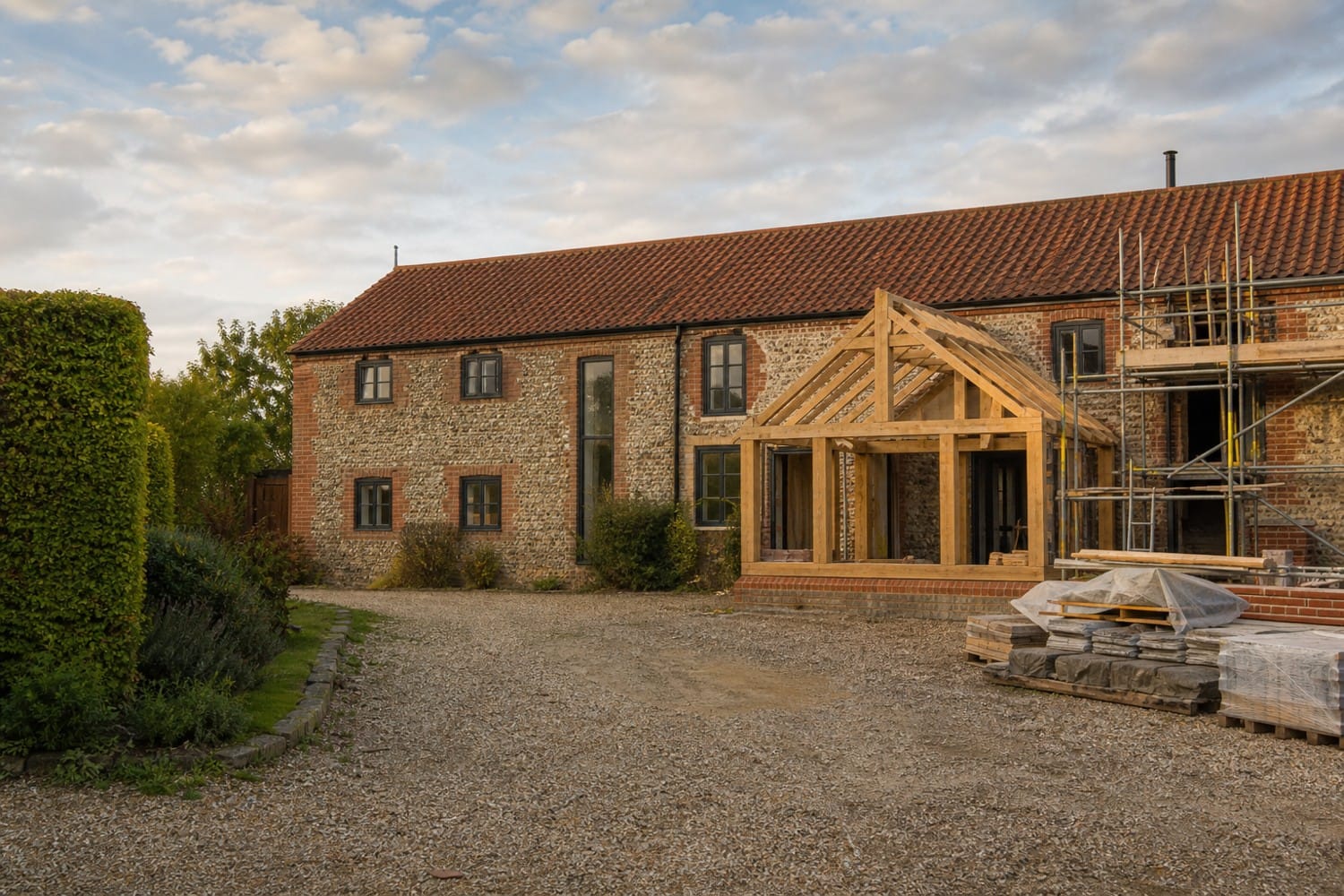
This matters disproportionately in Norfolk and Suffolk, because so much of the region’s equity sits in houses that changed hands or were refinanced during the cheap-money years and haven’t moved since. Owners of £900,000 barn conversions and Georgian rectories are frequently sitting on very large low-rate loans they have no wish to disturb.
Those same owners are often the ones contemplating a substantial extension, an annexe for a parent, a garden building for work, or the kind of comprehensive renovation a Grade II listed property demands every few decades. The money has to come from somewhere. Until recently the choice was to remortgage the whole thing or wait.
Raising the ceiling to 90% LTV widens the field considerably. At 75%, an owner with a large existing mortgage often had no headroom at all. At 90%, a house valued at £800,000 with a £520,000 first charge has around £200,000 of theoretical capacity, well beyond the £100,000 cap on these particular products.
Set this alongside what the transaction data has been showing. Moving costs money before it saves any: stamp duty on the purchase, agency fees, legal work, removals, and in the East of England a sale currently takes the better part of eight months from listing to completion. Spending £70,000 on the house you already own starts to look rational rather than indulgent.
That’s the shift second charge lending reflects. It isn’t a distress product. Rising volumes in this part of the market generally indicate homeowners choosing to invest in property they intend to keep, which is a bullish signal about the underlying asset even when headline transaction numbers move sideways.
The rate ladder here is worth studying, because it prices creditworthiness with unusual clarity. The gap between Super Prime at 6.09% and Specialist at 7.49% is 140 basis points. On £80,000 over 15 years that difference is meaningful, though not ruinous.
Specialist tiers exist for borrowers with historic arrears, recent defaults, or complex income. That last category covers a great many people in this region: farmers with volatile annual profits, holiday let operators with seasonal receipts, self-employed tradespeople and consultants. Being placed in a higher tier isn’t a judgement on reliability so much as a reflection of how hard the income is to evidence on a payslip.
A second charge is secured on your home. Default risks repossession, and because the second lender sits behind the first, its recovery position is weaker, which is exactly why it charges more. Anyone considering one should compare it properly against a further advance from the existing lender, an unsecured loan for smaller sums, and simply waiting for the fix to expire.
The lender’s own framing acknowledges that brokers, not borrowers, drive this market. “We’re continually reviewing our proposition to ensure it reflects changing market conditions and broker feedback,” Tolfree said. These products aren’t sold direct, which means the quality of advice a Norfolk homeowner receives depends heavily on the broker they happen to find.
Lenders don’t reintroduce higher LTV tiers into a market they expect to weaken. Extending to 90% is a statement about confidence in valuations, and it arrives while mainstream lenders remain cautious about the older, non-standard housing stock that fills villages between Holt and Burnham Market.
For owners weighing improvement against relocation, the arithmetic has quietly tilted. Our property market reports across 324 locations consistently show that the best-finished houses in any given village command a premium that outpaces the local average, and capital spent well on a house you’re keeping is rarely capital wasted.
Watch whether other lenders follow. When one specialist moves on LTV and price simultaneously, competitors usually respond within weeks, and borrowers who wait a little may find the ladder cheaper still.