
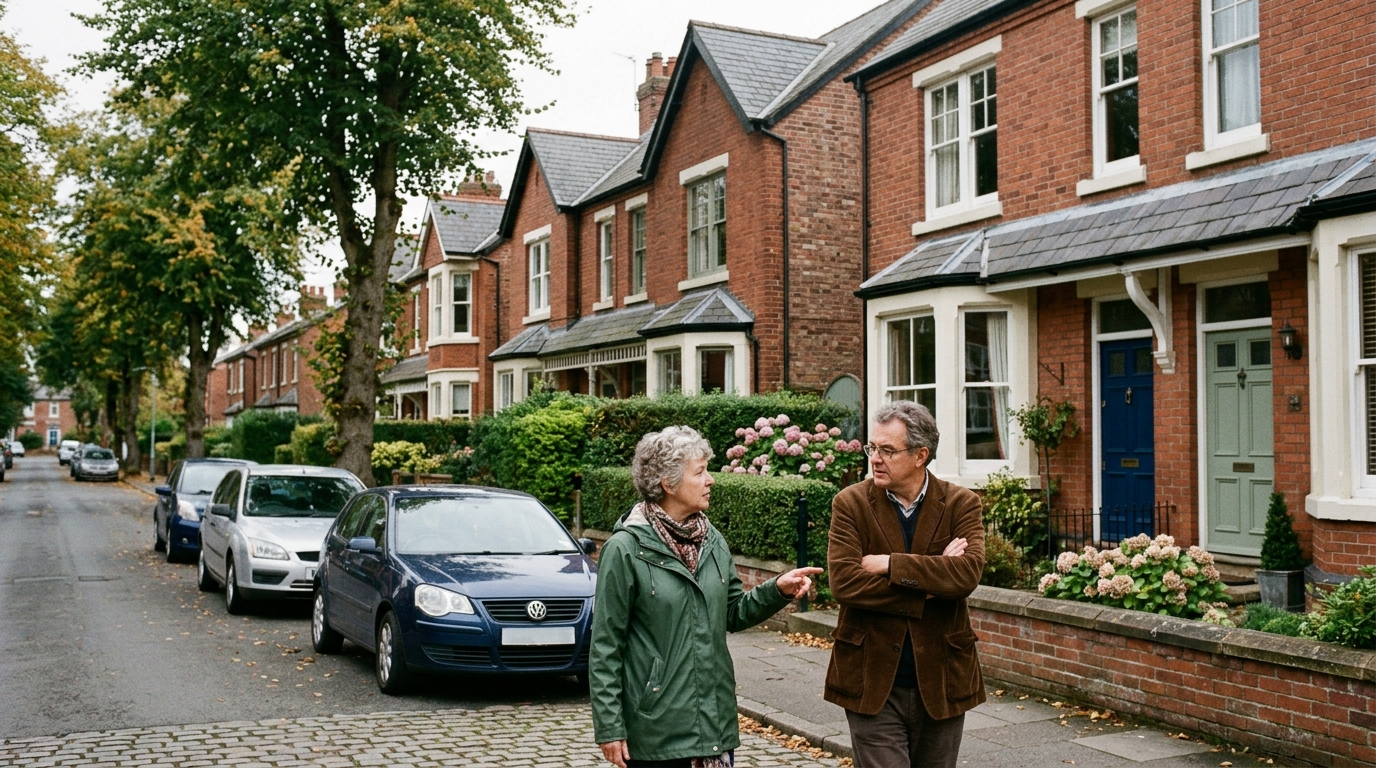
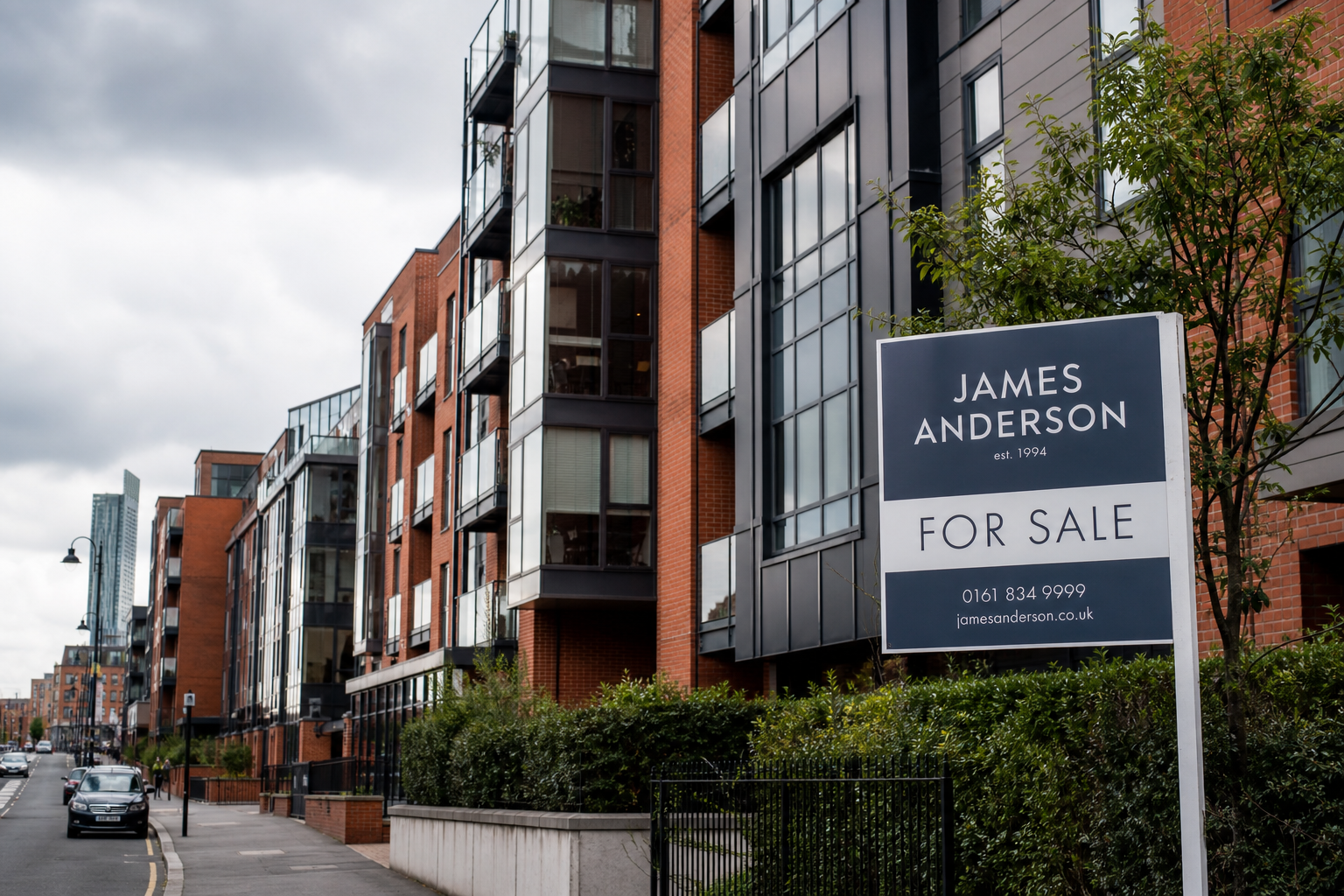
The average price of a house in the UK has risen 43% since 2016. Flats, over the same period, have managed just 10%. That’s not a rounding error or a temporary blip. It’s a decade-long divergence that has fundamentally altered how the property market works, and it’s reshaping the path to homeownership for an entire generation of buyers.
The figures, drawn from Zoopla research, were highlighted by Hill Group CEO Andy Hill in comments to The Times this week. His argument is straightforward: flats were once the natural first step on the property ladder, and that stepping stone has crumbled.
“They used to be the stepping stones,” Hill said. “Lots of first-time buyers now try to move further out and get a small house. We need to get market confidence up in apartments and promote that they are safe.”
The decline in flat market confidence didn’t happen in a vacuum. The Grenfell Tower tragedy in 2017 exposed catastrophic failures in building safety, and the aftershocks have never fully subsided. Leaseholders in thousands of blocks across the country found themselves trapped in properties with unsafe cladding, facing remediation bills they couldn’t afford and unable to sell even if they wanted to.
Nine years on, the building safety crisis isn’t resolved. Progress on remediation has been painfully slow. Buyers who might have considered a flat as their first purchase now view the sector with suspicion, and mortgage lenders remain cautious about properties without completed EWS1 fire safety certificates.
The leasehold system itself has compounded the problem. Ground rent escalation clauses, opaque service charges, and the fundamental absurdity of owning a property on a diminishing lease have all eroded confidence. The government’s leasehold reform programme is underway but incomplete, leaving many would-be flat buyers waiting for clarity before committing.
The traditional model was predictable enough. Buy a small flat in your twenties, build equity, trade up to a house. It worked for decades. It isn’t working now.
Young adults are increasingly delaying their first property purchase, often into their mid-thirties or beyond. When they do buy, many are skipping the starter flat entirely and going straight to a house that suits longer-term needs. If you don’t have family help to get on the ladder early, the first home you buy is likely to be more expensive than a one-bedroom flat, not less.
Guardian columnist Jason Okundaye captured the frustration this week, writing about the government’s decision to replace the Lifetime ISA with a new First-Time Buyer ISA. The replacement, according to Moneybox personal finance director Brian Byrnes, is “more complex, more restrictive and potentially less valuable than the Lisa.” The 25% government bonus will now only be paid when a property is bought rather than annually, eliminating the compound interest advantage. And the £450,000 property price cap, unchanged since 2017, remains in place.
That cap matters. It was set when the average UK house price was around £220,000. Today it’s closer to £290,000, and in many parts of the South East it’s significantly higher. A product designed to help first-time buyers increasingly excludes the homes they’re actually trying to buy.
Norwich has one of the more active flat markets in East Anglia, with purpose-built apartments in the city centre, converted period buildings along the Golden Triangle, and newer developments near the station and riverside. The city’s relative affordability compared to London and the South East has traditionally made it attractive for first-time buyers.
But the national trend is visible here too. Houses in Norfolk have outperformed flats consistently, and the price gap between a two-bedroom flat in Norwich and a terraced house on the outskirts has narrowed to the point where many buyers see little reason to choose the flat.
Coastal towns face their own version of the problem. Great Yarmouth and Cromer both have flatted stock that competes for attention with holiday lets and short-term rentals, creating a market where residential buyers feel squeezed on value. Ivybridge’s property market reports across 324 locations show how these micro-market dynamics play out differently from town to town.
Hill believes they can, but the product has to improve. The pandemic taught developers a blunt lesson about what people will tolerate. “One thing we learned from Covid was that we would never build another flat without its own personal outside space,” he said. “It needed an event like that to realise how important that is, even if it’s not huge.”
He’s also making the density argument. “If we want to build at pace and build large numbers of homes close to railway stations, we’ve got to get apartment living back on the agenda as being seen as a good option, whereas at the moment it isn’t.”
That’s the tension at the heart of housing policy. The government wants to build 1.5 million homes. Many of those will need to be flats, particularly on urban and transport-linked sites where houses simply don’t make sense at the required density. But if buyers won’t touch them, developers won’t build them, and the numbers don’t add up.
A property market where houses consistently outperform flats by a factor of four to one creates a self-reinforcing problem. Buyers avoid flats because they don’t appreciate in value. Developers focus on houses because that’s where the demand is. The flat stock that does exist ages without adequate investment. And the traditional first step onto the ladder disappears.
Fixing this requires more than better balconies. It needs completed leasehold reform, resolved building safety remediation, savings products with caps that reflect actual property prices, and a fundamental shift in how apartments are designed, managed, and marketed. None of that is quick or easy.
For sellers in Norfolk and Suffolk, the flat market’s weakness is the housing market’s weakness. Every first-time buyer who can’t get started is a buyer missing from the chain. Every chain that doesn’t form is a family home that doesn’t sell. The property ladder works from the bottom up, and the bottom rung has been quietly rotting for a decade.