House prices have fallen in 19 of the 25 local authority areas with the highest density of second homes in Britain, according to new analysis from wealth manager Rathbones. In the wider UK market, prices dropped in just 26% of local authorities over the same period. The contrast is stark, and the cause isn’t hard to find.
The worst-performing areas were overwhelmingly coastal and rural markets built on holiday-home demand. South Hams in Devon, which holds the highest concentration of second homes in England, recorded an annual price fall of 6.6%. By the first quarter of 2026, the picture had worsened further: 20 of those 25 local authorities were showing price declines.
These aren’t areas where the broader economy has collapsed. They’re places where a very specific type of buyer, the second-home purchaser, has pulled back. And the reasons are cumulative.
The Stamp Duty surcharge on additional properties rose from 3% to 5% in October 2024. On a £500,000 coastal cottage, that’s an extra £10,000 at the point of purchase alone. Councils in England can now charge a 100% council tax premium on second homes, effectively doubling the annual bill. In Wales, premiums of up to 300% are permitted.
Rathbones puts it plainly: the appeal of “additional property ownership for financial gain appears greatly reduced.” When you layer rising purchase costs onto higher annual holding costs, the financial case for a second home starts to erode. Not vanish entirely, but narrow considerably.
Separate Government figures confirm the trend from another angle. The number of second homes in England has fallen by around 12,000 since 2024, a decline of 4.3%. Some owners are selling. Others are converting properties to permanent residences or holiday lets to avoid the council tax premium. The effect is the same: fewer homes sitting empty for most of the year in communities that desperately need housing.
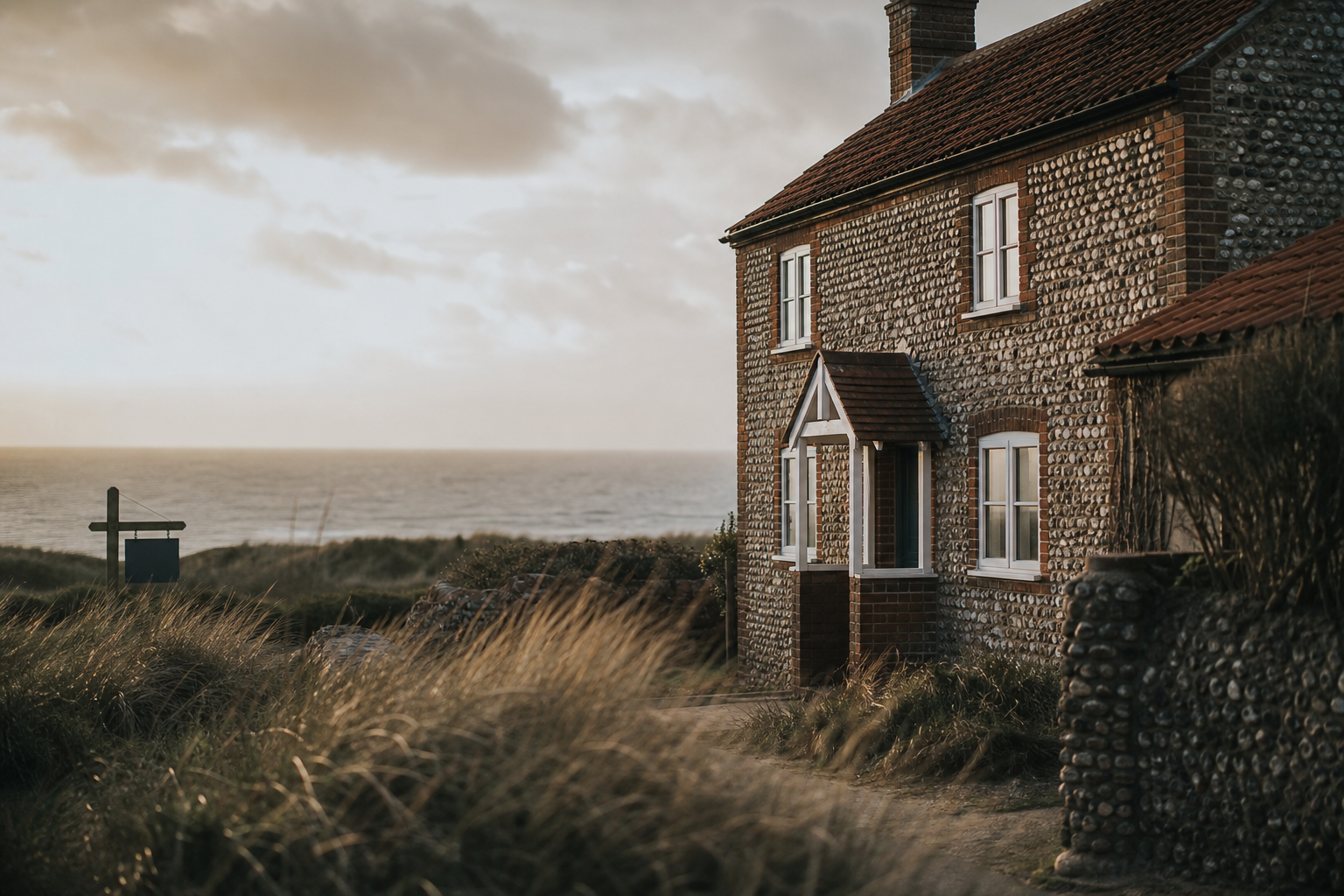
Anyone who works this market locally won’t be surprised by the direction of travel, even if the national data puts it in sharper focus. The North Norfolk coast, from Burnham Market through Blakeney to Wells-next-the-Sea, has long attracted second-home buyers from London and the South East. In some villages, second homes have historically accounted for a third or more of the housing stock.
The tax changes haven’t stopped this market entirely. Premium coastal properties with character still attract strong interest. But the casual second-home purchase, the “why not, it’s a good investment” buy, is harder to justify when upfront and ongoing costs have risen so materially. What I’m seeing locally is a more considered buyer: someone who genuinely intends to use the property regularly, not simply park capital in bricks and mortar.
For sellers in Holt, Cromer and Sheringham, this means understanding who your buyer is now. Properties marketed purely as lifestyle investments may sit longer. Those presented as genuine homes, whether primary residences or well-used second homes, will find their audience more quickly.
In Suffolk, similar dynamics are playing out in Southwold and Aldeburgh, where second-home ownership has shaped the character of these towns for decades. Our property market reports across 324 locations track these shifts at a granular level, and the data confirms that while values in the most desirable spots remain resilient, the broader second-home segment is repricing.
Liberal Democrat MP Andrew George, who represents St Ives in Cornwall, has tabled a Private Member’s Bill that would give councils new planning powers to restrict the conversion of homes into second homes in areas facing housing shortages. The bill is unlikely to pass in its current form. But it reflects a growing political consensus that second-home ownership should be harder, not easier.
The bigger shift may come from the top. Reports over the weekend suggest Andy Burnham, increasingly tipped as a future Labour leader, backs a proportional property tax proposed by the Fairer Share campaign. The scheme would replace both council tax and stamp duty with an annual levy set at 0.48% of a property’s value, rising to 0.96% for second homes, empty properties and overseas-owned homes.
Under that model, the owner of a £700,000 second home would face an annual property tax of roughly £6,720. That’s before maintenance, insurance or any mortgage costs. The campaign’s chairman Andrew Dixon has described it as “a de facto land value tax” designed to ensure “those with the broadest shoulders pay their fair share.” A cap of £1,200 per year on increases would initially protect existing homeowners, but the cap falls away on sale, meaning the full charge applies to anyone buying after the policy takes effect.
It’s tempting to frame all this as simply bad news for coastal property markets. The reality is more nuanced. Fewer second homes means more housing available for people who actually live and work in these communities. Primary residence demand along the Norfolk coast remains firm. Young families priced out of Burnham Market five years ago may find slightly more accessible routes in.
For vendors in the premium bracket, the key is recognising that the buyer pool has shifted. The investment-motivated purchaser is giving way to the lifestyle buyer who will use the property as a genuine base. Marketing and pricing need to reflect that change.
The tax direction is clear and unlikely to reverse under any plausible government. Councils across Norfolk and Suffolk will continue adopting second-home premiums. The Stamp Duty surcharge isn’t coming down. And if anything resembling the Fairer Share proposal gains traction, the annual cost of holding a second home will rise further still.
Coastal Norfolk and Suffolk won’t stop attracting buyers. These are beautiful, distinctive places, and the quality of life they offer is real. But the days of frictionless second-home accumulation are over. The market is adjusting to that reality, and the sellers who adjust with it will be the ones who succeed.