
A Northern Irish investment group has entered emergency discussions to rescue Poundland from administration, opening a high-stakes effort to protect one of Britain’s most visible value retailers. The sudden intervention highlights the acute structural headwinds bearing down on national retail chains, where soaring operational overheads, fragile margins, and subdued consumer discretionary budgets continue to test balance sheets across the sector.
Discount retailing once seemed insulated from the troubles haunting the wider high street. For over a decade, budget general merchandisers expanded aggressively, taking over prime and secondary town centre positions vacated by departing department stores, banks, and fashion chains. That rapid physical expansion, however, brought significant long-term lease liabilities. As freight disruption, energy tariffs, and wage floors climbed concurrently, the mathematics of low-margin retailing shifted rapidly against major operators.
The current rescue negotiations, led by a Northern Ireland-based firm, represent a familiar pattern in corporate turnaround strategy. The objective in such talks typically centres on securing immediate liquidity while preparing a rigorous restructuring package. For commercial landlords, that usually heralds formal requests for rent reductions, revised turnover-linked leases, or the outright closure of underperforming regional units.
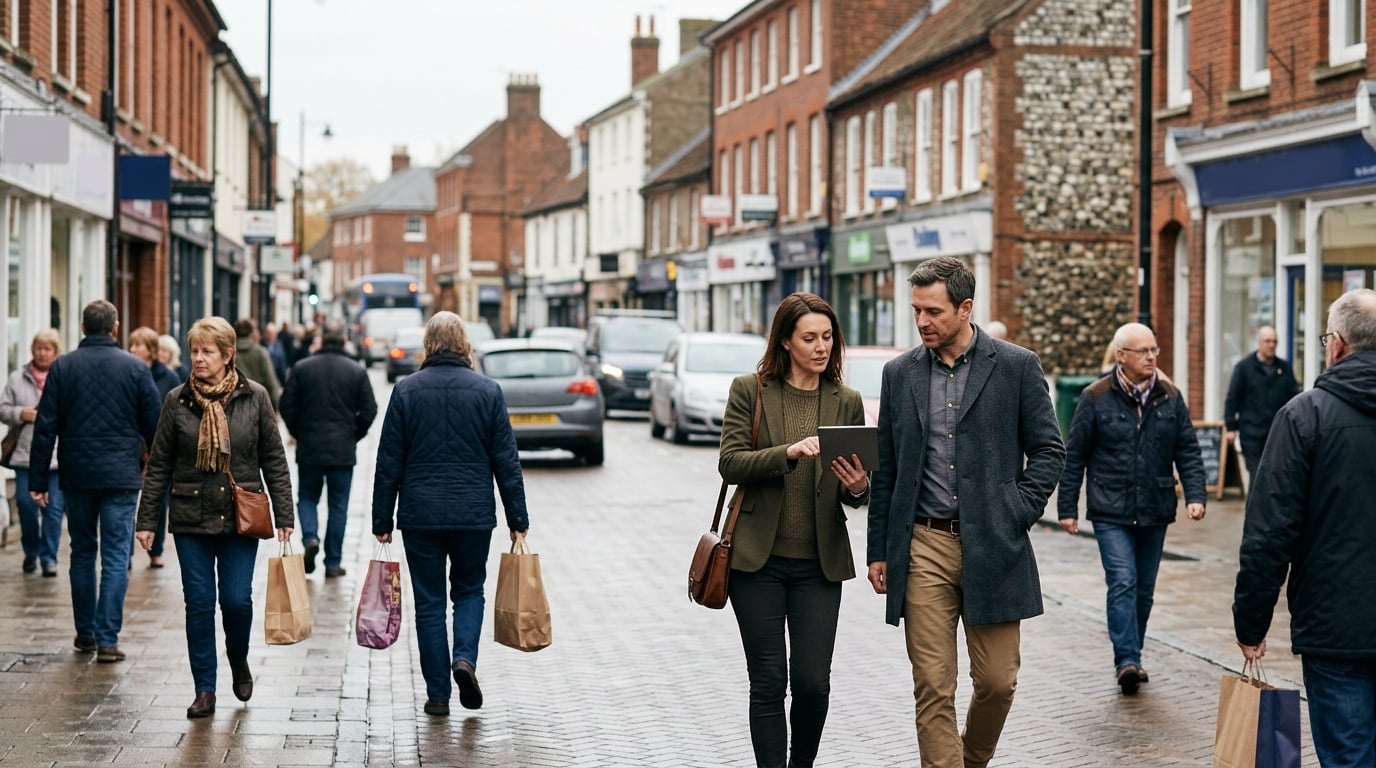
In market towns across Norfolk and Suffolk, from King’s Lynn and Great Yarmouth to Lowestoft and Ipswich, discount chains do not simply occupy floor space. They act as essential footfall anchors. When a prominent retail unit faces insolvency or shuttering, the consequences radiate quickly into neighbouring independent cafes, bakeries, and boutique shops that depend on regular pedestrian traffic.
Regional commercial property has had to adapt constantly over the past five years. Vacant commercial frontage often takes months, sometimes years, to find replacement retail occupants. In many provincial centres across East Anglia, secondary retail parades are already transitioning away from national multiples entirely, making way for community healthcare clinics, flexible office hubs, or mixed-use residential schemes.
Residential values in these towns are intimately linked to the vitality of the local urban core. Prospective buyers routinely weigh the health and appeal of a town centre when deciding whether to put down roots. In markets where high streets show signs of neglect, buyer hesitation can translate directly into slower transaction velocity. In our regional market, properties currently spend an average of 263 days on the market before finding a buyer, reflecting a cautious trading environment where purchasers examine local amenities and neighbourhood stability thoroughly before committing capital.
The prospect of further retail restructuring will inevitably accelerate the conversion of high street assets into residential housing. Permitted development rights have already lowered the barriers for converting commercial properties into flats. While this mechanism offers a practical solution to persistent retail vacancy, it requires sensitive local planning oversight to ensure town centres retain their character and do not become hollowed-out dormitories.
For local councils and property owners, the lesson from repeated high-street restructuring is plain. Relying heavily on national retail chains to sustain high street prosperity carries undeniable systemic risks. Towns that thrive over the coming decade will be those that encourage independent trade, integrate residential living into their commercial cores, and adapt quickly when commercial anchors stumble.
Whether the rescue talks succeed in preserving Poundland’s full physical store network will become clear over the coming weeks. Creditors and landlords will hold considerable sway over the eventual terms. For East Anglia, the episode serves as another reminder that commercial adaptability is now an essential prerequisite for sustaining vibrant, balanced regional property markets.