The government has announced a significant tightening of the rules governing Empty Dwelling Management Orders, the mechanism by which councils can take over the management of long-term vacant homes. From Sunday, ministers confirmed that the qualifying period before a council can act will fall from two years to just six months, a change that could bring thousands more properties within reach of local authority intervention.
The announcement, made by the Ministry of Housing, Communities and Local Government, was unveiled by Housing Secretary Angela Rayner at Labour’s party conference in Liverpool. New powers are to be given to local authorities to take over empty and derelict homes under new plans unveiled by Housing Secretary Angela Rayner as Labour’s annual conference opens in Liverpool. It sits within a broader push to make existing housing stock work harder, rather than relying solely on new construction to meet demand.
The changes will reduce the period a property must be empty before it becomes eligible for an EDMO from two years to just six months, allowing councils to act sooner where homes have been left vacant and preventing properties from falling into serious disrepair. Under the current regime, EDMOs allow councils to take over the management of long-term empty homes and bring them back into occupation for an initial period of 12 months, up to a total of eight years, but no applications have been made since 2021. That last detail matters. A power that sits unused for four years is not much of a power at all, and it is precisely this dormancy that ministers now say they want to fix.
Alongside the shortened qualifying period, the government intends to strip out some of the bureaucratic friction that has made applications so rare. The government has also vowed to remove the evidential requirements for local authorities to provide the residential property tribunal, simplifying the process and empowering councils’ empty homes officers. Councils will no longer need to demonstrate anti-social behaviour or community support before seeking an order through the Residential Property Tribunal, a requirement that has long been cited as a practical barrier to use. Ministers have also signalled further work ahead. Ministers have vowed to explore further changes to protect local authorities from absorbing the costs they face managing homes subject to EDMOs.
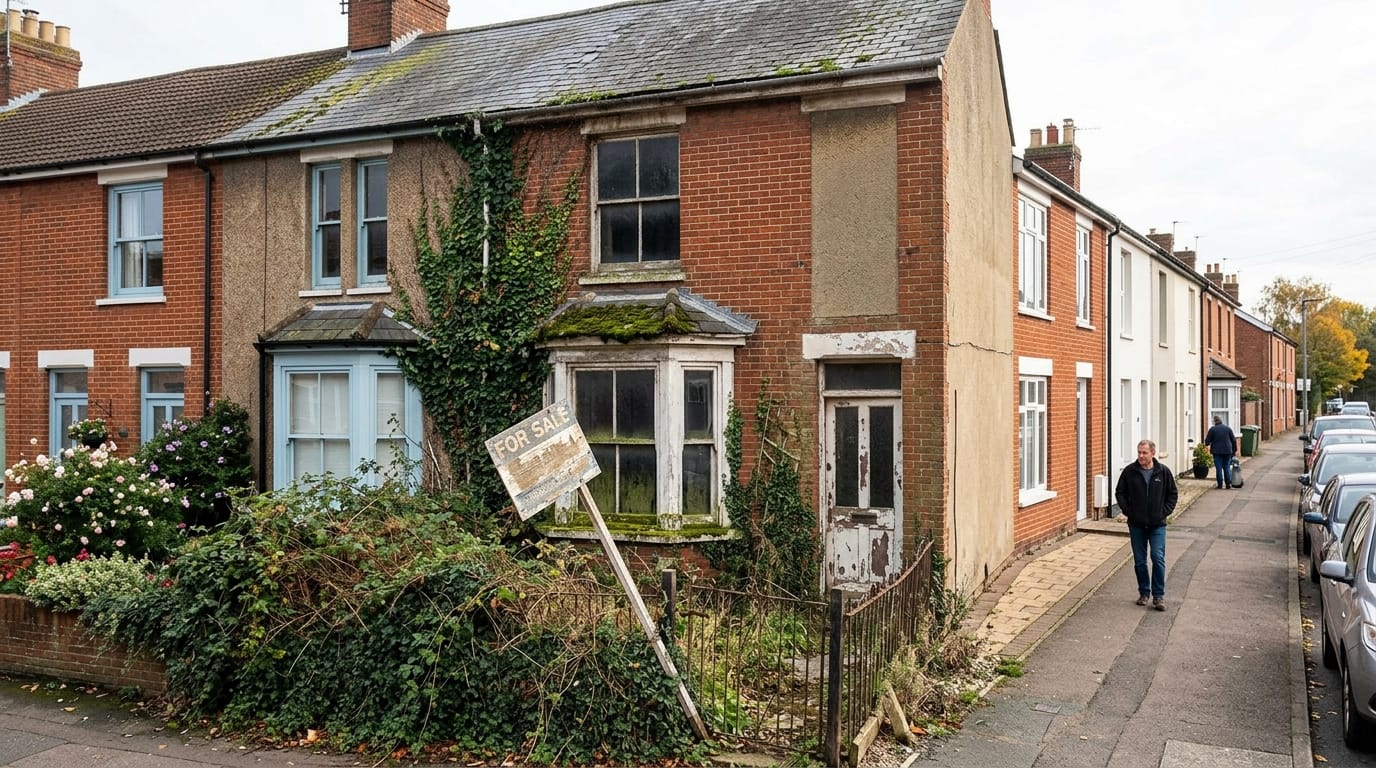
The numbers behind this reform are stark. The latest official statistics show 303,185 dwellings in England were classed as “long-term” empty (more than six months) in 2025. That figure has been climbing quickly. Separate analysis places the increase at 303,185 long-term vacant dwellings in England on 6th October 2025, up 14.5 per cent in a year. Against a backdrop of acute housing need, the pressure on ministers to act on empty stock rather than only greenfield building has been building for some time.
That pressure has not come from Whitehall alone. The announcement answers a long-running request from local government. In March 2025 the Local Government Association called for the qualifying period to be reduced to six months. The LGA’s housing spokesperson made the case plainly at the time, arguing that reducing the EDMO qualifying period to six months would ensure more homes are available to meet local housing needs. Councils, in other words, have been asking for exactly this tool for well over a year.
The wider housing context adds urgency. The number of homeless children in England living in temporary accommodation has hit 177,530, because of long-term shortages in housing supply. Reforms of this kind will not solve that crisis on their own, but they represent one of the few policy levers that acts on stock that already exists rather than stock that has yet to be built. The sweeping reforms to Empty Dwelling Management Orders (EDMOs) are being made as the Government aims to build 1.5 million homes before its self-imposed deadline of 2029.
It is worth being precise about timing here. Several outlets covering the announcement have noted that the change is not yet in force. The current two-year threshold, set by a 2012 amendment, remains the operative law in England until ministers bring forward the necessary statutory instrument. No commencement date has been published alongside Sunday’s announcement, so councils cannot yet act on the shorter window, however welcome the direction of travel might be for local authorities keen to tackle blight on their high streets.
For agents working across our patch, this is not an abstract Whitehall story. Long-term vacancy has a habit of concentrating in exactly the kind of markets we cover, rural and semi-rural stock, older coastal properties, and homes tied up in probate or slow-moving estates. Our own regional figures paint a picture of a market that is, in places, sluggish enough to tip properties into exactly the sort of long-term limbo these reforms are aimed at.
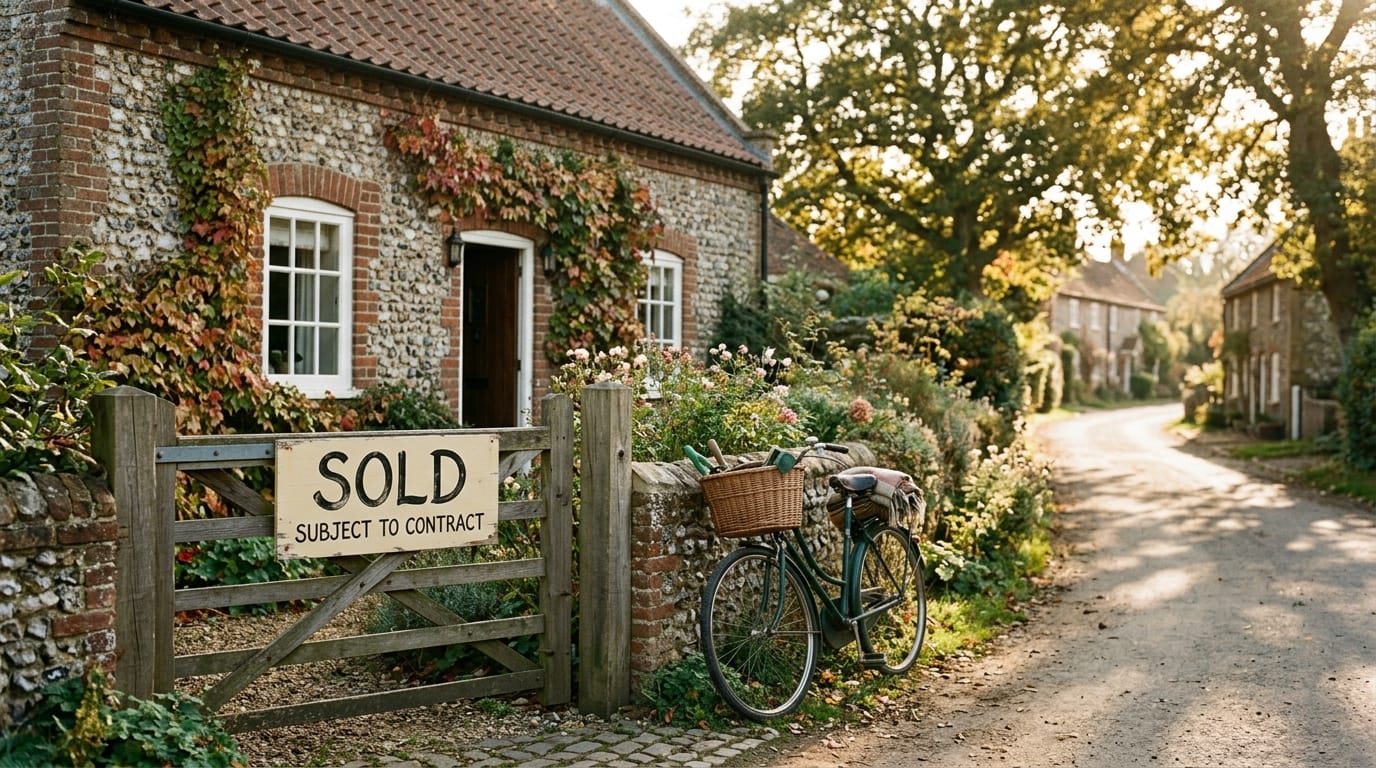
Across the 31 areas we track in Norfolk and Suffolk, the average asking price sits at £673,364, essentially flat year on year at 0.0% growth. That stagnation is not necessarily bad news for buyers, but it does suggest a market where sellers are struggling to generate urgency. More telling is the average time a property spends on the market, currently 260 days, the better part of nine months before a sale is agreed. With an average sold-subject-to-contract rate of just 22%, a substantial majority of listed homes in our area are simply sitting, unsold and, in some cases, unoccupied.
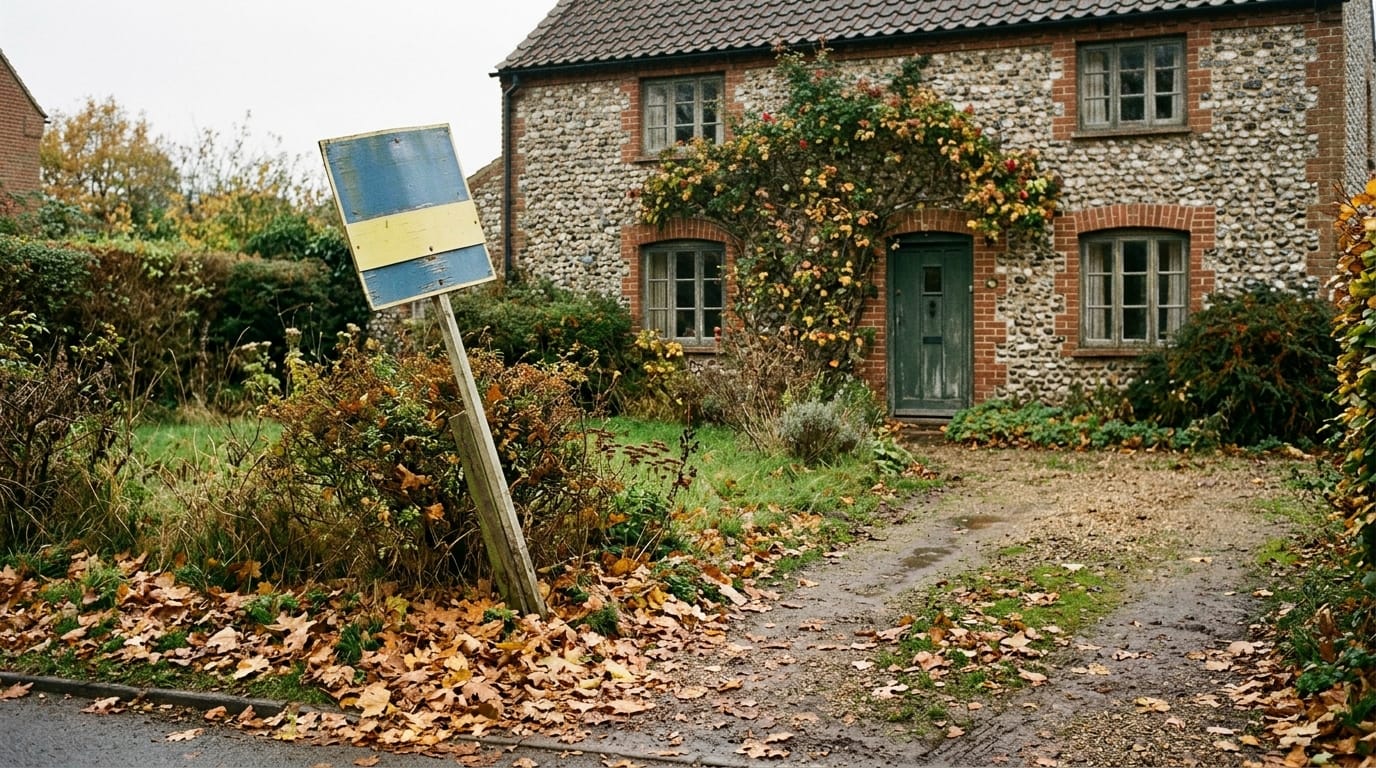
It does not take much imagination to see how a property that fails to sell after 260 days on the market can drift into genuine long-term vacancy, particularly where an owner has relocated, inherited the home, or is holding out for a price the market is not currently prepared to pay. Once a home crosses the six-month threshold under the proposed rules, it becomes a candidate for council intervention, at least in principle, once the legislation is actually commenced.
For owners of empty period properties in our rural villages and coastal towns, this is a moment to take stock. A home standing empty while a sale drags on, or while probate is resolved, is not automatically at risk. But the direction of travel is unmistakable, and the evidential bar for councils to intervene is being deliberately lowered. Agents in this region will want to flag the change clearly to vendors whose properties have been on the market, or simply unoccupied, for an extended period, particularly where a sale has stalled well past the six-month mark that used to carry no legal consequence at all.
There is a certain symmetry in this story landing when it has. A national policy built around the idea that homes should not sit idle arrives just as our own regional data shows a market where nearly four in five listed properties remain unsold and where the average sale takes the best part of a year to complete. Whether the reform, once actually commenced, meaningfully reduces long-term vacancy in Norfolk and Suffolk will depend on how energetically local councils choose to use a power that has, for years, barely been used at all. What is clear already is that the conversation between vendors, agents and local authorities about empty homes is about to become a good deal more pointed.