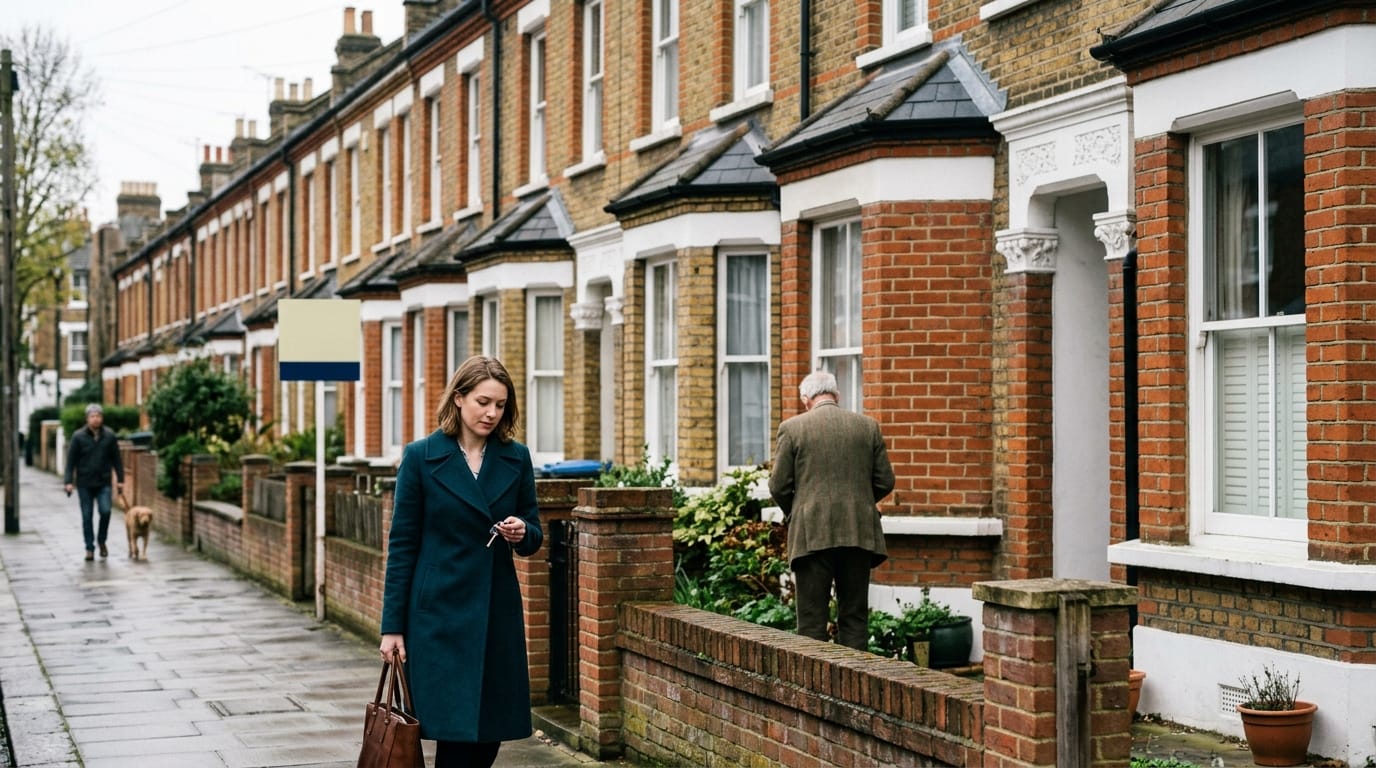

Multimillion-pound price reductions across central London are no longer isolated incidents. In Queen’s Gate Gardens, an elegant Georgian flat steps from the Natural History Museum recently saw its asking price trimmed by nearly a million pounds down to £4.4m. Nearby, a grand townhouse initially brought forward at £20m was slashed to £14m. A few streets away in Notting Hill, a stucco-fronted home that first arrived on the market two years ago asking £16m has dropped below £14m. Prime central London, historically insulated from broader economic turbulence, is enduring a visible chill.
For decades, the capital’s prestige postcodes outpaced the rest of Britain, creating a vast valuation gulf. That divergence is now reversing. Official figures show that while average home prices nationwide edged up by roughly 2% in the year to June, values in inner London boroughs tumbled by 8.3%. In the heart of Westminster, taking in Mayfair, Belgravia, and Marylebone, the contraction has reached 25%.
Local buying agents report that even marquee addresses beside Hyde Park are succumbing. In Pont Street, just minutes on foot from Harrods, one apartment that fetched £4.4m a decade ago traded down to £3.5m in a subsequent sale. Today, it sits on the market at £2.5m. The froth that defined high-value London property for nearly twenty years has cleared, leaving vendors facing a buyer pool that is smaller, more cautious, and far less willing to accept speculative pricing.
Multiple pressures have converged on the capital’s top tier. Successive revisions to stamp duty surcharges, higher borrowing costs across the wider financial system, and the steady withdrawal of preferential tax arrangements have chipped away at overseas interest. At the same time, domestic wealth has increasingly reassessed the functional value of tying substantial capital into central London townhouses that carry hefty maintenance liabilities, service charges, and holding costs.
The situation in prime London stands in stark contrast to the regional markets across East Anglia. While inner London values contracted by over 8% across the year, prime regional property across Norfolk and Suffolk has demonstrated remarkable underlying stability. Average values across prime segments in the two counties have held flat at 0.0% year on year, maintaining an average price of £671,371 across key regional enclaves.
Transactions outside the capital are undoubtedly measured. In Norfolk and Suffolk, the average listing currently sits on the market for 261 days before concluding, reflecting a deliberate, price-sensitive environment. Yet unlike the abrupt discounting seen across Kensington and Westminster, regional sellers are maintaining their pricing power. Buyers relocating from London or rebalancing portfolios are choosing substantial coastal and country homes where space, long-term capital preservation, and quality of life substitute for empty postcode prestige.
The contrast between these two worlds highlights an overdue structural reset. For years, prime central London operated as an international asset class detached from practical housing fundamentals. That detachment has caught up with the market. When a Pont Street flat loses nearly two million pounds in value over a ten-year stretch, buyers recognise that capital preservation in super-prime postcodes is no longer guaranteed.
That realization is prompting high-net-worth families to redeploy liquid capital. A £4m budget that struggles to secure a compromise-free apartment in South Kensington easily secures a prominent country estate, an expansive coastal home, or a substantial acreage holding in the East of England. With the Nationwide index pointing to a national average house price near £275,000, East Anglia’s upper tier provides scale, architectural merit, and permanence without the punitive overheads of central London.
The correction across London’s gilded boroughs shows little sign of an instant rebound. As central vendors continue to trim millions from speculative valuations, the gravitational pull toward established regional markets will probably gather pace. Discretionary buyers now hold the cards, and their focus has shifted decisively toward tangible utility and genuine permanence over speculative metropolitan prestige.