Every seller believes their house is different. It has kerb appeal, a good garden, a decent kitchen, maybe a period fireplace or a view worth boasting about. And yet, across Norfolk and Suffolk, plenty of genuinely attractive homes sit on the market for months without a single offer. In this region, the average property currently takes 271 days to sell, and only around 26 percent of listings reach sold subject to contract at any given time. Those figures tell you something important: a good house is not the same as a house that sells quickly. Presentation and appeal matter, but they are only part of the story. Here are the five reasons that genuinely good houses fail to sell, and what can be done about each one.
This is the single biggest reason a good house lingers. Sellers often price based on what they need, what a neighbour achieved five years ago, or what they simply feel the house is worth emotionally. Buyers do not care about any of that. They compare your home to everything else currently available in the same bracket, and they judge it in seconds. If your price sits above what the market believes it should, buyers will not tell you directly. They will simply stop booking viewings, or they will view once and never return. A property that is priced correctly from day one tends to attract the most attention in its opening weeks. A property that is priced optimistically often ends up chasing the market downward, which brings its own problems.
A good house can be badly represented online. Poor photography, a thin description, or a listing that leads with the least interesting room can quietly kill interest before a buyer has even considered booking a viewing. Buyers browse property portals quickly, often flicking through dozens of listings in one sitting. If the first photograph does not stop the scroll, the rest of the listing may never be seen at all. This is not about spending a fortune. It is about making sure the photography, floorplan, and description actually reflect the property’s real strengths, whether that is space, light, land, or character. A house that photographs poorly will always take longer to sell than one of similar quality that photographs well.
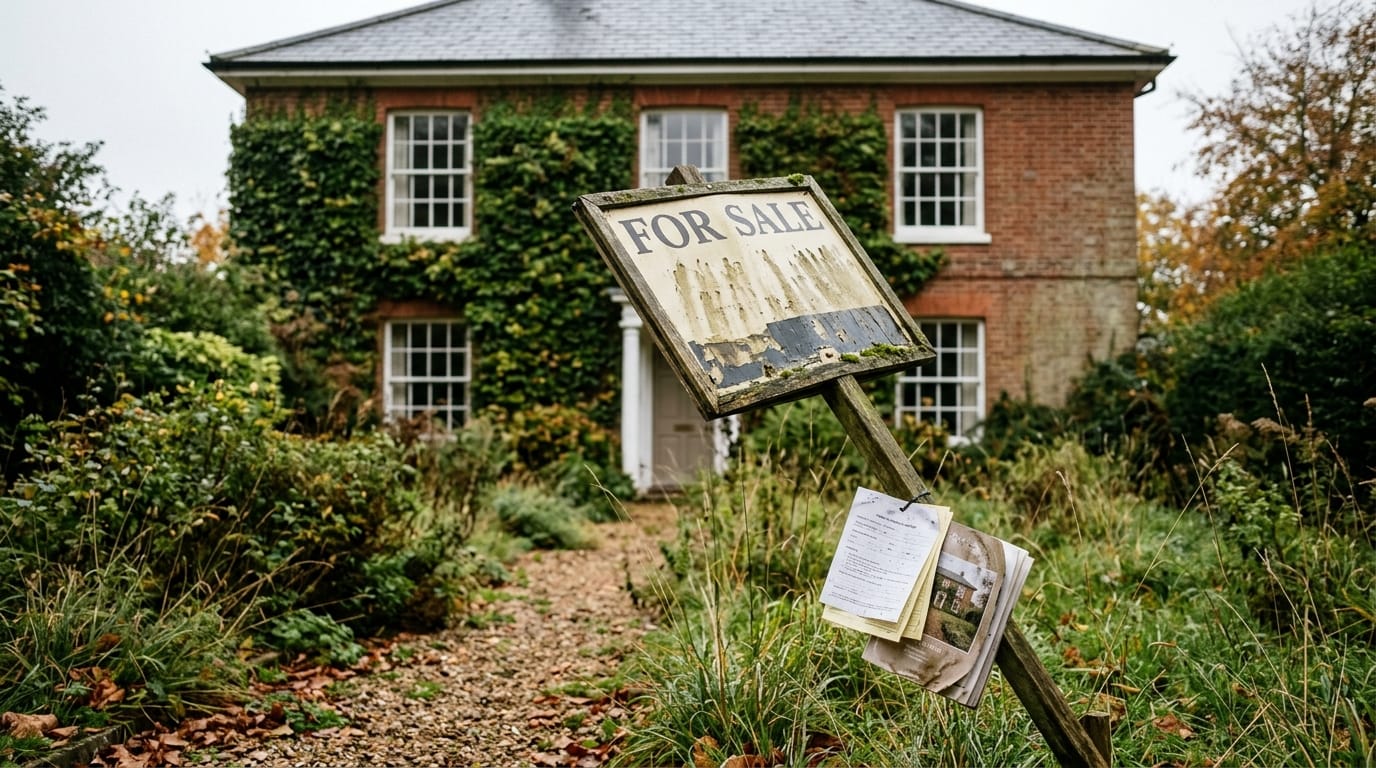
There is a psychological effect that happens once a property has been listed for an extended period. Buyers who track portals regularly start to notice it. They wonder why nobody else has bought it. They assume there must be a flaw they have not spotted, even when there is not one. This is why a property that has been sitting for many months, in a region where the average time on market already stretches past nine months, needs a proactive plan rather than simply waiting for the right buyer to appear. Doing nothing and hoping is rarely a strategy that works. Relaunching with fresh photography, a revised price, or a different marketing angle can genuinely reset how a property is perceived, even by buyers who have seen it before.
Sometimes the portal numbers look healthy. Plenty of views, plenty of enquiries, plenty of viewings booked. But no offers follow. This usually means the problem is not the listing, it is the experience once someone walks through the door. It could be clutter that makes rooms feel smaller than they are. It could be a lack of natural light because curtains are kept closed. It could be an agent who is not properly trained to answer questions, handle objections, or create a sense of occasion during the viewing itself. Buyers make emotional decisions during a viewing far more than they admit. If a house feels cold, cluttered, or poorly explained, even a structurally excellent property can fail to convert interest into an offer.
Not every estate agent is equally skilled at selling every type of home. An agent who is excellent at moving standard three bedroom semis may not have the network, the patience, or the marketing approach needed to sell a distinctive period property, a house with land, or something priced well above the local average. A good house represented by the wrong agent can sit unsold simply because it is not being shown to the right buyers, or because the agent lacks the skill to negotiate effectively once an offer does arrive. This is worth examining honestly. If viewings are scarce, if feedback is not being properly relayed, or if there is no clear marketing plan beyond the initial listing, the agent may be part of the problem rather than part of the solution.
The honest way to diagnose a stalled sale is to look at the pattern of interest rather than guess at the cause. If the listing has had very few online views, the problem is almost always price or presentation. If there have been plenty of views but few viewings booked, the photography or description is probably not converting curiosity into action. If viewings are happening regularly but no offers are coming in, the issue usually sits with the property’s presentation in person, or with how effectively the agent is following up and negotiating afterwards. And if the property has been on the market for a long time with no adjustments made at any stage, stagnation itself becomes the problem, regardless of what caused the original slowdown.
It is worth remembering that average figures hide a wide range of outcomes. Across this region, average prices sit around £696,906 with no meaningful year on year movement, which tells you the market is broadly stable rather than moving sharply in either direction. Stability like this rewards sellers who get the fundamentals right early, and it punishes those who wait too long to address a problem once it becomes apparent. A stable market is not a market where mistakes correct themselves.
None of these five reasons are unfixable. Pricing can be revised. Photography can be redone. Marketing can be relaunched. Viewing technique can be improved. Agents can be changed if necessary. The real risk is not that a good house fails to sell for one of these reasons, it is that a seller assumes the house alone should be enough, and never investigates which of these five issues is actually holding things back. A good house deserves a strategy that matches its quality. Without one, even the most attractive property can sit quietly unsold for far longer than it should.